Crypto News Today: Critical Developments Shake Bitcoin Mining, Banking Sector, and Regulatory Field
Significant cryptocurrency developments emerged on Tuesday, February 18, 2025, as three major stories converged to highlight the evolving relationship between digital assets and traditional finance. A severe winter storm disrupted Bitcoin mining operations across the United States, Standard Chartered analysts warned about stablecoin impacts on bank deposits, and Nomura-backed Laser Digital pursued deeper integration into the U.S. financial system through a national trust charter application. These events collectively demonstrate the increasing interconnectedness between cryptocurrency markets, energy infrastructure, banking stability, and regulatory frameworks.
Bitcoin Network Hashrate Plummets Amid Extreme Weather
Bitcoin’s network hashrate experienced a dramatic 40% decline over the weekend, reaching a seven-month low of 663 exahashes per second (EH/s) according to mining data platform CoinWarz. This substantial drop directly resulted from a massive winter storm that affected 36 U.S. states with heavy snow, ice, and widespread power outages impacting approximately one million energy customers. Mining operations voluntarily curtailed their activities to help stabilize regional energy grids during the extreme weather event.
Also read: Zero-Knowledge Proofs Guide: Hoskinson's Free 337-Page GitHub Release Empowers Developers
Abundant Mines, an Oregon-based Bitcoin mining company, reported that approximately 40% of global Bitcoin mining capacity went offline within a 24-hour period. The United States contributes nearly 38% of the world’s total Bitcoin mining power according to Hashrate Index data, making weather-related disruptions particularly significant for network stability. However, the hashrate demonstrated resilience by recovering to approximately 854 EH/s by Monday, showcasing the network’s adaptive capacity during infrastructure challenges.
Energy Infrastructure and Mining Interdependence
The relationship between Bitcoin mining and energy grids continues to evolve as demonstrated by this weekend’s events. Mining operations increasingly participate in demand response programs, voluntarily reducing power consumption during peak demand periods to support grid stability. This incident provides a real-world case study of how cryptocurrency mining can interact with traditional energy infrastructure, potentially offering grid-balancing services during extreme weather events while simultaneously affecting network security metrics.
Also read: Crypto Liquidations Surge Past $450M as Options Expiry and Oil Shock Fuel Market Panic
Stablecoin Growth Poses Banking Sector Risks
Standard Chartered analysts released a concerning report on Tuesday highlighting potential risks that stablecoin adoption poses to traditional banking deposits. According to Geoff Kendrick, Global Head of Digital Assets Research at Standard Chartered, U.S. bank deposits could decrease by approximately one-third of the stablecoin market capitalization. This warning arrives as the U.S. CLARITY Act faces delays, legislation that would prohibit interest payments on stablecoin holdings.
The report specifically identifies regional U.S. banks as most vulnerable to deposit outflows, with institutions including Huntington Bancshares, M&T Bank, Truist Financial, and CFG Bank facing particular exposure. Standard Chartered’s analysis focuses on net interest margin (NIM) income, a critical profitability metric that measures the difference between interest earned and interest paid relative to average interest-earning assets. Since deposits drive NIM, their potential migration to stablecoins represents a significant risk to traditional banking revenue models.
| Bank Type | Exposure Level | Key Metric Impact |
|---|---|---|
| Regional Banks | Highest | NIM Income Percentage |
| Diversified Banks | Moderate | Deposit Stability |
| Investment Banks | Lowest | Revenue Diversification |
This analysis emerges alongside ongoing industry debate about stablecoin impacts. Circle CEO Jeremy Allaire has previously dismissed concerns about stablecoin-driven bank runs as “totally absurd,” while companies like Coinbase have withdrawn support for certain regulatory approaches. The current stablecoin market capitalization stands at $301.4 billion for U.S. dollar-pegged assets according to CoinGecko data, representing substantial potential for deposit migration if adoption accelerates.
Laser Digital Pursues U.S. National Trust Charter
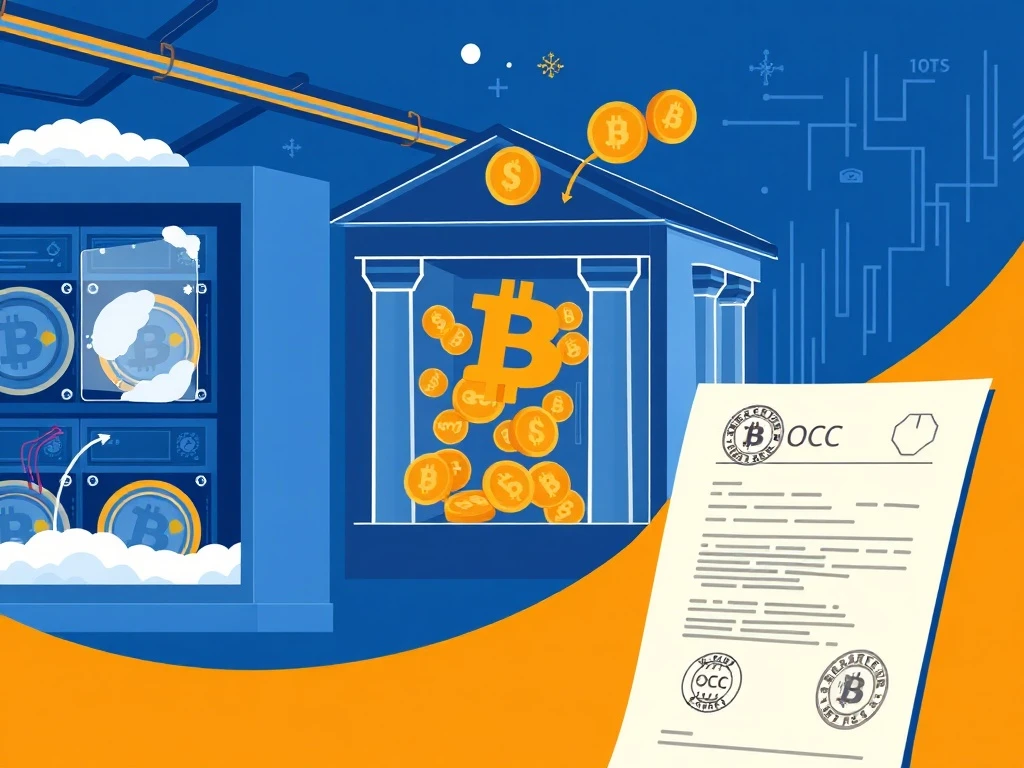
Laser Digital, a full-service digital asset company backed by Japanese financial giant Nomura, has applied for a U.S. national bank trust charter according to Financial Times reports. This strategic move signals increasing interest from cryptocurrency-focused companies in deeper integration with traditional financial systems, particularly amid evolving regulatory environments. The application submitted to the Office of the Comptroller of the Currency (OCC) would enable federal-level operations without requiring state-by-state custody licenses.
The company plans to offer spot trading for digital assets while explicitly stating it does not intend to accept customer deposits. Established in 2022 and headquartered in Switzerland, Laser Digital has already secured regulatory approvals in multiple jurisdictions including Switzerland and Dubai. The OCC charter approval process involves two distinct stages: preliminary approval followed by final authorization once applicants demonstrate sufficient capital and operational credibility, a procedure that typically requires up to one year for completion.
Regulatory Field Evolution
This development occurs within a broader context of cryptocurrency regulatory maturation. The potential approval of an OCC charter for Laser Digital would represent another milestone in institutional cryptocurrency adoption, following similar moves by traditional financial institutions entering the digital asset space. Regulatory clarity continues to develop across major jurisdictions, with companies increasingly seeking established financial frameworks rather than operating in regulatory gray areas.
Key considerations for cryptocurrency companies pursuing traditional financial charters include:
- Capital requirements: Demonstrating sufficient financial resources
- Operational credibility: Establishing solid compliance systems
- Regulatory alignment: Meeting both traditional finance and cryptocurrency standards
- Market access: Gaining broader institutional participation capabilities
Conclusion
Today’s crypto news reveals three interconnected developments shaping the digital asset market. Bitcoin’s network resilience faced weather-related stress testing, banking sector analysts raised concerns about stablecoin deposit competition, and institutional players pursued deeper regulatory integration. These stories collectively highlight cryptocurrency’s evolving relationship with traditional systems including energy infrastructure, financial services, and regulatory frameworks. As the industry matures, such intersections between digital assets and established sectors will likely increase in frequency and significance, requiring ongoing analysis of both technological and economic implications.
FAQs
Q1: How did the winter storm affect Bitcoin mining specifically?
The severe winter storm caused approximately 40% of global Bitcoin mining capacity to go offline as operations curtailed activities to stabilize regional energy grids. This voluntary reduction helped prevent broader power outages but temporarily decreased network security as measured by hashrate.
Q2: Why are regional banks more vulnerable to stablecoin competition?
Regional banks face greater exposure because they typically rely more heavily on deposit-driven net interest margin income compared to diversified or investment banks. Their business models concentrate on traditional deposit services, making them more susceptible to disruption from alternative digital asset offerings.
Q3: What advantages would an OCC charter provide Laser Digital?
A national trust charter from the OCC would allow Laser Digital to operate at the federal level without applying for state-by-state custody licenses. This regulatory approval would streamline operations, enhance credibility with institutional clients, and provide clearer compliance frameworks for digital asset services.
Q4: How quickly did Bitcoin’s hashrate recover from the weather disruption?
Bitcoin’s network hashrate demonstrated significant resilience, recovering from a weekend low of 663 EH/s to approximately 854 EH/s within approximately 24 hours. This rapid recovery highlights the distributed nature of mining operations and their ability to adapt to temporary infrastructure challenges.
Q5: What is the current status of stablecoin regulation in the United States?
Stablecoin regulation remains in development, with the CLARITY Act facing legislative delays. This proposed legislation would prohibit interest payments on stablecoin holdings, addressing concerns about banking sector competition while industry participants continue debating appropriate regulatory approaches for digital dollar alternatives.

This article was produced with AI assistance and reviewed by our editorial team for accuracy and quality.