Explosive Davos Clash: Coinbase and JPMorgan CEOs Battle Over Crypto Market Structure Bill
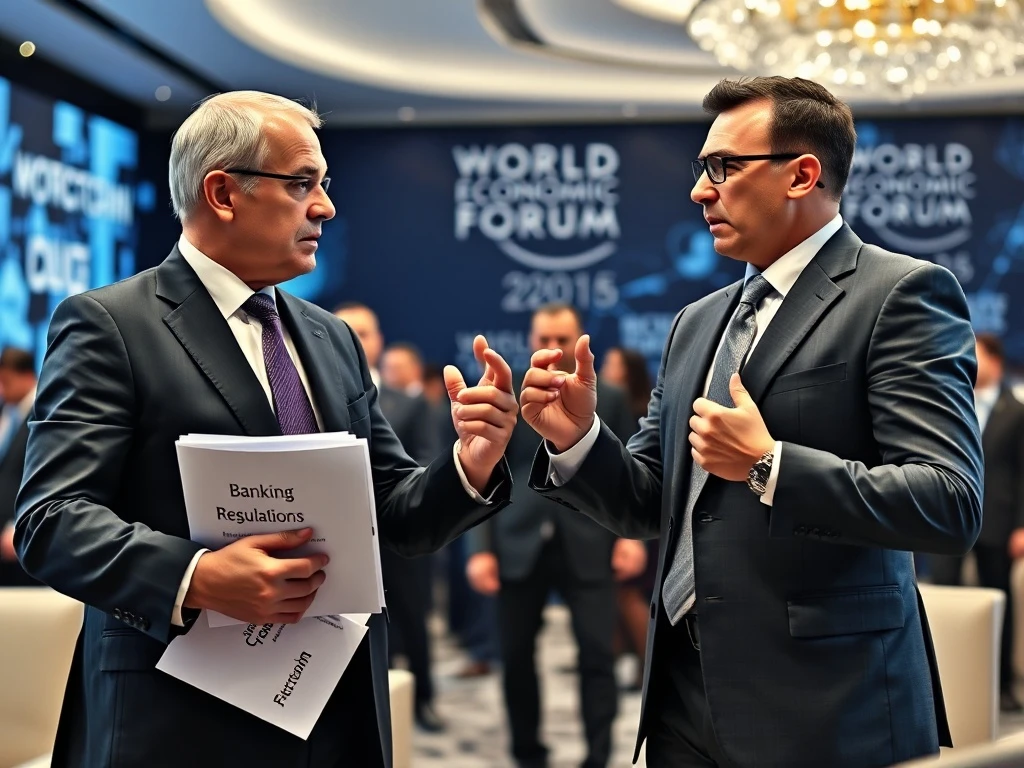
DAVOS, Switzerland — January 2025 witnessed a dramatic confrontation between traditional finance and cryptocurrency titans during the World Economic Forum, as Coinbase CEO Brian Armstrong and JPMorgan Chase CEO Jamie Dimon engaged in a heated exchange about pending U.S. cryptocurrency legislation. This explosive Davos clash highlights the intensifying battle over the future of digital asset regulation, particularly concerning the controversial market structure bill currently dividing Washington policymakers and financial industry leaders.
Coinbase and JPMorgan CEOs Clash Over Crypto Legislation
The Wall Street Journal reported that Jamie Dimon directly confronted Brian Armstrong during what was supposed to be a casual coffee chat with former UK Prime Minister Tony Blair. According to multiple sources familiar with the incident, Dimon interrupted Armstrong’s conversation, telling the Coinbase CEO he was “full of s—” regarding public statements about banking industry opposition to cryptocurrency legislation. This confrontation occurred just days after Armstrong announced Coinbase would withdraw support for the current version of the market structure bill, citing concerns about provisions that would allegedly benefit traditional banks at the expense of crypto innovation.
Also read: Zcash Analysis: Grayscale's Bold Claim on Private Money's Future and ZEC's Value
Banking industry advocates have consistently opposed allowing stablecoin rewards under the proposed legislation, while cryptocurrency companies argue such provisions are essential for competitive fairness. Armstrong has repeatedly claimed in television interviews that banks are attempting to “sabotage” the legislation to eliminate competition from decentralized finance platforms. Meanwhile, Dimon and other banking executives maintain that cryptocurrency platforms seeking to offer banking-like services should be subject to equivalent regulatory frameworks.
Broader Banking Industry Resistance Emerges
Armstrong reportedly faced additional resistance from other prominent banking leaders throughout the Davos forum. Bank of America CEO Brian Moynihan delivered a pointed remark to the Coinbase executive, stating “if you want to be a bank, just be a bank” in reference to cryptocurrency exchanges seeking to offer financial services without traditional banking licenses. Wells Fargo CEO Charlie Scharf reportedly refused to engage in substantive discussion about the legislation with Armstrong, signaling broader industry alignment against certain cryptocurrency regulatory approaches.
This tension reflects fundamental disagreements about financial system architecture. Traditional banks emphasize consumer protection and systemic stability concerns, while cryptocurrency advocates prioritize innovation and decentralization principles. The market structure bill attempts to work through these competing priorities by establishing clearer regulatory guidelines for digital assets, but specific provisions about stablecoin operations have become particularly contentious.
Legislative Context and Timeline
The market structure legislation passed the U.S. House of Representatives in July 2024 but has since encountered significant obstacles in the Senate. Democratic lawmakers have raised concerns about ethics provisions, while both banking and cryptocurrency lobbyists have opposed elements they believe disadvantage their respective industries. The Senate Banking Committee originally scheduled a markup session for January 15, 2025, but postponed indefinitely following Coinbase’s announcement that it could not support the legislation “as written.”
Simultaneously, the Senate Agriculture Committee advanced its version of cryptocurrency legislation along party lines on January 16, 2025. This committee oversees commodities regulations, creating a jurisdictional overlap that complicates legislative progress. Lawmakers acknowledge that both committees’ versions must eventually merge before any comprehensive legislation reaches the Senate floor for a full vote.
| Stakeholder | Primary Concern | Legislative Priority |
|---|---|---|
| Traditional Banks | Consumer protection, systemic risk | Equal regulatory treatment for similar services |
| Cryptocurrency Exchanges | Innovation, market access | Clear rules allowing stablecoin yield products |
| Democratic Lawmakers | Ethics, investor protection | Strong consumer safeguards in legislation |
| Republican Lawmakers | Innovation, economic growth | Regulatory clarity to build industry development |
Stablecoin Yield: The Core Controversy
The most contentious element of the legislation involves whether cryptocurrency platforms should be permitted to offer yield on stablecoin holdings. Banking industry representatives argue these products essentially constitute interest-bearing accounts that should fall under existing banking regulations. Conversely, cryptocurrency companies contend that stablecoin yield represents a fundamentally different financial product enabled by blockchain technology and decentralized finance protocols.
Armstrong has publicly stated that excluding stablecoin yield provisions would effectively allow “banks to ban their competition” by preventing cryptocurrency platforms from offering competitive financial products. This perspective reflects broader cryptocurrency industry concerns about traditional financial institutions utilizing regulatory frameworks to maintain market dominance. Banking executives counter that appropriate regulation ensures financial stability and protects consumers from potentially risky products.
Coinbase chief policy officer Faryar Shirzad attempted to contextualize the disagreement, telling The Wall Street Journal that “the fight over rewards is really an anomaly in our collaborative relationship with the banks. We work closely with them and have announced multiple partnerships.” This statement acknowledges ongoing cooperation between traditional and cryptocurrency financial entities while highlighting specific regulatory disagreements.
Historical Precedents and Regulatory Evolution
The current debate follows years of regulatory uncertainty surrounding cryptocurrency classification and oversight. Since Bitcoin’s emergence in 2009, regulators have struggled to categorize digital assets within existing financial frameworks. The Securities and Exchange Commission has pursued enforcement actions against numerous cryptocurrency projects for allegedly offering unregistered securities, while the Commodity Futures Trading Commission has claimed jurisdiction over certain digital assets as commodities.
This regulatory ambiguity has created compliance challenges for cryptocurrency businesses and uncertainty for investors. The market structure legislation represents Congress’s most substantial attempt to establish comprehensive digital asset regulations, but the Davos confrontation demonstrates how deeply stakeholders disagree about appropriate regulatory approaches. Previous legislative efforts, including the proposed CLARITY Act, have similarly stalled amid industry disagreements and competing priorities.
Global Implications of U.S. Regulatory Decisions
The outcome of U.S. cryptocurrency legislation carries significant international implications. As the world’s largest economy and financial market, American regulatory decisions frequently influence global standards and approaches. Other jurisdictions, including the European Union with its Markets in Crypto-Assets (MiCA) framework and Hong Kong with its developing cryptocurrency regulations, are watching U.S. developments closely.
Industry analysts suggest that restrictive U.S. regulations could push cryptocurrency innovation to more accommodating jurisdictions, potentially diminishing American influence in the growing digital asset sector. Conversely, appropriately balanced regulations might establish the United States as a global leader in responsible cryptocurrency innovation. The Davos confrontation between Armstrong and Dimon therefore represents more than personal disagreement—it symbolizes a decisive moment in determining which regulatory philosophy will dominate the future of global finance.
Key considerations for international observers include:
- Regulatory arbitrage possibilities if U.S. regulations differ substantially from other jurisdictions
- Cross-border compliance challenges for global cryptocurrency businesses
- Investor protection standards that might establish international benchmarks
- Innovation migration patterns based on regulatory environments
Conclusion
The explosive Davos clash between Coinbase CEO Brian Armstrong and JPMorgan Chase CEO Jamie Dimon reveals fundamental divisions about cryptocurrency regulation that extend far beyond personal disagreement. This confrontation highlights competing visions for financial system evolution, with traditional institutions emphasizing stability and protection while cryptocurrency advocates prioritize innovation and accessibility. As the U.S. market structure legislation progresses through congressional committees, these competing perspectives will continue shaping regulatory outcomes with significant implications for both industries and consumers. The resolution of this cryptocurrency legislation debate will likely influence financial innovation trajectories for years to come, making the Davos confrontation a symbolic moment in the ongoing evolution of global finance.
FAQs
Q1: What specifically caused the confrontation between the Coinbase and JPMorgan CEOs at Davos?
The immediate trigger was Brian Armstrong’s public statements accusing banks of trying to sabotage cryptocurrency legislation. Jamie Dimon confronted Armstrong about these claims during a coffee chat, telling him he was “full of s—” regarding allegations of banking industry interference with the market structure bill.
Q2: Why is stablecoin yield so controversial in the proposed legislation?
Traditional banks argue that stablecoin yield products function similarly to interest-bearing bank accounts and should therefore face equivalent regulations. Cryptocurrency companies contend these are different financial products enabled by blockchain technology, and restricting them would give banks unfair competitive advantages.
Q3: What is the current status of the market structure legislation in Congress?
The legislation passed the House of Representatives in July 2024 but faces challenges in the Senate. The Senate Banking Committee postponed its markup session indefinitely after Coinbase withdrew support, while the Senate Agriculture Committee advanced its version along party lines in January 2025. Both versions must merge before full Senate consideration.
Q4: How have other banking executives responded to cryptocurrency regulatory proposals?
Bank of America CEO Brian Moynihan told Armstrong “if you want to be a bank, just be a bank,” while Wells Fargo CEO Charlie Scharf refused to discuss the matter. This suggests broader banking industry alignment against certain cryptocurrency regulatory approaches, particularly those that might create regulatory asymmetries.
Q5: What are the potential consequences if this legislation fails or becomes significantly delayed?
Continued regulatory uncertainty could hinder cryptocurrency innovation in the United States, potentially pushing development to more accommodating jurisdictions. It might also maintain consumer protection gaps and create compliance challenges for businesses operating across state and international boundaries.

This article was produced with AI assistance and reviewed by our editorial team for accuracy and quality.