CLARITY Act Faces Critical Hurdles as Goldman Sachs CEO Signals Regulatory Uncertainty
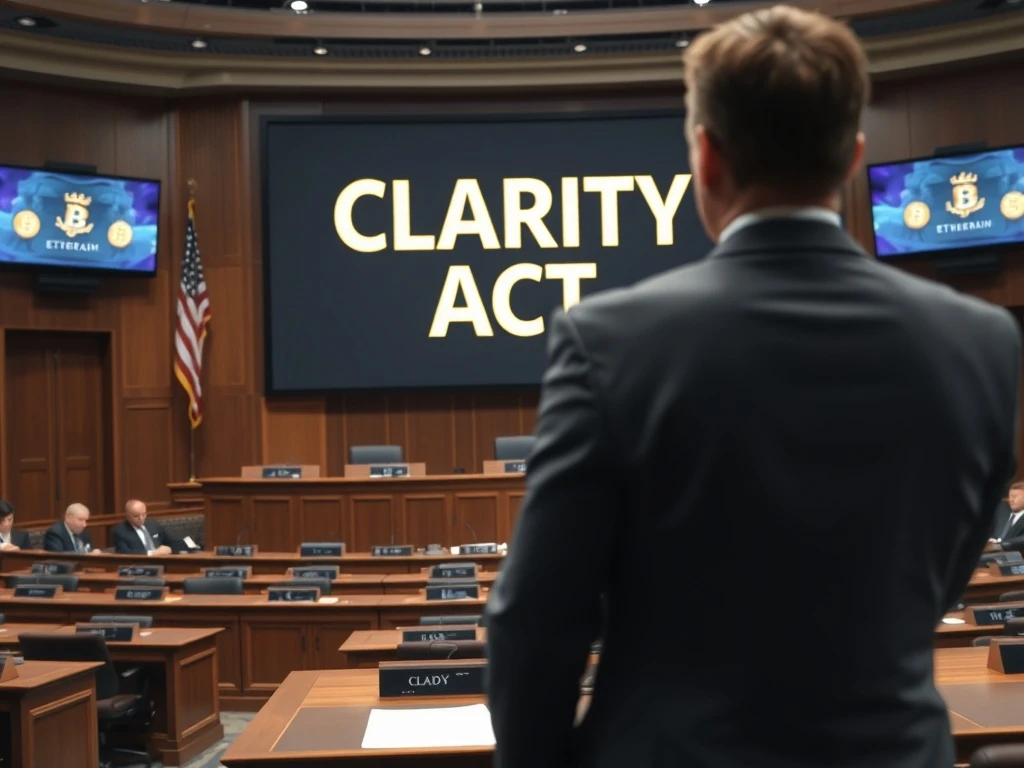
WASHINGTON, D.C., January 2025 – Goldman Sachs CEO David Solomon delivered a sobering assessment of pending cryptocurrency legislation during the firm’s quarterly earnings call, stating the Digital Asset Market Clarity (CLARITY) Act “has a long way to go” before becoming law. His comments highlight growing uncertainty surrounding comprehensive digital asset regulation as financial institutions monitor developments affecting tokenization and stablecoins. The banking executive’s remarks followed the sudden postponement of a crucial Senate Banking Committee markup session, creating regulatory limbo for market participants.
CLARITY Act Faces Legislative Delays and Industry Pushback
The CLARITY Act represents Congress’s most significant attempt to establish comprehensive digital asset market structure since the emergence of cryptocurrency markets. However, recent developments suggest substantial obstacles remain before passage. Specifically, the Senate Banking Committee postponed its scheduled markup session after Coinbase withdrew support for the current draft. This postponement creates immediate uncertainty for financial institutions planning digital asset initiatives.
Also read: Crypto Clarity Act Gains Significant Backing as Armstrong Shifts Stance, Pressuring Congress
During markup sessions, congressional committees debate legislation line-by-line while proposing amendments before advancing bills to full chambers. The CLARITY Act’s postponement indicates substantial disagreement among stakeholders about key provisions. Consequently, industry observers now anticipate weeks or months before the committee schedules another session. Meanwhile, Congress must also address government funding deadlines, potentially further delaying digital asset legislation.
Banking Industry’s Stakes in Digital Asset Regulation
Goldman Sachs represents numerous traditional financial institutions monitoring the CLARITY Act’s progression with intense interest. David Solomon confirmed that many Goldman professionals remain “extremely focused” on the legislation due to its potential impact on tokenization and stablecoins. These financial innovations represent significant business opportunities for major banks seeking to modernize asset management and payment systems.
Also read: XRP Price Prediction: Analyst Eyes $2 Target Before Potential Retest of Gaussian Channel Support
Tokenization involves converting real-world assets into digital tokens on blockchain networks. This process could revolutionize securities trading, real estate transactions, and commodity markets. Similarly, stablecoins—digital currencies pegged to stable assets like the U.S. dollar—promise faster, cheaper payment systems. However, regulatory clarity remains essential before large-scale institutional adoption can occur. The CLARITY Act aims to provide this clarity but currently faces substantial revisions.
Key Controversies Surrounding Stablecoin Regulation
Stablecoin provisions within the CLARITY Act have emerged as particularly contentious among lawmakers and industry participants. Banking industry groups have actively lobbied to prohibit interest-bearing stablecoins through the legislation. Their concerns center on potential disintermediation of traditional banking services if stablecoins offer competitive yields without equivalent regulatory oversight.
The most recent committee draft suggested banning passive returns on stablecoin balances rather than completely prohibiting rewards. This distinction matters significantly for decentralized finance (DeFi) platforms that commonly offer yield-generating opportunities. The table below outlines key stakeholder positions on stablecoin regulation:
| Stakeholder Group | Primary Position | Key Concerns |
|---|---|---|
| Traditional Banks | Limit or prohibit stablecoin rewards | Deposit competition, regulatory parity |
| Cryptocurrency Exchanges | Allow regulated stablecoin rewards | Innovation preservation, user benefits |
| DeFi Platforms | Minimal restrictions on stablecoin use | Protocol functionality, decentralization |
| Consumer Advocates | Strong investor protections | Risk disclosure, fraud prevention |
These conflicting positions explain the legislative delays as lawmakers attempt to balance innovation with financial stability. Furthermore, the Securities and Exchange Commission’s (SEC) approach to tokenized equities remains unclear, adding another layer of regulatory complexity.
Broader Legislative Context and Timeline Challenges
The CLARITY Act’s progression occurs within a crowded legislative calendar complicated by funding deadlines and political considerations. Congress must pass another funding bill before January’s end to avoid a government shutdown. Previous shutdowns have already delayed digital asset legislation consideration in 2025, creating urgency among industry participants.
Simultaneously, the Senate Agriculture Committee plans its own markup session for a separate market structure bill on January 27. This parallel process reflects jurisdictional overlaps between committees regarding digital asset regulation. Consequently, final legislation may require reconciliation between different committee versions, potentially extending the timeline further.
Key legislative milestones affecting the CLARITY Act include:
- January 27, 2025: Senate Agriculture Committee markup session
- January 31, 2025: Government funding deadline
- February 2025: Potential Banking Committee rescheduling
- Spring 2025: Possible floor consideration if committees advance bills
Goldman Sachs’s Strategic Positioning and Future Opportunities
Beyond regulatory monitoring, Goldman Sachs actively explores digital asset opportunities despite legislative uncertainty. David Solomon revealed meetings with prediction market representatives in recent weeks, specifically mentioning Polymarket and Kalshi. These platforms allow users to speculate on event outcomes using cryptocurrency, representing another frontier in digital asset innovation.
Goldman’s interest aligns with its recent upgrade of Coinbase stock to “buy” status, reflecting growing institutional confidence in cryptocurrency infrastructure companies. The banking giant appears to adopt a multi-faceted approach to digital assets, including:
- Regulatory advocacy through industry groups
- Direct investment in cryptocurrency companies
- Exploration of tokenization use cases
- Evaluation of prediction market opportunities
This comprehensive strategy acknowledges digital assets’ potential transformation of financial services while respecting regulatory realities. Solomon emphasized that “these innovations are important” despite legislative challenges, suggesting Goldman’s long-term commitment to the sector.
Industry Reactions and Alternative Regulatory Approaches
The cryptocurrency industry exhibits mixed reactions to the CLARITY Act’s current status. Some exchanges and DeFi platforms advocate for substantial amendments addressing their operational concerns. Their priorities include clear definitions of security versus commodity tokens, workable stablecoin frameworks, and appropriate decentralization thresholds.
Meanwhile, some policymakers consider alternative regulatory approaches if comprehensive legislation stalls. Potential alternatives include:
- Targeted stablecoin legislation separate from broader market structure
- Enhanced SEC and CFTC guidance using existing authorities
- State-level initiatives creating regulatory laboratories
- International coordination through standard-setting bodies
Each approach presents distinct advantages and limitations compared to comprehensive federal legislation. However, industry participants generally prefer statutory clarity over regulatory guidance, which can change with administrative priorities.
Conclusion
The CLARITY Act faces substantial legislative hurdles according to Goldman Sachs CEO David Solomon’s recent assessment. Key issues include stablecoin regulation, tokenized securities treatment, and jurisdictional coordination between congressional committees. Traditional financial institutions monitor developments closely as they plan digital asset initiatives involving tokenization and stablecoins. Despite current challenges, industry participants recognize the importance of establishing clear digital asset market structure. The coming months will determine whether Congress can reconcile diverse stakeholder interests into workable legislation or if alternative regulatory approaches will emerge. Regardless of the path forward, comprehensive cryptocurrency regulation remains essential for institutional adoption and market maturation.
FAQs
Q1: What is the CLARITY Act?
The Digital Asset Market Clarity (CLARITY) Act represents proposed U.S. legislation establishing comprehensive regulations for cryptocurrency markets, including tokenization and stablecoin frameworks.
Q2: Why did Goldman Sachs CEO David Solomon comment on the legislation?
Solomon discussed the CLARITY Act during Goldman Sachs’s quarterly earnings call because the legislation significantly impacts the bank’s digital asset initiatives involving tokenization and stablecoins.
Q3: What caused the Senate Banking Committee to postpone its markup session?
The committee postponed its session after Coinbase withdrew support for the current draft, indicating substantial disagreement among stakeholders about key provisions.
Q4: What are the main controversies surrounding stablecoin regulation?
Key controversies include whether stablecoins should offer interest-like rewards, how they should be regulated compared to bank deposits, and which agencies should oversee them.
Q5: How might the CLARITY Act affect cryptocurrency innovation?
Properly balanced legislation could encourage innovation by providing regulatory certainty, while overly restrictive provisions might limit development of new financial products and services.

This article was produced with AI assistance and reviewed by our editorial team for accuracy and quality.