FOMC Meeting Forecast: BofA Securities Predicts a Calm Session Amid Political Focus
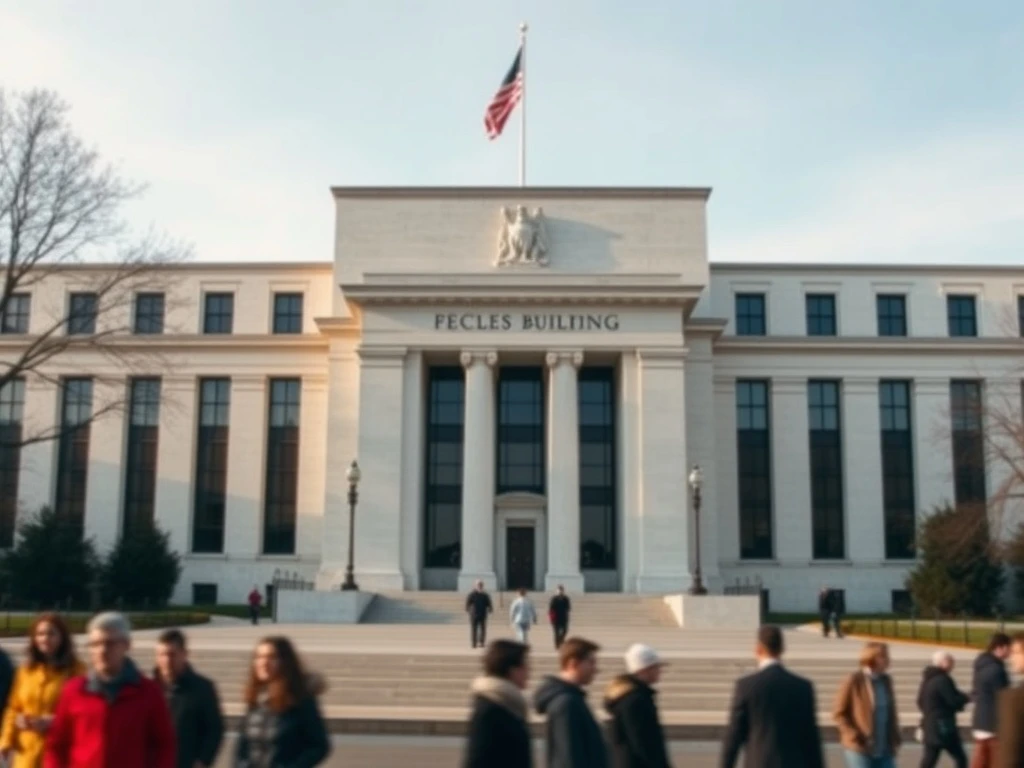
As financial markets globally brace for the Federal Reserve’s first policy decision of 2025, a pivotal forecast from BofA Securities suggests investors should prepare for continuity rather than shock. The firm’s analysis indicates the upcoming Federal Open Market Committee (FOMC) meeting will likely deliver no major surprises, maintaining a steady course for monetary policy. This projection arrives amidst a complex economic landscape where political discourse increasingly intersects with central banking communications.
BofA Securities’ FOMC Meeting Analysis: A Forecast of Stability
Bank of America’s research division, BofA Securities, has provided a detailed preview of the January 2025 FOMC gathering. The firm’s economists anticipate the committee will hold the federal funds rate steady, aligning with broad market consensus. Consequently, this expected decision reflects a period of assessment following the aggressive tightening cycle of the early 2020s. The central bank now appears focused on evaluating the lagged effects of previous hikes on inflation and growth.
Historical context underscores this cautious approach. For instance, the Fed has historically paused rate movements during periods of data ambiguity. The current environment, characterized by moderating but persistent inflation and solid labor metrics, fits this pattern. Therefore, a hold allows policymakers more time to gather conclusive evidence on the economy’s trajectory.
The Shifting Spotlight: From Policy to Political Commentary
A notable element of BofA’s forecast centers on the post-meeting press conference. The analysis suggests Fed Chair Jerome Powell may dedicate significant attention to political matters. This potential shift represents a nuanced development in central bank communication. Traditionally, these briefings focus intensely on technical policy rationale and economic data.
Several factors could drive this anticipated focus. First, the Fed often faces heightened political scrutiny during election years or periods of fiscal debate. Second, legislative discussions concerning the central bank’s mandate or structure can necessitate public commentary from its leadership. Powell’s remarks will therefore be parsed not just for economic signals, but for any insight into the institution’s relationship with other government branches.
- Neutral Interest Rate (R*): Investors will scrutinize any discussion on whether strong economic activity suggests a higher long-run equilibrium rate.
- December Unemployment Data: Powell’s interpretation of the recent dip in joblessness will be key for future labor market assessments.
- Balance Sheet Policy: While not a primary focus, questions may arise about the ongoing pace of quantitative tightening.
Expert Angle: Decoding the Data Dependence Mantra
Market strategists emphasize that “no surprise” does not equate to “no substance.” The true value for investors, according to independent analysts, will lie in the updated Summary of Economic Projections (SEP) and the nuances in the official statement’s language. A single changed word—like describing growth as “solid” versus “moderate”—can shift market pricing for the entire year. Furthermore, the perceived correlation between robust economic activity and a rising neutral rate forms a critical undercurrent. If policymakers believe the economy can sustain higher rates without slowing, it alters the long-term path for borrowing costs across mortgages, business loans, and government debt.
Market Implications and Historical Precedents
The widespread expectation for a rate freeze has already been largely absorbed by financial markets. Treasury yields and futures pricing currently reflect a high probability of unchanged policy. However, volatility often stems from deviations in the “dot plot” or in Powell’s tone during the Q&A session. A calm meeting, as BofA predicts, typically supports stability in equity and bond markets in the immediate aftermath. It allows other fundamental drivers, like corporate earnings and geopolitical events, to take center stage.
For comparison, the table below outlines key recent FOMC decisions and their immediate market impact:
| Meeting Date | Policy Action | Primary Market Reaction (Next Day) |
|---|---|---|
| December 2024 | Rate Hold | S&P 500 +0.8%, 10-Yr Yield -5 bps |
| November 2024 | Rate Hold | S&P 500 +0.5%, 10-Yr Yield Stable |
| September 2024 | Final Rate Hike (+25 bps) | S&P 500 -1.2%, 10-Yr Yield +12 bps |
This pattern suggests that anticipated holds generally foster a modest risk-on environment. Conversely, unexpected guidance about the future can trigger sharper moves. The BofA report effectively advises clients that the risk of a hawkish surprise is currently low, allowing for more predictable portfolio positioning.
The Road Ahead: Monitoring the Fed’s Dual Mandate
Looking beyond January, the FOMC’s path remains contingent on incoming data. The two pillars of its mandate—maximum employment and price stability—will dictate all future moves. The decline in the December unemployment rate, which BofA highlighted, confirms strength in the labor market. Simultaneously, the Personal Consumption Expenditures (PCE) index, the Fed’s preferred inflation gauge, must continue its downward trend toward the 2% target.
Upcoming reports on consumer spending, wage growth, and housing will provide the necessary fodder for the March meeting. Consequently, while this week may be quiet, the following weeks of data releases will be exceptionally loud. Investors should therefore use a calm meeting to reassess their outlooks based on fresh economic indicators, not just central bank commentary.
Conclusion
In summary, BofA Securities provides a clear forecast for a steady FOMC meeting with no major policy shifts expected. The focus will likely pivot toward Chair Powell’s commentary on the political landscape and his interpretation of recent labor market strength. For investors and analysts, this meeting represents a crucial checkpoint in the Fed’s patient, data-dependent approach. Understanding the nuances in communication and the underlying assessment of the neutral interest rate will be far more valuable than anticipating any immediate change in the federal funds rate. The calm predicted by BofA offers a moment for the market to consolidate before navigating the next set of economic data that will ultimately shape monetary policy in 2025.
FAQs
Q1: What is the main prediction from BofA Securities for the January 2025 FOMC meeting?
BofA Securities expects the Federal Open Market Committee to maintain current interest rates and deliver no major policy surprises, focusing instead on communication regarding economic data and political context.
Q2: Why might Fed Chair Powell’s press conference focus on political matters?
The Fed often addresses its relationship with fiscal authorities and its statutory mandate during periods of political transition, legislative debate, or public scrutiny, especially in a complex election-year environment.
Q3: What is the “neutral interest rate” and why is it important?
The neutral interest rate (R*) is the theoretical federal funds rate that neither stimulates nor restrains the economy over the long term. If the Fed believes it has risen, it implies policy may need to stay restrictive for longer to control inflation.
Q4: How do markets typically react to a “no surprise” FOMC meeting?
Financial markets usually experience reduced volatility and modest positive moves in risk assets like stocks when the outcome matches expectations, as it reduces uncertainty and allows other fundamentals to drive prices.
Q5: What key economic data will the Fed be watching after this meeting?
The Federal Reserve will closely monitor subsequent reports on inflation (PCE and CPI), employment and wage growth, consumer spending, and housing market activity to guide its decisions at future meetings, starting with March 2025.
This article was produced with AI assistance and reviewed by our editorial team for accuracy and quality.