Bithumb USDT Withdrawal Suspension: Critical Tron Network Maintenance Disrupts Trading
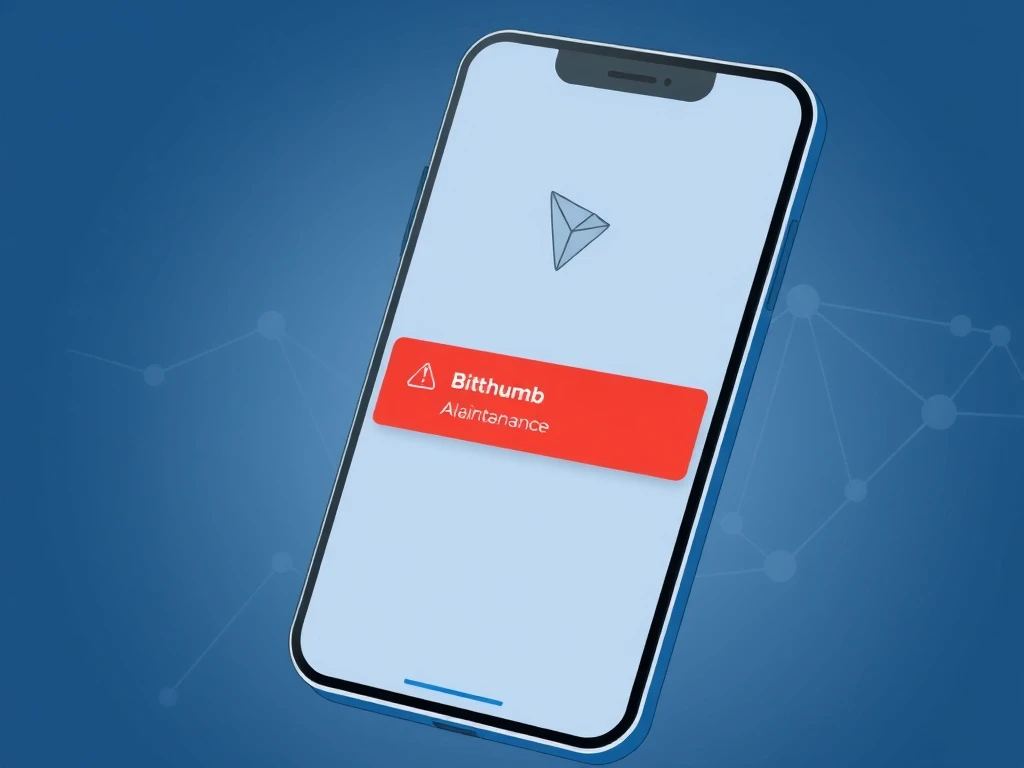
In a significant operational update affecting thousands of traders, the prominent South Korean cryptocurrency exchange Bithumb has temporarily suspended all Tether (USDT) withdrawals via the Tron (TRC-20) network. This decisive action, effective from 3:55 a.m. UTC on January 19, stems from essential wallet system maintenance. Consequently, this move highlights the ongoing technical demands within the digital asset ecosystem.
Bithumb USDT Withdrawal Suspension: The Immediate Announcement
Bithumb officially communicated the suspension through its website and user notification systems. The exchange cited “wallet system maintenance” as the sole reason for the pause. Importantly, the announcement specified that only USDT withdrawals on the Tron network are affected. Deposits and withdrawals for USDT on other blockchain networks, such as Ethereum (ERC-20), continue to operate normally. Furthermore, trading of USDT and all other digital assets on the Bithumb platform remains fully functional.
Also read: Bitcoin Capital Rotation Triggers Critical Signal, Points to $41,400 Price Floor
This targeted maintenance approach minimizes broader market disruption. The exchange has not provided a specific timeline for resuming services. However, Bithumb typically completes such technical upgrades within 24 to 48 hours. Historical data from similar maintenance events on other major exchanges supports this estimated timeframe.
Understanding the Tron Network and USDT’s Role
The Tron network has become a popular choice for USDT transactions due to its low fees and high throughput. Tether, the company behind USDT, issues the stablecoin on multiple blockchains. The TRC-20 version on Tron now represents a substantial portion of all USDT in circulation. Data from Tether’s official transparency report consistently shows significant volume on the TRC-20 standard.
Exchanges like Bithumb must maintain secure, synchronized wallet software for each supported network. Regular maintenance is a standard security practice. It often involves updating node software, applying security patches, or optimizing transaction processing systems. For users, the TRC-20 network offers distinct advantages:
- Lower Transaction Fees: Fees are typically a fraction of a cent compared to higher costs on networks like Ethereum.
- Faster Settlement: Transactions often confirm within seconds, providing quicker fund movement.
- High Scalability: The Tron network handles a high volume of transactions per second efficiently.
Expert Insight on Exchange Infrastructure Management
Industry analysts view such maintenance pauses as a sign of proactive operational management. “Scheduled maintenance, while inconvenient, is a critical component of exchange security and stability,” notes a blockchain infrastructure specialist from a Seoul-based fintech research firm. “It demonstrates an exchange’s commitment to safeguarding user assets and ensuring the underlying technology remains strong. The alternative—operating on outdated or vulnerable systems—poses a far greater risk to the ecosystem.” This perspective aligns with global financial regulations increasingly applied to digital asset service providers.
Impact on South Korean Traders and the Crypto Market
Bithumb is one of South Korea’s largest cryptocurrency exchanges, often referred to as part of the “Big Four” alongside Upbit, Coinone, and Korbit. Any service interruption on such a platform immediately affects a large user base. The suspension primarily impacts traders and investors who rely on the Tron network for fast, low-cost transfers of USDT to other wallets or exchanges.
Market data indicates that trading volumes for USDT/KRW pairs on Bithumb remained stable following the announcement. This stability suggests that users simply shifted to alternative withdrawal methods or temporarily held assets. The incident underscores the importance of multi-chain support for stablecoins. It also highlights a key user consideration: always having a confirmed, functional alternative for moving assets.
The following table compares common USDT withdrawal networks available on major exchanges:
| Network | Standard | Typical Fee | Speed | Common Use Case |
|---|---|---|---|---|
| Tron | TRC-20 | ~$0.01 | Seconds | Low-cost, high-speed transfers |
| Ethereum | ERC-20 | $1 – $15+ | Minutes | DeFi, institutional moves |
| Solana | SPL | ~$0.001 | Seconds | Ultra-low-cost transactions |
| Avalanche | ARC-20 | ~$0.05 | Seconds | Cross-chain applications |
Regulatory Context and Security Protocols in South Korea
South Korea enforces strict regulations on cryptocurrency exchanges through the Financial Services Commission (FSC) and the Financial Intelligence Unit (FIU). These rules mandate rigorous security standards, real-name banking partnerships, and comprehensive anti-money laundering (AML) procedures. Scheduled maintenance on critical systems like wallet infrastructure is often part of compliance with these security mandates.
Exchanges must ensure their systems can accurately track and report all transactions as required by law. Therefore, maintenance is not merely technical but also a regulatory necessity. The transparent communication from Bithumb about the suspension aligns with best practices for user protection and regulatory transparency. Other global exchanges have followed similar protocols during system upgrades.
Conclusion
The temporary Bithumb USDT withdrawal suspension on the Tron network represents a routine yet essential operation in the complex world of cryptocurrency exchange management. This event underscores the critical balance exchanges must maintain between uninterrupted service, reliable security, and regulatory compliance. For users, it serves as a reminder of the evolving infrastructure supporting digital assets and the importance of understanding multiple transaction pathways. As the industry matures, such transparent maintenance protocols will likely become even more standardized, contributing to a safer and more reliable trading environment for all participants.
FAQs
Q1: When did Bithumb suspend USDT withdrawals on the Tron network?
Bithumb suspended USDT withdrawals via the Tron network effective 3:55 a.m. UTC on January 19, 2025, for wallet system maintenance.
Q2: Can I still withdraw USDT from Bithumb using other networks?
Yes. The suspension applies only to the Tron (TRC-20) network. Withdrawals for USDT on other supported networks, such as Ethereum (ERC-20), remain operational according to the exchange’s announcement.
Q3: How long will the USDT withdrawal suspension last?
Bithumb has not announced a specific end time. Based on historical patterns for similar exchange maintenance, service typically resumes within 24 to 48 hours. Users should monitor official Bithumb channels for the restoration notice.
Q4: Does this affect my ability to trade USDT on Bithumb?
No. The suspension only affects withdrawals of USDT via one specific network. Trading of all pairs, including USDT, continues normally on the exchange platform.
Q5: Why do exchanges like Bithumb need to perform this kind of maintenance?
Wallet system maintenance is a standard security and operational procedure. It allows exchanges to update software, apply critical security patches, optimize performance, and ensure compliance with regulatory reporting requirements, all of which protect user funds and data.

This article was produced with AI assistance and reviewed by our editorial team for accuracy and quality.