
BitGo IPO Shatters Expectations with $18 Share Price, Validating Crypto Custody Market
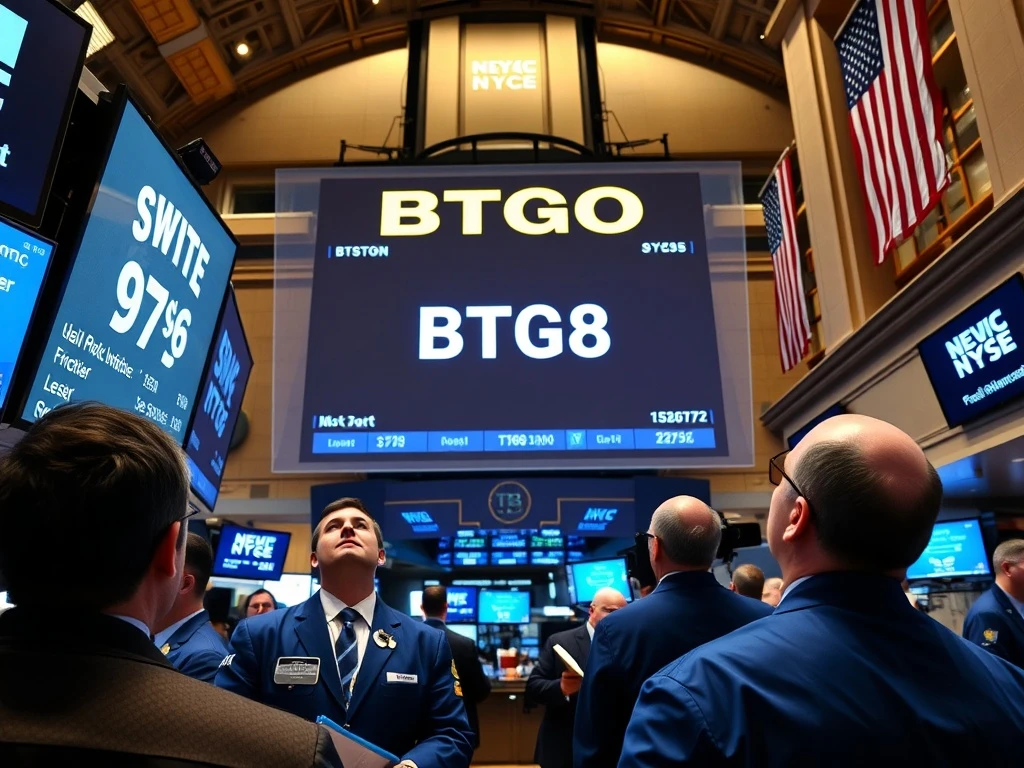
BitGo IPO launch on NYSE with BTGO ticker symbol at $18 per share valuation

In a landmark move for the digital asset industry, cryptocurrency custody leader BitGo has officially set its initial public offering price at $18 per share, establishing a fully diluted valuation of $2 billion ahead of its highly anticipated New York Stock Exchange debut on January 21, 2025. This pivotal development, first reported by CoinDesk, represents the most significant traditional market entry by a pure-play crypto security company to date and signals growing institutional confidence in blockchain infrastructure.

BitGo IPO Price Analysis and Market Context

The $18 per share pricing positions BitGo’s public offering within the upper range of analyst expectations. Consequently, this valuation reflects substantial investor appetite for regulated cryptocurrency infrastructure. Moreover, the $2 billion fully diluted valuation represents a significant milestone for the digital asset custody sector. Industry observers note that this pricing demonstrates maturation beyond speculative crypto trading platforms toward essential financial infrastructure.

Historically, cryptocurrency companies have faced challenging paths to public markets. For instance, Coinbase’s 2021 direct listing established an important precedent. However, BitGo’s traditional IPO through the NYSE represents a different approach entirely. The company will trade under the ticker symbol BTGO, joining a select group of blockchain-focused firms on major traditional exchanges.

Crypto Custody Evolution and BitGo’s Trajectory

Founded in 2013, BitGo pioneered the multi-signature security wallet for Bitcoin. Subsequently, the company expanded into institutional-grade custody solutions. Today, BitGo serves over 1500 institutional clients globally. These clients include exchanges, hedge funds, and family offices. The company’s services now encompass:

  • Regulated Custody: Licensed across multiple jurisdictions including New York, South Dakota, and Germany
  • Prime Services: Trading, lending, and borrowing for institutional clients
  • Wallet Infrastructure: Secure storage supporting over 700 digital assets
  • DeFi Access: Institutional gateway to decentralized finance protocols

This comprehensive service portfolio differentiates BitGo from competitors. Furthermore, the company reported securing over $64 billion in assets under custody as of Q3 2024. This represents a 40% year-over-year increase despite market volatility.

Expert Perspectives on the Valuation Milestone

Financial analysts specializing in fintech IPOs have noted several key factors supporting BitGo’s valuation. First, recurring revenue from custody fees provides stability uncommon in crypto markets. Second, regulatory compliance investments position the company favorably amid tightening global standards. Third, institutional adoption of digital assets continues accelerating despite price fluctuations.

“BitGo’s IPO pricing reflects institutional recognition that custody represents critical blockchain infrastructure,” observed financial technology analyst Michael Chen. “Unlike trading platforms vulnerable to market cycles, custody services generate consistent revenue based on assets secured rather than transaction volume.”

The following table compares recent digital asset company public offerings:

CompanyYearValuationExchangeBusiness Focus
BitGo2025$2BNYSECustody & Security
Coinbase2021$86BNASDAQTrading Exchange
Bakkt2021$2.1BNYSETrading & Custody
Galaxy Digital2018$1.2BTSXAsset Management

Regulatory Landscape and Institutional Adoption

BitGo’s public market debut coincides with significant regulatory developments. Specifically, the SEC’s approval of spot Bitcoin ETFs in early 2024 created unprecedented institutional demand for qualified custodians. Consequently, regulated custody providers have become essential infrastructure. Additionally, proposed legislation like the Digital Asset Market Structure bill provides clearer operational frameworks.

The company’s multiple regulatory licenses provide competitive advantages. For example, the New York Department of Financial Services BitLicense remains among the most stringent digital asset approvals. Similarly, South Dakota trust company charter enables nationwide custody services. European operations benefit from BaFin registration in Germany.

Institutional adoption metrics further support the IPO timing. A 2024 Fidelity Digital Assets survey revealed that 82% of institutional investors find digital assets appealing. Moreover, 74% plan to purchase digital assets in the future. These investors overwhelmingly prefer regulated custodians over self-custody solutions.

Market Impact and Competitive Positioning

BitGo’s successful pricing will likely influence several market segments. First, private cryptocurrency companies may accelerate IPO plans. Second, traditional financial institutions might increase digital asset infrastructure investments. Third, regulatory discussions could reference BitGo as a compliance model.

The custody competitive landscape includes several key players:

  • Coinbase Custody: Integrated with trading platform, $100+ billion AUM
  • Fidelity Digital Assets: Traditional finance entry, retirement account focus
  • Anchorage Digital: Bank-chartered, $40+ billion AUM
  • Fireblocks: Technology-focused, $1+ trillion transferred

BitGo distinguishes itself through several strategic advantages. Primarily, the company developed proprietary multi-signature technology from inception. Additionally, BitGo created the first insured custody solution for digital assets. The company also pioneered cold storage with geographically distributed private keys.

Financial Performance and Growth Projections

While BitGo remains privately held, industry analysts estimate annual revenue between $300-400 million. This revenue primarily derives from custody fees typically ranging from 0.5% to 1.5% of assets under custody. The company’s expansion into staking services provides additional yield-based revenue streams.

Growth projections appear robust based on several factors. Digital asset ownership continues expanding beyond Bitcoin and Ethereum to include tokenized real-world assets. Furthermore, traditional finance institutions increasingly require custody partners for client digital asset offerings. Finally, sovereign wealth funds and central banks are exploring digital asset allocations requiring secure storage solutions.

Conclusion

The BitGo IPO at $18 per share represents a watershed moment for cryptocurrency infrastructure validation. This $2 billion valuation demonstrates institutional recognition that digital asset security forms essential financial plumbing rather than speculative venture. As BitGo begins trading as BTGO on the NYSE, market participants will watch closely for performance indicators. Ultimately, this successful public offering could accelerate institutional cryptocurrency adoption while establishing new benchmarks for blockchain company valuations. The BitGo IPO price achievement validates over a decade of custody innovation while positioning the company for its next growth phase as a publicly-traded industry leader.

FAQs

Q1: What is BitGo’s IPO price and valuation?
BitGo has set its initial public offering price at $18 per share, resulting in a fully diluted valuation of approximately $2 billion.

Q2: When will BitGo begin trading and on which exchange?
BitGo is scheduled to begin trading on the New York Stock Exchange on January 21, 2025, under the ticker symbol BTGO.

Q3: What services does BitGo provide?
BitGo provides institutional-grade cryptocurrency custody, wallet infrastructure, prime brokerage services, and regulated digital asset storage supporting over 700 tokens.

Q4: How does BitGo’s valuation compare to other crypto companies?
BitGo’s $2 billion valuation positions it as a significant but specialized player, compared to Coinbase’s $86 billion 2021 debut valuation, reflecting its focus on custody rather than trading.

Q5: Why is BitGo’s IPO significant for the cryptocurrency industry?
BitGo’s successful public offering validates the cryptocurrency custody business model, demonstrates institutional confidence in blockchain infrastructure, and provides a regulated pathway for traditional investors to access digital asset security services.