Bitcoin Mining Stocks Skyrocket as Winter Storm Cripples Network Hashrate, Revealing Market Resilience
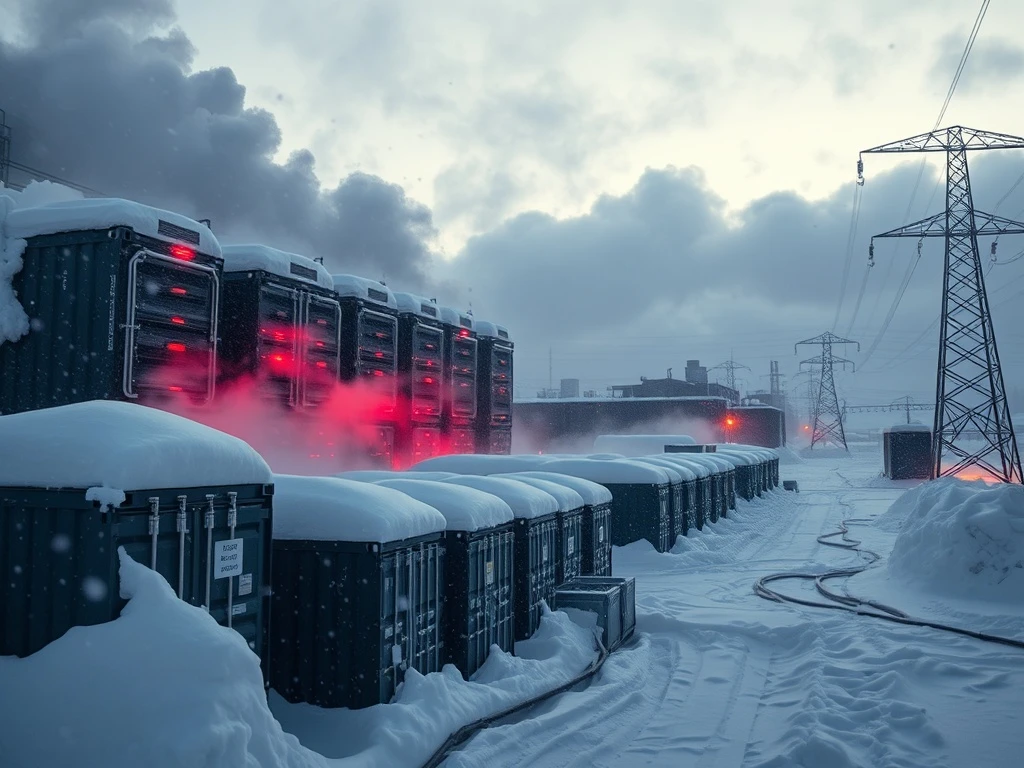
Major Bitcoin mining stocks experienced dramatic gains this week as a severe winter storm across the United States forced widespread operational shutdowns, creating unprecedented profitability conditions for companies maintaining operations. The January 2025 weather event triggered a chain reaction across cryptocurrency markets, revealing critical insights about infrastructure resilience and market dynamics during network stress events.
Winter Storm Triggers Bitcoin Hashrate Collapse
The Bitcoin network’s computational power plummeted to a seven-month low of 663 exahashes per second on Sunday, representing a staggering 40% decline within just 48 hours. This dramatic reduction occurred as extreme cold temperatures swept across mining-heavy regions including Texas, New York, and the Pacific Northwest. Consequently, the network difficulty adjustment mechanism temporarily created significantly more favorable conditions for remaining operational miners.
Also read: Zero-Knowledge Proofs Guide: Hoskinson's Free 337-Page GitHub Release Empowers Developers
Data from Coinwarz shows the hashrate partially recovered to 814 EH/s by Wednesday. However, it remained substantially below the pre-storm level of approximately 1.1 zettahashes per second. This temporary network weakness created a unique opportunity for well-prepared mining operations. Meanwhile, the sudden change highlighted the geographical concentration of Bitcoin mining infrastructure in weather-vulnerable areas.
Mining Stock Performance Analysis
Publicly traded mining companies posted remarkable gains following the hashrate decline. According to Barchart market data, TeraWulf shares rose approximately 11% while Iren Limited gained roughly 14%. Additionally, Cipher Mining climbed around 13% during the same 24-hour period. These movements significantly outperformed broader cryptocurrency market indicators.
Also read: Crypto Liquidations Surge Past $450M as Options Expiry and Oil Shock Fuel Market Panic
The table below illustrates key stock movements:
| Company | Stock Gain | Primary Mining Region |
|---|---|---|
| TeraWulf | ~11% | New York, Pennsylvania |
| Iren Limited | ~14% | Texas, International |
| Cipher Mining | ~13% | Texas, Ohio |
This stock performance divergence demonstrates how temporary network disruptions can create substantial advantages for companies with robust infrastructure. Furthermore, investor recognition of these operational advantages drove immediate market reactions.
Profitability Metrics and Hash Price Impact
The Bitcoin hash price index, measuring revenue per terahash of mining power, increased from $0.038 to $0.040 per terahash per day during the storm period. This 5.3% profitability boost directly resulted from reduced network competition. Consequently, miners maintaining operations earned more Bitcoin for the same computational effort.
Key profitability factors during the event included:
- Reduced network difficulty competition from offline miners
- Stable Bitcoin price during the weather event
- Lower energy costs in some regions due to demand response programs
- Increased block rewards for operational miners
Operational Challenges and Infrastructure Strain
Julio Moreno, head of research at CryptoQuant, documented significant production declines across major mining operations. CleanSpark’s daily Bitcoin production decreased from 22 BTC to 12 BTC while Riot Platforms reduced from 16 BTC to 3 BTC. Similarly, Marathon Digital Holdings experienced a dramatic drop from 45 BTC to 7 BTC daily. Iren Limited also reduced from 18 BTC to 6 BTC mined daily.
These reductions primarily resulted from voluntary curtailment to support regional power grids during peak demand. Many mining operations participate in demand response programs that compensate them for reducing consumption during grid stress. Therefore, the financial impact included both reduced mining revenue and demand response payments.
Industry Resilience and Preparedness Lessons
The Bitcoin mining ecosystem organization Braiins emphasized how “winter punishes poor preparation and rushed decisions.” Their analysis noted that most equipment damage occurs during restart procedures in freezing conditions. Additionally, facilities lacking proper airflow and temperature control faced particular challenges.
This weather event revealed several critical industry insights:
- Geographic diversification reduces weather-related operational risks
- Infrastructure hardening against extreme temperatures prevents equipment damage
- Demand response participation provides alternative revenue during curtailment
- Capital reserves enable operations to withstand temporary shutdowns
The storm’s impact extended beyond immediate profitability changes. It also demonstrated how Bitcoin mining interacts with traditional energy infrastructure during crisis events. This interaction increasingly influences regulatory discussions about cryptocurrency mining’s role in grid stability.
Market Implications and Future Considerations
The temporary hashrate decline created a natural experiment in Bitcoin network economics. It validated the network’s ability to maintain security despite significant computational power reductions. Additionally, it demonstrated how market mechanisms automatically adjust to maintain blockchain operations during infrastructure stress.
Looking forward, several developments warrant monitoring:
- Increased infrastructure investment in weather-resistant mining facilities
- Regulatory attention to mining’s grid interactions during extreme weather
- Investor preference shifts toward companies demonstrating operational resilience
- Technology development for cold-weather mining optimization
The event also highlighted Bitcoin mining’s evolving relationship with traditional finance. Public mining companies now represent a significant portion of network hashrate. Therefore, their operational decisions directly impact network security and performance metrics.
Conclusion
The winter storm’s impact on Bitcoin mining stocks revealed fundamental truths about cryptocurrency infrastructure resilience and market dynamics. Well-capitalized mining operations with robust infrastructure gained substantial advantages during the network stress event. Meanwhile, the temporary hashrate decline demonstrated Bitcoin’s inherent adaptability to changing conditions. This event ultimately provided valuable insights about operational preparedness, market efficiency, and the growing interconnection between cryptocurrency mining and traditional infrastructure systems. The Bitcoin mining industry continues evolving toward greater resilience and integration with broader energy and financial ecosystems.
FAQs
Q1: How does a lower Bitcoin hashrate increase mining profitability?
A lower hashrate reduces competition for block rewards, increasing the probability that operational miners will successfully mine blocks and earn Bitcoin rewards. This effectively increases revenue per unit of computational power deployed.
Q2: Why did mining companies voluntarily reduce operations during the storm?
Many mining operations participate in demand response programs that compensate them for reducing electricity consumption during grid stress. These payments can offset lost mining revenue while supporting community infrastructure stability.
Q3: How quickly can Bitcoin mining operations restart after weather-related shutdowns?
Restart timelines vary by facility design and severity of temperature exposure. Properly designed facilities can restart within hours, while operations experiencing equipment damage from freezing may require days or weeks for repairs.
Q4: Does geographic concentration of mining in certain US regions create systemic risk?
Yes, concentration in weather-vulnerable regions creates exposure to correlated shutdown events. The industry is gradually diversifying geographically to mitigate this risk through international expansion and distributed operations.
Q5: How do mining stock movements correlate with Bitcoin price during such events?
Mining stocks often demonstrate higher volatility than Bitcoin itself during network events because they reflect both cryptocurrency price movements and company-specific operational factors like hashrate changes and infrastructure resilience.

This article was produced with AI assistance and reviewed by our editorial team for accuracy and quality.