
Bitcoin Miners Confront Massive Ice Storm Threat, Deploying Critical Grid Defense Strategy
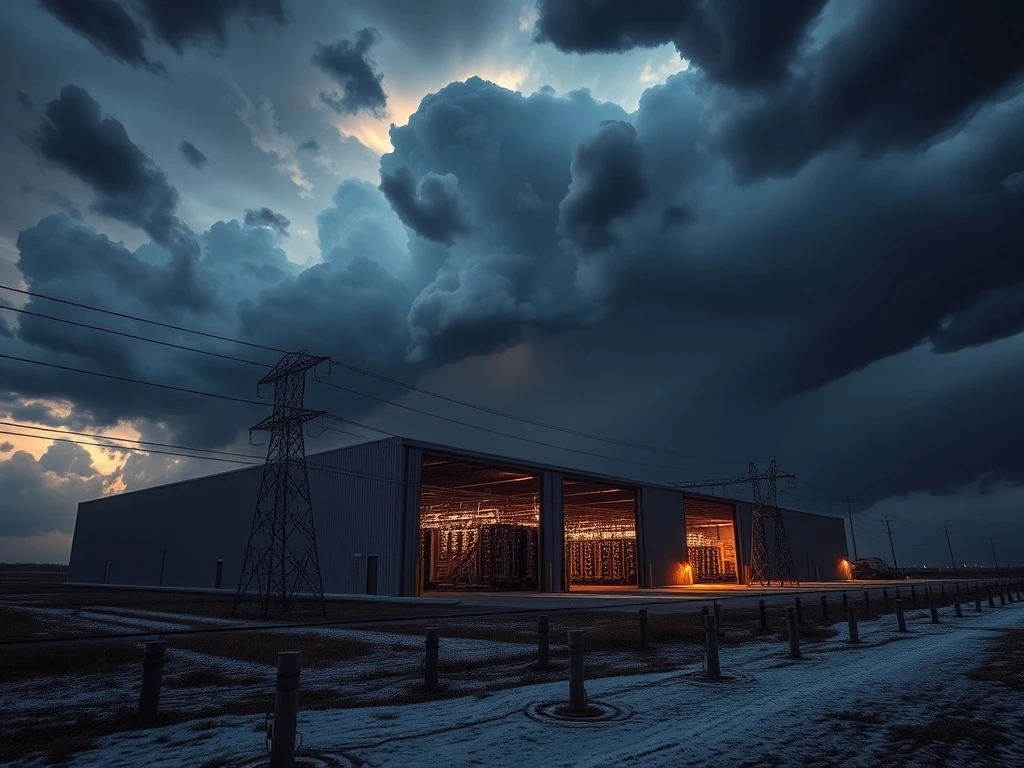
Bitcoin miners prepare for an ice storm to protect the Texas power grid from outages.

As a massive winter storm barrels towards the southern United States, threatening tens of millions with ice and power outages, the nation’s Bitcoin mining industry is activating a critical defense protocol. Miners across Texas and other key states are preparing to voluntarily power down their energy-intensive operations, a strategic move that provides essential stability for vulnerable electrical grids. This proactive response, developed from hard-won experience during previous weather crises, highlights the evolving and complex relationship between cryptocurrency infrastructure and national energy resilience.

Bitcoin Miners Mobilize as Winter Storm Looms

Forecasters at AccuWeather warn of a severe winter storm system stretching over 1,800 miles, from west Texas to the mid-Atlantic coast. Consequently, this event poses a significant threat to power infrastructure across more than a dozen states. In response, Bitcoin mining companies with operations in the storm’s path are implementing contingency plans. These plans specifically involve curtailing their substantial electricity consumption to prevent grid overload and potential blackouts. This practice, known as demand response, transforms large-scale mining facilities into a flexible, on-call resource for grid operators.

Historically, this strategy proved vital during the major Texas winter storm of 2022. During that crisis, miners across the state voluntarily shut down, freeing up gigawatts of power for residential heating and critical services. Daniel Batten, a noted Bitcoin ESG researcher, emphasizes the growing importance of this role. “With extreme weather events becoming more common,” Batten explains, “the need for Bitcoin mining load balancing, particularly as more solar and wind go onto grids, is only going to increase.”

The Mechanics of Mining and Grid Stabilization

Bitcoin mining’s unique characteristic as an interruptible load makes it uniquely valuable for grid management. Unlike hospitals or factories, mining operations can power down almost instantly with minimal operational disruption, aside from forgone Bitcoin rewards. This capability allows grid operators to manage sudden supply shortages effectively.

  • Load Balancing: Miners act as a “shock absorber” for the grid, ramping up to consume surplus renewable energy and shutting down during peak demand or generation shortfalls.
  • Financial Impact: A 2024 report from the Digital Assets Research Institute suggested Bitcoin mining’s demand-response capability saved Texas an estimated $18 billion by reducing the need for additional natural gas “peaker” plants.
  • Grid Classification: In Texas, the Electric Reliability Council of Texas (ERCOT) formally classifies large Bitcoin miners as “large flexible loads,” integrating them into official grid management protocols.

Industry Preparedness and Operational Resilience

While many miners prepare to curtail operations, companies like Bitdeer, which operates over 293,000 mining rigs globally including in Texas, express confidence in their physical preparedness. A company spokesperson noted that standard winterization procedures, like insulating pipes, are already in place. “Storms typically do not directly impact our operations,” the spokesperson stated, highlighting proactive monitoring by site teams. Crucially, the spokesperson affirmed, “Bitdeer stands ready to fully support the grid should supply constraints occur,” underscoring the industry’s commitment to its grid-support role.

The United States: A Global Mining Powerhouse

The American response to this storm carries global implications for the Bitcoin network. The United States now controls the largest share of the global Bitcoin hashrate—the total computational power securing the network. Estimates from Hashrate Index place the U.S. share at nearly 38%, followed distantly by Russia and China. This concentration of mining power in storm-prone regions like Texas, Georgia, and New York means weather events can have measurable, though temporary, impacts on network security.

The federal Energy Information Administration identified over 137 large-scale crypto-mining facilities in the U.S. in 2024. Major publicly traded companies like Marathon Digital Holdings and Riot Platforms anchor this industry. Their scale allows for coordinated, impactful responses to grid emergencies, transforming potential vulnerabilities into a collective strength for energy infrastructure.

Beyond the Storm: The Future of Energy and Mining

The recurring pattern of miners responding to weather crises is shaping energy policy and business models. Mining operations are increasingly viewed not just as energy consumers, but as partners in building a more resilient and renewable-powered grid. Their ability to monetize otherwise wasted or stranded energy, and to provide rapid demand response, creates a compelling economic case for their location near renewable projects and within major grid systems.

Conclusion

The impending ice storm presents a real-time test of the symbiotic relationship between Bitcoin miners and the modern power grid. By preparing to curtail operations, miners demonstrate a critical, value-adding function that extends far beyond cryptocurrency creation. Their actions provide direct support to grid stability, help prevent widespread outages, and validate an emerging model where intensive computing supports, rather than strains, energy infrastructure. As severe weather events increase in frequency, the role of Bitcoin miners as a flexible grid asset is likely to become more defined, more valuable, and more integrated into national energy security planning.

FAQs

Q1: Why do Bitcoin miners power down during storms?
Bitcoin miners power down to reduce strain on the electrical grid during extreme weather. This voluntary curtailment, known as demand response, prevents overloads and blackouts, freeing up essential power for heating, hospitals, and other critical needs.

Q2: How does Bitcoin mining actually help stabilize the power grid?
Mining operations act as a “flexible load.” They can consume excess power when generation is high (e.g., sunny or windy periods) and shut down almost instantly when grid demand spikes or supply drops, providing crucial balance and reducing the need for emergency fossil-fuel plants.

Q3: Did Bitcoin miners help during the 2022 Texas winter storm?
Yes. During Winter Storm Uri in 2022, Bitcoin miners across Texas voluntarily curtailed their operations, freeing up an estimated 1-2 gigawatts of power for the strained grid, which helped prevent more severe rolling blackouts.

Q4: Does shutting down hurt the Bitcoin miners financially?
Yes, temporarily. When miners power down, they stop earning Bitcoin block rewards. However, many participate in grid programs that offer financial compensation for demand response, and the practice protects their long-term operational viability by supporting overall grid health.

Q5: What percentage of global Bitcoin mining happens in the United States?
The United States is the global leader in Bitcoin mining, controlling an estimated 38% of the worldwide hashrate. Major mining hubs are located in Texas, Georgia, and New York, making U.S. grid stability directly relevant to the security of the Bitcoin network.

Related Crypto News