Crypto Clarity Act Gains Significant Backing as Armstrong Shifts Stance, Pressuring Congress
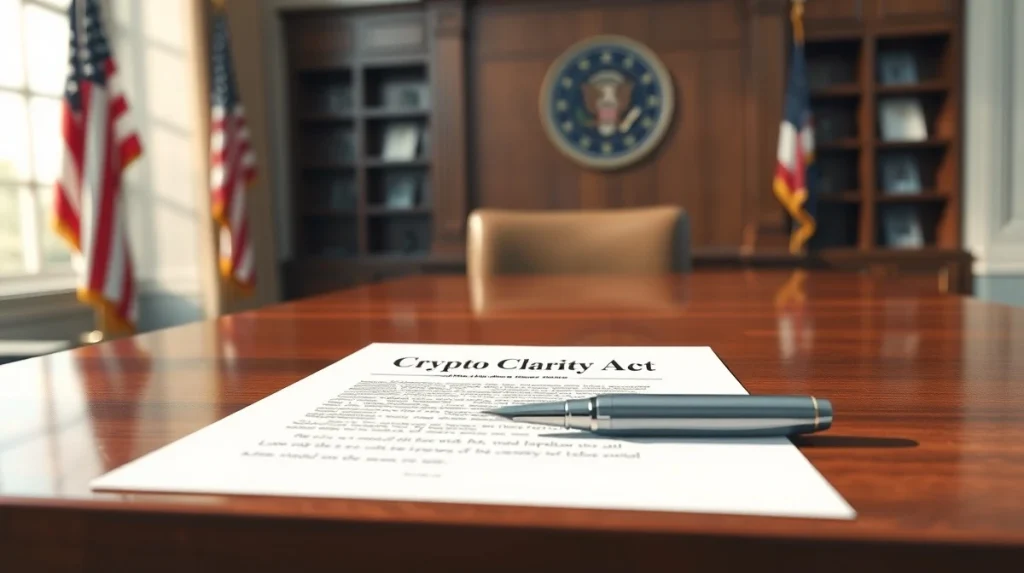
WASHINGTON, D.C. — In a significant move that alters the political dynamics for digital assets, Coinbase CEO Brian Armstrong has publicly endorsed the Crypto Clarity Act. His support, confirmed in a statement on April 10, 2026, follows earlier reservations and aligns with influential investor Scott Bessent’s urgent call for congressional action. This shift signals a potential turning point in a long-running and contentious debate over how the United States should oversee cryptocurrency markets.
Armstrong’s Endorsement Marks a Strategic Shift
Brian Armstrong’s backing of the Clarity Act represents a clear strategic pivot. For months, Coinbase and other industry leaders had expressed concerns about specific provisions within earlier drafts of the legislation. Armstrong’s statement, however, framed the current version as a necessary compromise. “After reviewing the latest text and engaging with lawmakers, we believe this bill provides the clear rules of the road our industry needs to innovate responsibly in the United States,” the statement read. According to sources familiar with the discussions, this change in position was influenced by sustained regulatory pressure on crypto firms and a desire to break the legislative logjam before the end of the current congressional session.
Also read: XRP Price Prediction: Analyst Eyes $2 Target Before Potential Retest of Gaussian Channel Support
Data from Coinbase’s own transparency reports shows the company has engaged in over 300 meetings with U.S. policymakers since 2023. This endorsement is the most visible outcome of that effort. Industry watchers note that Armstrong’s move could pull other hesitant executives and trade groups toward supporting the bill. The implication is a more unified industry front, which historically increases a bill’s chances of moving through committee.
Mounting Pressure on a Divided Congress
The Clarity Act, formally known as the Digital Asset Market Structure and Investor Protection Act, aims to resolve the central question plaguing U.S. crypto policy: which assets are commodities and which are securities? The bill proposes a new process for the Securities and Exchange Commission (SEC) and the Commodity Futures Trading Commission (CFTC) to make these determinations. Scott Bessent, founder of Key Square Capital Management and a notable figure in financial circles, has been vocal in urging Congress to pass the legislation. In a recent interview, Bessent argued that “the cost of inaction is now measured in lost economic leadership and capital flight.”
Also read: Bitcoin Surges Past $72K, Setting Stage for Potential $80M Short Squeeze
Pressure is coming from multiple directions:
- Industry Fatigue: Years of enforcement actions and regulatory uncertainty have drained resources.
- International Competition: Clearer regimes in the EU, UK, and Singapore are attracting talent and investment.
- Election Year Politics: With the 2026 midterms approaching, both parties are seeking policy wins they can present to voters.
Despite this, the path forward remains steep. The bill must manage deep partisan divides and jurisdictional battles between congressional committees and the two financial agencies. What this means for investors is continued volatility tied to regulatory headlines, but with a newly strengthened prospect for a legislative framework.
The Long Road to Clarity
The current push did not emerge in a vacuum. It follows nearly a decade of regulatory false starts and escalating tensions. A brief timeline highlights key moments:
| Date | Event | Impact |
|---|---|---|
| 2020-2023 | SEC launches numerous enforcement actions against crypto firms, labeling many tokens as unregistered securities. | Created a climate of legal uncertainty and industry pushback. |
| 2024 | First draft of the Clarity Act introduced but fails to gain committee vote amid industry objections. | Revealed internal industry divisions and lack of political consensus. |
| Early 2026 | Revised bill text circulated, incorporating feedback from both sides of the aisle and major market participants. | Set the stage for Armstrong’s endorsement and renewed lobbying push. |
This suggests that the revised legislation represents a hard-fought compromise. Analysts point out that the bill’s success likely hinges on its ability to attract moderate support from both Democrats, concerned with consumer protection, and Republicans, focused on innovation and market growth.
What the Clarity Act Actually Proposes
At its core, the Clarity Act seeks to draw functional lines in a market that has defied easy categorization. The legislation outlines a multi-step process. First, it would require the SEC and CFTC to jointly establish objective criteria for distinguishing between digital asset securities and digital asset commodities. Second, it creates a formal certification process for trading platforms. Third, it addresses the treatment of decentralized finance (DeFi) protocols and stablecoins, two areas that have been major flashpoints.
According to a summary published by the House Financial Services Committee, the bill’s key objectives are:
- Provide legal certainty for market participants.
- Establish federal oversight while respecting state money transmitter laws.
- Enhance consumer protection standards for custodial services.
- Direct regulators to develop rules for blockchain network security and operational resilience.
This framework is less about introducing radically new ideas and more about codifying existing practices and filling glaring gaps. The hope among supporters is that this pragmatic approach will finally secure enough votes.
Potential Impacts and Unresolved Questions
If passed, the Clarity Act would trigger a multi-year implementation period. Regulatory agencies would have to write detailed rules, a process open to public comment and likely legal challenges. For crypto companies, the immediate impact would be a clearer compliance target, but also the cost and burden of adapting to new requirements. This could signal a wave of consolidation, as smaller firms struggle to meet heightened standards.
Major unresolved questions remain. The bill does not fully preempt state-level regulations, potentially leaving a patchwork of rules. Furthermore, its treatment of truly decentralized networks is still a subject of intense debate among legal scholars. Industry watchers note that the legislation may settle the biggest questions but will inevitably spawn new regulatory and legal battles at the margins.
Conclusion
Brian Armstrong’s endorsement of the Crypto Clarity Act is a consequential development in the long saga of U.S. digital asset regulation. It unites a major industry leader with influential financial voices like Scott Bessent, increasing the pressure on Congress to act. The shift reflects a calculated bet that a compromise bill, however imperfect, is superior to the current state of regulatory ambiguity and conflict. While significant political hurdles remain, this alignment marks the most promising moment in years for establishing a comprehensive federal framework for cryptocurrency. The coming months will test whether this momentum can translate into actual law.
FAQs
Q1: What is the Crypto Clarity Act?
The Crypto Clarity Act is proposed U.S. legislation designed to create a clear regulatory framework for digital assets. Its main goal is to distinguish which cryptocurrencies are securities (under SEC jurisdiction) and which are commodities (under CFTC jurisdiction).
Q2: Why did Brian Armstrong change his position on the bill?
Armstrong and Coinbase shifted from having concerns to endorsing the bill after reviewing revised text that addressed some industry issues. The change is also a strategic response to prolonged regulatory uncertainty and a desire to secure rules that allow the industry to operate within the U.S.
Q3: Who is Scott Bessent and why is his support significant?
Scott Bessent is the founder of Key Square Capital Management, a major investment firm. His public urging for Congress to pass the Clarity Act adds weight from the traditional finance sector, signaling that clear crypto rules are important to a broader set of investors beyond the tech industry.
Q4: What are the biggest obstacles to the bill becoming law?
The bill faces challenges from partisan division, complex jurisdictional disputes between congressional committees, and lingering disagreements over specific provisions related to DeFi, stablecoins, and the extent of regulatory authority.
Q5: How would the Clarity Act affect everyday cryptocurrency users?
For users, the primary effects would likely be increased consumer protections on major trading platforms and clearer definitions of what they are buying. However, it could also lead to changes in which assets are available on U.S. platforms and potentially new compliance steps for certain transactions.

This article was produced with AI assistance and reviewed by our editorial team for accuracy and quality.