Aptos Unveils Bold Deflation Plan: Gas Burns and 210M APT Lock to Reshape Tokenomics
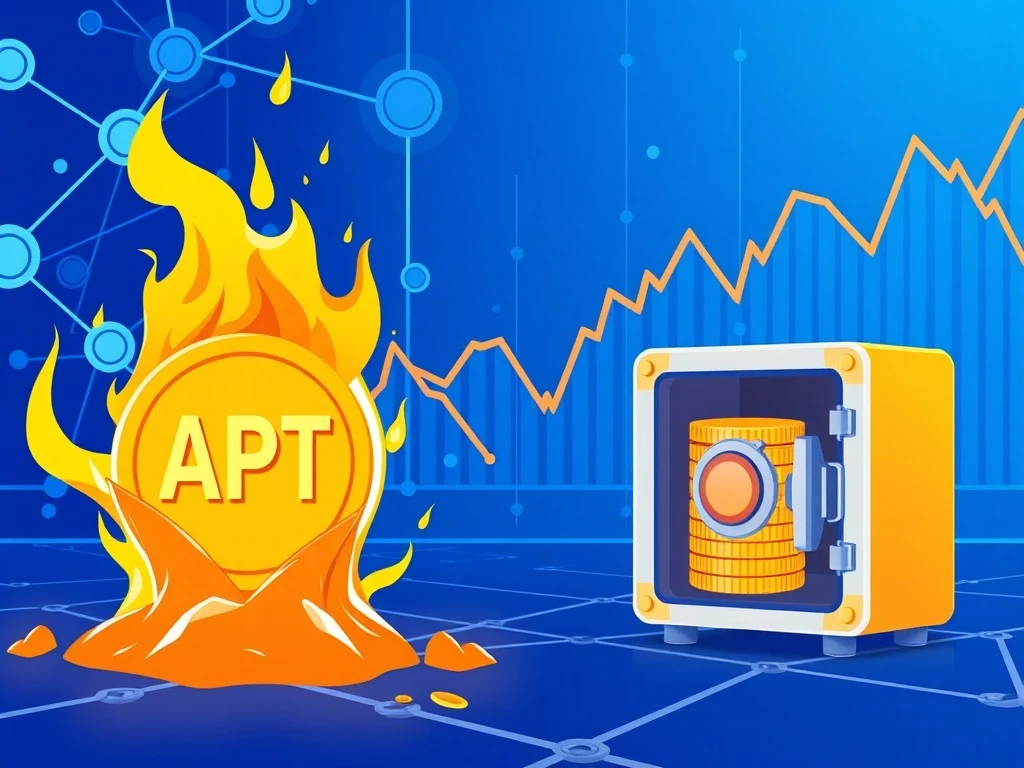
In a significant move ready to reshape its economic environment, the Aptos blockchain has announced a comprehensive and bold deflation plan. This strategic initiative, revealed on April 2, 2025, centers on burning all network gas fees and permanently locking a substantial portion of the APT supply. Consequently, the Aptos deflation plan represents one of the most substantial tokenomics overhauls in the layer-1 blockchain space this year, directly targeting circulating supply and long-term validator incentives.
Aptos Deflation Plan: Core Mechanics and Immediate Impact
The Aptos deflation plan introduces two primary mechanisms designed to apply downward pressure on the circulating supply of its native APT token. First, the network will implement a 100% burn of all gas fees paid by users for transactions and smart contract executions. To amplify this effect, the base gas fee will increase by approximately 10x. This combination ensures that value is permanently removed from the APT ecosystem with every network interaction. Second, the Aptos Foundation will permanently lock 210 million APT tokens, which represents a significant portion of the total initial supply. This action immediately reduces the liquid tokens available in the market.
Also read: Zcash Analysis: Grayscale's Bold Claim on Private Money's Future and ZEC's Value
Simultaneously, the plan adjusts staking rewards. The annual percentage rate (APR) for stakers will decrease from roughly 5.19% to 2.6%. Aptos developers state this change incentivizes more committed, long-term validator participation rather than short-term reward chasing. Furthermore, this adjustment works in tandem with the deflationary measures; a lower inflation rate from new token issuance, coupled with active token burning, accelerates the net supply reduction.
Context and Comparison in Layer-1 Tokenomics
This Aptos deflation plan does not exist in a vacuum. It enters a competitive arena where other major blockchains have employed similar economic strategies with varying results. For instance, Ethereum’s EIP-1559 upgrade in 2021 introduced a base fee burn mechanism, creating a deflationary pressure that has become a cornerstone of its post-Merge monetary policy. Similarly, Binance Smart Chain (BNB Chain) executes quarterly token burns based on profits. However, Aptos’s approach is distinct in its direct coupling of a fee increase with a full burn and a massive foundational lock.
The rationale often centers on creating a “store of value” characteristic within a utility token. By systematically reducing supply, especially during periods of growing network usage, the theory suggests each remaining token could capture more value. Blockchain economist Dr. Lena Schmidt commented on the trend last month, noting, “Post-2023, we’ve seen a clear shift from purely inflationary, incentivized models toward balanced or deflationary frameworks. The focus is now on sustainable security budgets and aligning tokenholder incentives with long-term network health, not just user acquisition.”
Analyzing the Long-Term Security and Economic Trade-offs
The reduction in staking rewards presents a calculated trade-off. While lower yields may discourage some casual stakers, the Aptos team argues it will attract validators more invested in the network’s operational resilience and long-term governance. A lower inflation rate from staking reduces sell pressure from validators covering operational costs, which, when combined with burning, can lead to a net deflationary state. The locked 210 million APT from the Foundation also serves a dual purpose: it signals a long-term commitment to the network’s security by preventing those tokens from ever entering circulation, and it effectively acts as a permanent sink.
Data from on-chain analytics firms will be vital in monitoring the plan’s efficacy. Key metrics to watch include the net APT supply change (new issuance minus burns), the stability of the validator set post-reward change, and network activity levels despite higher gas fees. Historical data shows that fee increases can suppress spam transactions but must be carefully balanced to avoid stifling legitimate developer and user activity.
Potential Market Reactions and Investor Considerations
Market participants typically scrutinize such fundamental changes. The immediate effect of a reduced circulating supply, all else being equal, can influence token valuation models. However, investors also weigh the potential impact on network adoption. A 10x gas fee increase could deter certain high-frequency, low-value applications. The Aptos team likely anticipates that the value accrual from deflation and a focus on higher-value transactions will offset this risk.
The following table outlines the before-and-after state of key APT economic parameters:
| Parameter | Previous Model | New Deflation Plan |
|---|---|---|
| Gas Fee Disposition | Paid to validators | 100% burned |
| Base Gas Fee | X | ~10X |
| Staking APR | ~5.19% | ~2.6% |
| Foundation APT Lock | Variable/Unlocked | 210M permanently locked |
| Primary Goal | Network bootstrapping | Supply reduction & long-term security |
Ultimately, the success of the Aptos deflation plan hinges on its execution and the broader market’s reception. It marks a major evolution from a growth-focused emission schedule to a mature, scarcity-driven economic model.
Conclusion
The Aptos deflation plan constitutes a decisive shift in the blockchain’s economic policy, moving aggressively to reduce the circulating supply of APT through gas fee burns and a massive token lock. By lowering staking rewards, Aptos aims to cultivate a more dedicated validator base aligned with the network’s multi-year future. While the increase in transaction costs presents a usability challenge, the overall strategy reflects a broader industry trend toward sustainable tokenomics. The long-term impact on network security, developer activity, and token valuation will define the success of this bold Aptos deflation initiative.
FAQs
Q1: What is the main goal of the Aptos deflation plan?
The primary goal is to reduce the circulating supply of the APT token, creating deflationary pressure that could enhance the token’s value accrual and transition the network’s economics toward long-term sustainability and security.
Q2: How will the gas fee burn work?
All gas fees paid for transactions on the Aptos network will be permanently destroyed, or “burned,” instead of being paid to validators. The base fee for transactions will also increase significantly to amplify the burn effect.
Q3: Why is the staking reward being cut from 5.19% to 2.6%?
Aptos states this change is to incentivize long-term, committed validator participation rather than attracting short-term stakers seeking high yields. It also reduces the rate of new token issuance, complementing the burn mechanism.
Q4: What happens to the 210 million APT tokens being locked?
The Aptos Foundation will permanently lock these tokens, meaning they will be placed in an inaccessible wallet and can never enter the circulating supply. This acts as a permanent reduction in potential sell pressure.
Q5: Could higher gas fees hurt Aptos adoption?
It is a potential trade-off. Higher fees may deter low-value transactions and spam but could encourage more efficient use of the blockchain. The network is betting that the benefits of deflation and a stronger security model will outweigh the downsides of higher costs.

This article was produced with AI assistance and reviewed by our editorial team for accuracy and quality.