Bybit EU’s Strategic Expansion: New USDC and EURC Reward Programs Drive European Stablecoin Adoption
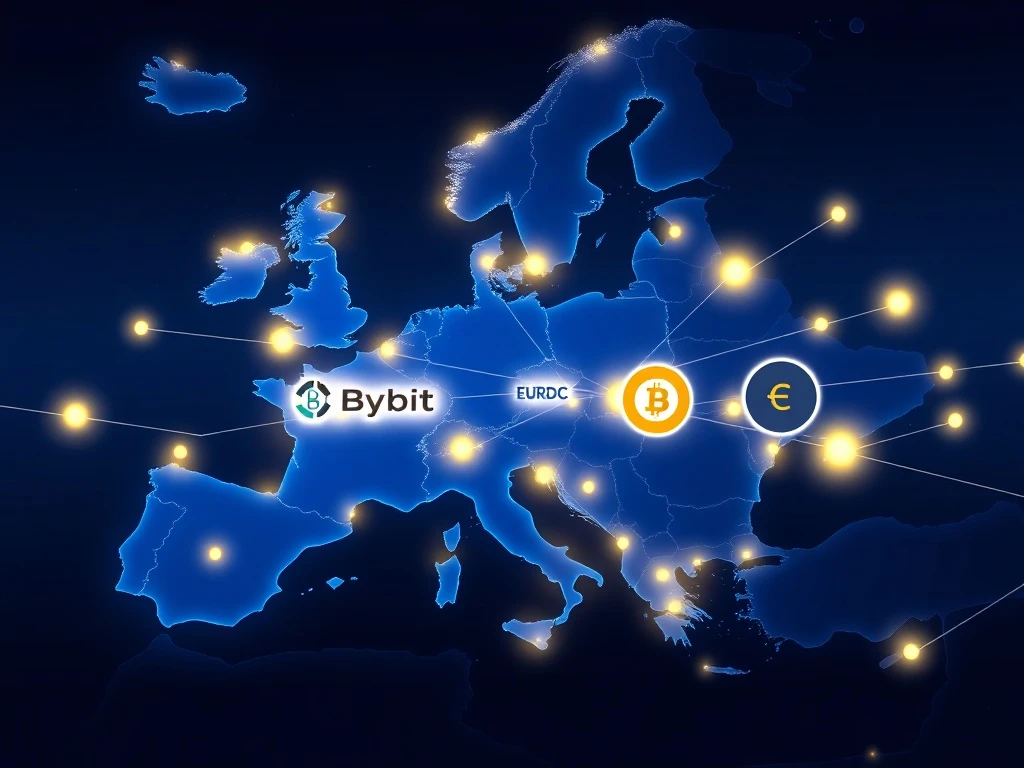
In a significant move for the European digital asset landscape, Bybit EU has officially launched new reward programs centered on the regulated stablecoins USDC and EURC. This strategic initiative, announced in Q1 2025, directly aims to expand the practical utility of compliant digital currencies across savings, trading, and payment ecosystems. The launch comes at a pivotal moment as the European Union’s Markets in Crypto-Assets (MiCA) regulation begins its full implementation, creating a new framework for digital finance.
Bybit EU’s Reward Programs: A Catalyst for Regulated Stablecoin Use
Bybit EU, the European arm of the global cryptocurrency exchange, has introduced targeted incentive schemes to promote the adoption of Circle’s USDC and EURC. These programs are not mere marketing promotions. Instead, they represent a calculated business strategy aligned with forthcoming regulatory standards. The company designed the rewards to integrate stablecoins into core financial activities. For instance, users can now earn additional yields on USDC holdings within dedicated savings products. Furthermore, trading fee rebates are available for pairs involving EURC. This multi-pronged approach encourages habitual use rather than speculative trading alone.
Industry analysts view this as a proactive adaptation to MiCA. The regulation, which fully applies to stablecoin issuers and crypto-asset service providers in 2025, mandates strict requirements for reserve backing, governance, and consumer protection. By building programs around fully regulated and transparent stablecoins like USDC and EURC, Bybit EU positions itself as a compliant market leader. This foresight mitigates regulatory risk while building user trust in a often volatile sector.
The MiCA Framework and Its Impact on European Crypto Markets
The Markets in Crypto-Assets regulation represents the world’s first comprehensive regulatory regime for digital assets. Its implementation creates a unified legal framework across 27 member states. For stablecoins, MiCA imposes rigorous standards. Issuers must maintain liquid reserves equivalent to the value of tokens in circulation. They must also provide detailed operational plans and offer clear redemption rights to holders. Consequently, compliant stablecoins like USDC and EURC gain a significant competitive advantage over unregulated alternatives.
Bybit EU’s launch directly leverages this regulatory shift. The exchange is effectively channeling user activity toward assets that meet the new gold standard. This move provides several tangible benefits for users:
- Reduced Counterparty Risk: USDC and EURC reserves are held in highly liquid, audited accounts.
- Regulatory Clarity: Users engage with assets that have clear legal status in the EU.
- Enhanced Utility: Reward programs lower the cost of using stablecoins for real-world applications.
This regulatory backdrop transforms the strategic importance of Bybit EU’s programs. They are not just user acquisition tools but essential components of a compliant business model.
Expert Analysis: Building a Compliant Digital Economy
Financial technology experts emphasize the long-term significance of this development. “Exchanges that integrate MiCA-compliant instruments into their core product offerings are future-proofing their operations,” notes Dr. Elara Vance, a fintech regulation scholar at the European University Institute. “Bybit EU’s reward programs serve a dual purpose. They educate users on the value of regulated assets while systematically increasing their market share. This is a classic network effect strategy, applied within a new regulatory paradigm.”
The timeline is also critical. MiCA’s provisions for stablecoins became applicable in mid-2024, with a grace period for existing operators. Bybit EU’s 2025 launch demonstrates a full-scale operational shift aligned with the final implementation phase. This proactive compliance contrasts with competitors who may be scrambling to adjust their offerings. Data from the European Blockchain Observatory suggests that trading volumes for MiCA-ready stablecoins have grown by over 300% since the regulation’s final text was published, indicating strong market alignment with Bybit’s direction.
USDC and EURC: A Comparative Look at Regulated Stablecoins
Understanding the assets at the heart of Bybit’s campaign is crucial. USDC (USD Coin) and EURC (Euro Coin) are both fiat-backed stablecoins issued by Circle, a global financial technology firm. Each token is fully backed by cash and short-duration U.S. Treasury or Euro-denominated assets, held in segregated accounts with regulated custodians. Monthly attestations by independent accounting firms verify the reserves.
The key distinction lies in their currency peg and target market. The following table outlines their primary characteristics:
| Stablecoin | Underlying Currency | Primary Reserve Assets | Key Regulatory Alignment |
|---|---|---|---|
| USDC | U.S. Dollar (USD) | Cash & U.S. Treasuries | MiCA (as a third-country asset), U.S. state money transmitter laws. |
| EURC | Euro (EUR) | Cash & Euro-denominated government debt | Native MiCA compliance as a EUR-denominated e-money token. |
EURC, in particular, is strategically vital for the European market. As a euro-denominated token issued by a entity seeking MiCA authorization, it offers European users a direct digital representation of their home currency. This eliminates foreign exchange risk for eurozone residents and businesses using it for payments or savings. Bybit EU’s inclusion of EURC rewards specifically encourages this on-chain euro adoption, supporting the digital euro ecosystem envisioned by EU policymakers.
The Broader Impact on European Crypto Adoption and Finance
Bybit EU’s initiative extends beyond its own platform. It signals a maturation of the European crypto industry from a speculative frontier to a integrated component of the financial system. The focus on savings and payments, facilitated by reward programs, points toward utility-driven adoption. Users are incentivized to treat stablecoins not as trading vehicles but as functional tools for earning yield and settling transactions.
This has profound implications for the future:
- Banking Integration: Increased use of regulated stablecoins could foster deeper connections between traditional banks and crypto service providers.
- Cross-Border Payments: EURC’s efficiency could challenge legacy cross-border payment networks within the Single Euro Payments Area (SEPA).
- Corporate Treasury Management: Businesses may begin to adopt these instruments for treasury operations, attracted by yield opportunities and regulatory clarity.
Payment processors and fintech apps are already monitoring user engagement with these programs. High participation rates could lead to more merchants accepting USDC and EURC directly, knowing they are dealing with regulated, low-volatility assets. Therefore, Bybit EU’s move acts as a potential catalyst for wider commercial acceptance.
Conclusion
Bybit EU’s launch of new USDC and EURC reward programs is a strategically timed and regulation-centric maneuver. It leverages the certainty provided by the MiCA framework to promote the adoption of fully compliant stablecoins. This approach benefits users through enhanced yields and reduced risk while solidifying Bybit EU’s position as a forward-thinking, compliant exchange. The programs highlight a decisive shift in the European crypto market toward utility, stability, and integration with the traditional financial system. As MiCA’s influence grows, initiatives like these will likely set the standard for how digital asset platforms operate and compete within the world’s largest regulated digital asset market.
FAQs
Q1: What are the specific rewards offered in Bybit EU’s new programs?
Bybit EU offers multiple reward types. These include boosted annual percentage yield (APY) for holding USDC or EURC in savings vaults, trading fee rebates for spot trades involving these stablecoins, and potential airdrops for users who complete specific educational modules about regulated stablecoins and MiCA.
Q2: How does MiCA regulation make USDC and EURC more attractive than other stablecoins?
MiCA grants compliant stablecoins a “passport” to operate across the entire European Union. It mandates robust consumer protections, including full reserve backing and clear redemption rights. Using MiCA-aligned stablecoins like USDC and EURC on a regulated exchange like Bybit EU significantly reduces regulatory and counterparty risk for European users compared to using unregulated alternatives.
Q3: Is EURC fundamentally different from a digital euro issued by the European Central Bank (ECB)?
Yes, they are distinct. EURC is a privately issued, euro-backed stablecoin regulated under MiCA. The digital euro (still in development) would be a central bank digital currency (CBDC), a direct liability of the ECB. Both aim to digitize the euro, but they have different issuers, underlying technologies, and policy objectives.
Q4: Can non-European residents participate in these Bybit EU reward programs?
Typically, Bybit EU’s services are specifically designed for residents of the European Economic Area (EEA) in compliance with its licensing. Eligibility for these specific reward programs is almost certainly restricted to verified users within Bybit EU’s licensed jurisdictions. Users should check the program’s official terms and conditions.
Q5: What long-term effect could this have on the price volatility of cryptocurrencies in Europe?
By promoting deep liquidity and everyday use of regulated stablecoins, such initiatives could indirectly reduce volatility for major cryptocurrencies like Bitcoin and Ethereum. As stablecoins become the primary on-ramp, off-ramp, and trading pair, they create a more stable base currency within crypto ecosystems, potentially dampening extreme price swings caused by fiat gateway inefficiencies.