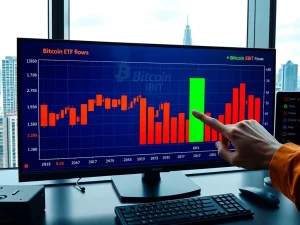
Tax Refunds Could Unleash a $150 Billion Liquidity Surge, Potentially Fueling a Dramatic Return of Retail ‘YOLO’ Trades

U.S. financial markets, as of April 2025, are bracing for a significant liquidity injection as the annual tax refund season reaches its peak, with analysts closely monitoring whether a projected $150 billion windfall could reignite the volatile ‘YOLO’ trading phenomenon and provide substantial support for assets like Bitcoin.
The Mechanics of the $150 Billion Tax Refund Wave
Each year, the Internal Revenue Service processes millions of tax returns, resulting in refunds for a majority of filers. The National Taxpayer Advocate reports that the average refund typically ranges between $2,800 and $3,200. When multiplied across tens of millions of households, this creates a massive, synchronized capital distribution. Economists describe this event as a fiscal stimulus with direct consumer impact. Consequently, a significant portion of this capital historically flows into discretionary spending and investment accounts. Market analysts at firms like JPMorgan Chase and Vanguard publish seasonal reports tracking this liquidity event. They note its potential to influence trading volumes, especially in retail-centric platforms.
Historical Precedent and the ‘YOLO’ Trade Resurgence
The term ‘YOLO’—You Only Live Once—became synonymous with a high-risk, high-conviction retail trading style popularized during the 2020-2021 market cycle. Platforms like Robinhood, Webull, and social media forums such as Reddit’s WallStreetBets served as its epicenters. This activity often targeted ‘meme stocks’ like GameStop and AMC or highly volatile cryptocurrencies. The 2025 market environment presents distinct parallels and differences. While interest rates and regulatory landscapes have evolved, the core behavioral drivers—accessible trading apps, social media influence, and a desire for outsized returns—remain potent. Analysts at Bloomberg Intelligence suggest that even a small percentage of the total refund pool directed toward speculative assets could create noticeable market movements.
Expert Analysis on Retail Sentiment and Capital Allocation
Financial behavior researchers point to key factors that could channel refund money into markets. First, the psychological effect of receiving a ‘lump sum’ refund often categorizes this money as separate from regular income, making individuals more prone to speculative allocation. Second, current economic data on savings rates and consumer debt may influence whether refunds are used for necessities, debt repayment, or investment. Charles Schwab’s annual survey on financial literacy indicates a growing percentage of younger demographics view tax refunds as ‘investment capital.’ Furthermore, the sustained institutional adoption of Bitcoin and clearer regulatory frameworks may reduce the perceived risk for new retail entrants compared to previous cycles.
Bitcoin and Cryptocurrency as a Primary Beneficiary
Bitcoin’s position as a potential beneficiary of this liquidity wave is supported by several structural market factors. Its established role as a digital store of value and its performance correlation with liquidity injections are well-documented. The cryptocurrency market now boasts greater infrastructure, including spot Bitcoin ETFs approved in 2024, which provide a familiar, regulated conduit for retail capital. Data from Coinbase’s quarterly reports shows consistent spikes in new account funding and trading volume during Q2, aligning with tax refund distributions. The table below outlines potential capital flow scenarios based on historical allocation studies:
| Refund Allocation Scenario | Percentage of $150B | Estimated Capital to Markets | Primary Asset Targets |
|---|---|---|---|
| Conservative (Debt/Savings) | 70% | $0B | N/A |
| Moderate (Mixed Use) | 25% | $37.5B | Broad ETFs, Blue Chips |
| Speculative (‘YOLO’) | 5% | $7.5B | Bitcoin, Meme Stocks, Altcoins |
Even the speculative 5% scenario represents a $7.5 billion influx, a sum capable of moving thinner asset markets. Key indicators to watch include:
- Exchange Inflows: An increase in USD deposits on major crypto exchanges like Coinbase and Kraken.
- Social Volume: A spike in discussion volume around speculative assets on platforms like X (formerly Twitter) and Discord.
- Options Activity: Rising retail interest in short-dated, out-of-the-money call options for stocks and Bitcoin.
Broader Market Impacts and Risk Considerations
The potential liquidity boost extends beyond crypto. The entire equity market, particularly sectors favored by retail traders, could experience heightened volatility and volume. However, analysts caution against overstating the long-term impact. The 2025 ‘YOLO’ dynamic, if it materializes, may be more measured than its predecessor. Tighter monetary policy compared to the zero-interest-rate environment of 2021 could dampen excessive risk-taking. Additionally, platforms have implemented more robust risk disclosures and educational tools. Regulatory bodies like the SEC and FINRA continue to monitor for market manipulation and ensure investor protection. The ultimate effect on asset prices will depend on the confluence of this retail liquidity with institutional flows and macroeconomic data.
Conclusion
The convergence of the annual $150 billion tax refund distribution with a maturing yet accessible digital asset landscape sets the stage for a potentially significant liquidity event in 2025. While the dramatic return of full-scale ‘YOLO’ trades is not guaranteed, the underlying conditions support increased retail participation in markets, with Bitcoin standing as a likely primary beneficiary. Market participants should monitor on-chain data, exchange volumes, and retail sentiment indicators in the coming weeks to gauge the magnitude of this seasonal capital wave and its impact on both traditional and cryptocurrency markets.
FAQs
Q1: What are ‘YOLO’ trades?
YOLO trades refer to high-risk, high-conviction investments where individuals allocate a large portion of capital to a single, often volatile, asset based on strong belief or social sentiment, accepting the potential for total loss.
Q2: How could $150 billion in tax refunds affect Bitcoin’s price?
If even a small percentage (e.g., 2-5%) of the total refund pool flows into Bitcoin via exchanges or ETFs, it could create significant buy-side pressure, potentially supporting or increasing its price due to the asset’s relatively finite and liquid market structure.
Q3: Is there historical evidence that tax refunds boost retail trading?
Yes, multiple brokerage firms, including Fidelity and TD Ameritrade (now Charles Schwab), have published data showing increased account deposits and trading activity correlating with the tax refund season in Q1 and Q2 of each year.
Q4: What other assets besides Bitcoin might see increased interest?
Historically, meme stocks, leveraged ETFs, and smaller-capitalization ‘altcoin’ cryptocurrencies have been focal points for speculative retail capital during similar liquidity events.
Q5: What are the risks of using a tax refund for speculative trading?
The primary risk is the loss of capital. Tax refunds, while often viewed as ‘found money,’ can be crucial for financial stability, emergency funds, or debt reduction. Speculative trading carries a high risk of loss and should only involve capital one can afford to lose entirely.