Zero Knowledge Proof: The Revolutionary Shield Powering Private AI and Secure Data
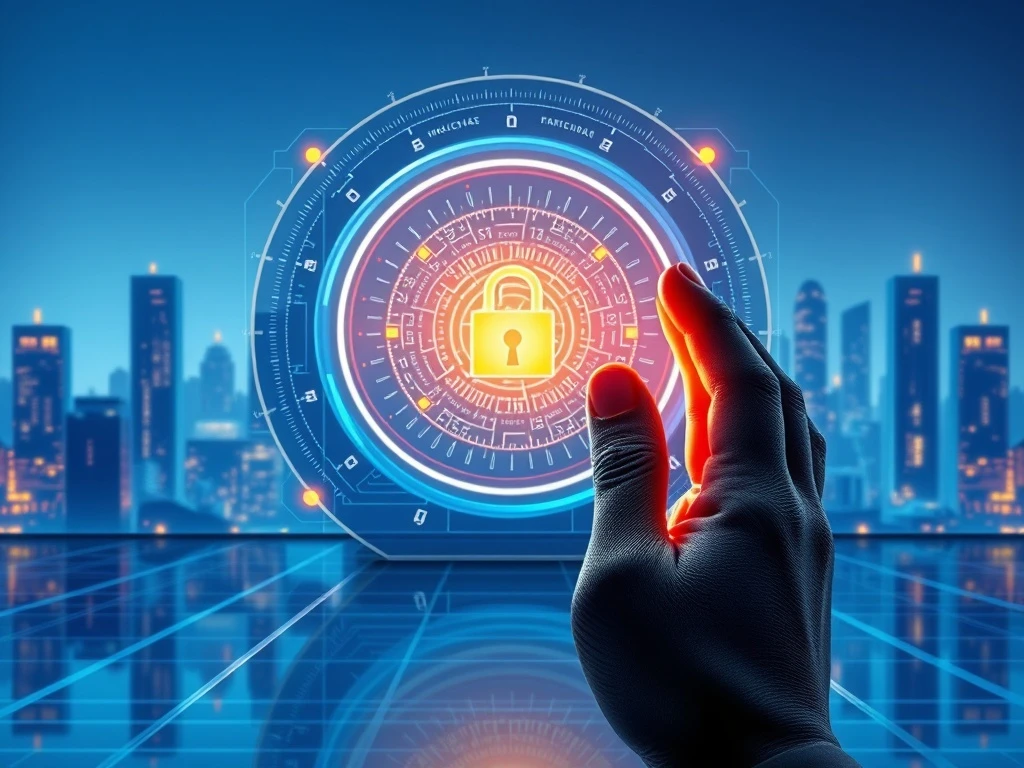
In an era defined by data breaches and digital surveillance, a revolutionary cryptographic concept is redefining the boundaries of privacy and trust. Zero Knowledge Proof (ZKP), a method rooted in advanced mathematics, allows one party to prove to another that a statement is true without revealing any information beyond the validity of the statement itself. This technology, once a theoretical construct, now powers critical advancements in private artificial intelligence, secure blockchain transactions, and confidential data sharing. The global push for robust digital sovereignty, particularly following the 2024 EU Digital Identity Framework updates, has accelerated ZKP’s transition from academic papers to real-world infrastructure.
Understanding the Core Mechanics of Zero Knowledge Proof
At its heart, a Zero Knowledge Proof operates on a simple yet profound principle: proving knowledge without disclosure. Imagine proving you know a secret password without ever saying the password aloud. ZKP makes this digital concept a reality through complex interactions between a prover and a verifier. The prover demonstrates possession of certain information, while the verifier becomes convinced of this fact without learning the information itself. This process relies on sophisticated algorithms and mathematical commitments, creating an interactive proof that is both sound and complete.
Three fundamental properties define every valid Zero Knowledge Proof. First, completeness ensures that if a statement is true, an honest verifier will be convinced by an honest prover. Second, soundness guarantees that if a statement is false, no dishonest prover can convince an honest verifier otherwise, except with a negligible probability. Finally, and most crucially, zero-knowledge means the verifier learns nothing beyond the fact that the statement is true. The history of this technology dates back to a seminal 1985 paper by Shafi Goldwasser, Silvio Micali, and Charles Rackoff, who formalized the concept and laid the groundwork for decades of cryptographic research.
The Mathematical Foundation and Evolution
Zero Knowledge Proofs utilize various cryptographic primitives and mathematical hard problems. Early constructions often relied on the difficulty of factoring large integers or computing discrete logarithms. Modern implementations, however, frequently employ elliptic curve cryptography and pairing-based systems for greater efficiency. The evolution from interactive proofs, requiring multiple back-and-forth communications, to non-interactive proofs (zk-SNARKs, zk-STARKs) represents a major breakthrough. These allow the prover to generate a single, succinct proof that anyone can verify later, a feature essential for scalable blockchain applications. Research institutions like MIT’s Computer Science and Artificial Intelligence Laboratory and the Weizmann Institute continue to publish peer-reviewed papers advancing the efficiency and security of these systems.
The Real-World Utility of ZKP in Data Security
Beyond theory, Zero Knowledge Proof delivers tangible security benefits across multiple industries. In financial services, ZKP enables regulatory compliance like Anti-Money Laundering (AML) checks without exposing a user’s entire transaction history. A bank can verify that a customer’s funds originate from legitimate sources without seeing every counterparty. For identity management, projects like Microsoft’s ION decentralized identity network leverage ZKP to allow users to prove they are over a certain age or hold a specific credential without revealing their birthdate or other personal details. This shifts the paradigm from oversharing data to providing minimal, verified claims.
The following table contrasts traditional verification with ZKP-based verification:
| Aspect | Traditional Verification | ZKP-Based Verification |
|---|---|---|
| Data Exposure | Full data disclosure to verifier | Zero data disclosure; only proof validity |
| Privacy Risk | High; creates data honeypots | Minimal; sensitive data remains with owner |
| Trust Model | Requires trust in verifier’s security | Trustless; based on cryptographic proof |
| Audit Trail | May be opaque or centralized | Transparent, verifiable proof on a ledger |
In supply chain logistics, companies can prove the ethical sourcing of materials or adherence to temperature controls for pharmaceuticals without revealing proprietary supplier networks or exact shipment routes. Governments are also exploring ZKP for digital voting systems, where a voter can prove their ballot was counted correctly without revealing for whom they voted, thereby ensuring both verifiability and secrecy.
Zero Knowledge Proof as the Engine for Private AI
The intersection of Zero Knowledge Proof and artificial intelligence addresses one of AI’s most pressing challenges: data privacy. Training powerful machine learning models typically requires aggregating vast, sensitive datasets, raising concerns about confidentiality and ownership. ZKP enables a new paradigm known as private inference or verifiable computation. Here, a user can submit encrypted data to an AI model and receive a prediction, while the model owner proves the computation was performed correctly without ever decrypting the input data. This allows hospitals, for instance, to gain insights from diagnostic AI trained on global datasets without exposing patient records.
Furthermore, ZKP facilitates secure federated learning. In this setup, multiple parties collaboratively train a model while keeping their local training data private. Each participant can prove they have correctly executed the training steps on their private data set, ensuring the integrity of the collaborative process without data pooling. Companies like Meta and Google have published research on using cryptographic techniques, including ZKP, to enhance privacy in their AI systems. This approach directly supports compliance with stringent regulations like the General Data Protection Regulation (GDPR) and the California Consumer Privacy Act (CCPA), which mandate data minimization and purpose limitation.
Case Study: Secure Medical Diagnostics
A concrete example involves medical imaging. A research institute develops an AI model to detect anomalies in MRI scans. A hospital wishes to use this model but cannot share its patients’ scans due to privacy laws. Using a ZKP system, the hospital encrypts a scan and sends it to the model. The institute runs the model and returns an encrypted result along with a Zero Knowledge Proof. This proof verifies that the model used was the certified, unaltered version and that the computation followed the correct algorithm, all without the institute ever seeing the actual scan. The hospital decrypts the result, gaining a diagnosis with a cryptographically guaranteed assurance of process integrity.
The Cryptographic Landscape and Blockchain Integration
Zero Knowledge Proof has found one of its most prominent applications in the blockchain and cryptocurrency sector. Here, it solves the critical trilemma of scalability, security, and decentralization. Networks like Zcash pioneered the use of zk-SNARKs to enable fully private transactions, where transaction amounts and participant addresses are shielded yet verifiable. Ethereum’s ongoing upgrades, including its rollup-centric roadmap, heavily rely on ZK-rollups. These layer-2 scaling solutions bundle thousands of transactions off-chain, generate a single ZKP of their validity, and post it to the main Ethereum chain, dramatically reducing costs and increasing throughput while inheriting Ethereum’s security.
Key implementations shaping the landscape include:
- zk-SNARKs (Zero-Knowledge Succinct Non-Interactive Argument of Knowledge): Known for small proof sizes and fast verification, used by Zcash and early rollups. They require a trusted initial setup ceremony.
- zk-STARKs (Zero-Knowledge Scalable Transparent Argument of Knowledge): Offer greater scalability and post-quantum security potential without a trusted setup, though proofs are larger. Pioneered by StarkWare.
- Bulletproofs & Sigma Protocols: Used for confidential transactions in cryptocurrencies like Monero, focusing on range proofs to show values are non-negative without revealing them.
This cryptographic toolkit allows developers to build applications with unprecedented privacy features. For example, decentralized credit scoring can assess loanworthiness based on verified financial history proofs without exposing individual transactions. Similarly, decentralized exchanges can facilitate trades without revealing a user’s full portfolio, mitigating front-running risks.
Challenges, Considerations, and the Future Outlook
Despite its promise, Zero Knowledge Proof technology faces significant hurdles. The computational intensity of generating proofs, especially for complex statements, remains high, leading to latency and energy consumption concerns. Ongoing research focuses on hardware acceleration (using GPUs, FPGAs, and ASICs) and more efficient algorithms to mitigate this. Another consideration is the complexity of implementation; designing secure ZKP systems requires deep cryptographic expertise to avoid subtle vulnerabilities. Furthermore, the regulatory environment is still adapting. While ZKP enhances privacy, it also creates challenges for authorities in contexts where lawful interception is required, necessitating careful design of governance models.
Looking toward 2025 and beyond, the trajectory points toward deeper integration into core internet infrastructure. The World Wide Web Consortium (W3C) is exploring standards for verifiable credentials that will likely incorporate ZKP principles. In the enterprise space, major cloud providers like Amazon Web Services and Microsoft Azure are expected to offer ZKP-as-a-service toolkits, lowering the barrier to adoption. The ultimate goal is a web where users have sovereign control over their digital identities and data, interacting with services through selective, minimal disclosure verified by cryptographic proof rather than blind trust.
Conclusion
Zero Knowledge Proof stands as a foundational technology for the next generation of the internet. By enabling verification without disclosure, it provides a powerful tool to reconcile the often-competing demands of utility, privacy, and security. From securing private artificial intelligence and enabling regulatory-compliant finance to building scalable, confidential blockchains, ZKP’s real-world utility is vast and growing. As computational efficiency improves and developer tools mature, its principles will likely become embedded in the fabric of our digital interactions, moving us closer to a future where we can prove what we need to without ever having to show our hand. The journey of Zero Knowledge Proof from academic abstraction to essential infrastructure underscores its role as a revolutionary shield for the digital age.
FAQs
Q1: Is a Zero Knowledge Proof unbreakable?
No cryptographic system is theoretically unbreakable, but Zero Knowledge Proofs are based on mathematical problems considered computationally infeasible to solve with current technology, such as certain elliptic curve discrete logarithms. Their security relies on the continued hardness of these problems and proper, audited implementation.
Q2: How is ZKP different from encryption?
Encryption scrambles data to hide its content during storage or transmission, but the data must be decrypted to be used. ZKP allows a specific fact *about* the data to be verified (e.g., “this number is greater than 18”) while the data itself remains completely encrypted and unused by the verifier.
Q3: Does using ZKP slow down applications?
Historically, yes, proof generation could be computationally expensive. However, major advances in algorithms (like PLONK, Halo2) and dedicated hardware acceleration are rapidly reducing this overhead, making ZKP feasible for real-time applications in finance and gaming.
Q4: Can ZKP be used for authentication without passwords?
Absolutely. This is a prime use case. A user can prove they possess the private key corresponding to a public key (and thus their identity) without ever transmitting the private key or a password, effectively preventing phishing and server-side credential theft.
Q5: Are there any fully operational large-scale systems using ZKP today?
Yes. Several systems are in production, including the Zcash cryptocurrency for private payments, various Ethereum Layer-2 scaling solutions like zkSync and StarkNet, and components of digital identity platforms such as the Decentralized Identity Foundation’s specifications.