World Swap Remittance Platform Revolutionizes Cross-Border Payments with Groundbreaking Crypto Integration
World Liberty Financial has officially launched its World Swap remittance platform, marking a significant expansion into digital payments that promises to transform how money moves across borders. The platform specifically targets four critical areas: reducing remittance costs, accelerating settlement times, promoting stablecoin adoption, and expanding global cryptocurrency payment services. This strategic move comes as traditional remittance corridors face increasing pressure from both regulatory changes and consumer demand for faster, cheaper alternatives.
World Swap Platform Architecture and Core Features
The World Swap remittance platform represents a sophisticated integration of blockchain technology with traditional financial infrastructure. Unlike conventional remittance services that rely on correspondent banking networks, World Swap utilizes a hybrid approach combining cryptocurrency liquidity pools with fiat gateways. This architecture enables the platform to bypass multiple intermediaries typically involved in cross-border transactions.
Key technical components include:
- Multi-chain compatibility supporting Ethereum, Polygon, and Solana networks
- Automated market makers for optimal currency exchange rates
- Regulatory compliance modules for different jurisdictions
- Real-time tracking with blockchain confirmation visibility
Industry analysts note that this approach addresses several pain points in traditional remittance systems. For instance, the average international wire transfer takes 2-5 business days and costs 6-8% in fees. Preliminary data suggests World Swap could reduce settlement times to under 24 hours while cutting costs by approximately 40-60%.
Stablecoin Strategy and Market Positioning
World Liberty Financial’s platform emphasizes stablecoin adoption as a core component of its foreign exchange strategy. The company has integrated major dollar-pegged stablecoins including USDC, USDT, and DAI, alongside exploring regional stablecoins for specific corridors. This focus responds to growing regulatory clarity around stablecoins in major markets like the European Union’s MiCA framework and proposed U.S. legislation.
Executive Vision and Political Connections
The platform’s unveiling revealed notable political connections, with backing from members of the Trump family adding a distinctive dimension to the venture’s profile. While company executives emphasized the technological and financial aspects during the announcement, industry observers noted the potential regulatory implications of such high-profile political associations in the cryptocurrency space.
World Liberty Financial executives focused their presentation on practical benefits rather than political affiliations. They highlighted how the platform addresses specific market gaps, particularly for emerging economies where remittance inflows represent significant portions of GDP. Countries like the Philippines, Mexico, and Nigeria, which collectively receive over $150 billion annually in remittances, stand to benefit substantially from reduced transfer costs.
Comparative Analysis with Traditional Remittance Providers
The following table illustrates how World Swap compares to established remittance services across key metrics:
| Service Type | Average Cost | Settlement Time | Currency Pairs | Accessibility |
|---|---|---|---|---|
| Traditional Banks | 6-8% | 2-5 days | Limited | High (but restrictive) |
| Money Transfer Operators | 4-6% | Minutes to hours | Moderate | High |
| World Swap Platform | 2-4% (projected) | Under 24 hours | Extensive (including crypto) | Growing |
This competitive positioning comes at a crucial time for the remittance industry. The World Bank’s 2024 Remittance Price Worldwide database shows global average costs at 6.2%, still far from the UN Sustainable Development Goal target of 3%. Meanwhile, cryptocurrency-based remittances have grown steadily, though they face challenges including volatility concerns and regulatory uncertainty.
Global Expansion Strategy and Regulatory Considerations
World Liberty Financial’s expansion into digital payments follows careful regulatory preparation. The company has reportedly secured necessary licenses in several jurisdictions, including specific money transmitter licenses in U.S. states and equivalent authorizations in key European and Asian markets. This regulatory-first approach distinguishes the platform from earlier cryptocurrency remittance services that faced compliance challenges.
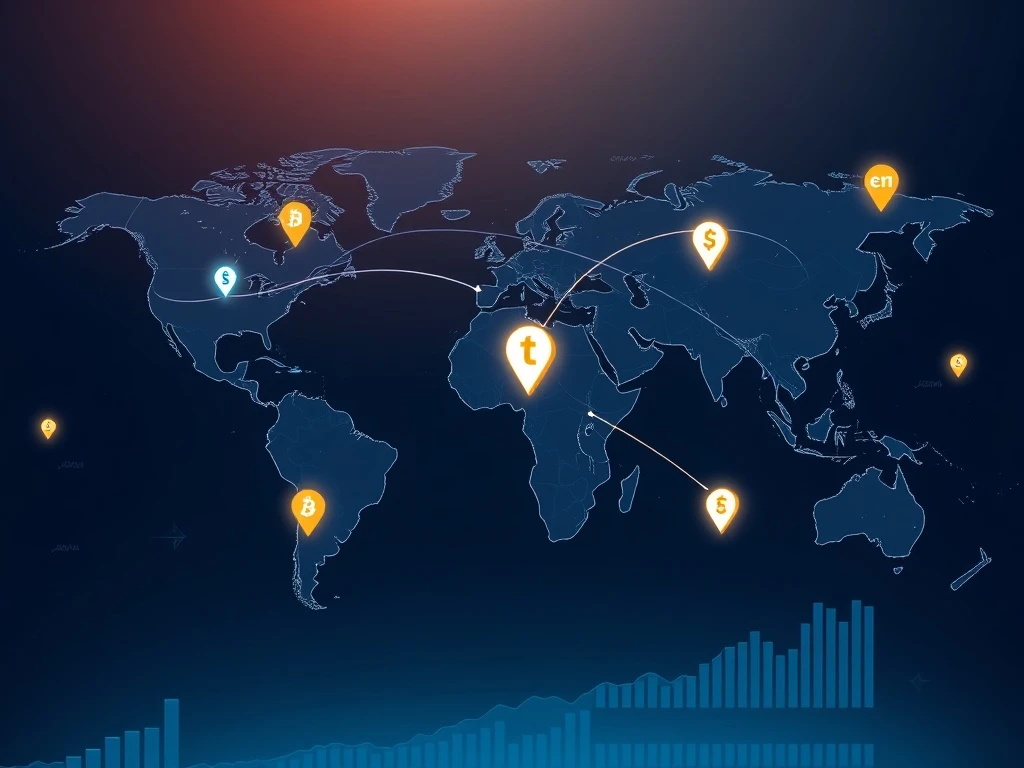
The rollout strategy appears phased, with initial corridors focusing on:
- North America to Latin America (particularly US-Mexico corridor)
- Europe to Africa (focusing on Eurozone to West Africa)
- Gulf Cooperation Council to South Asia (addressing significant labor migration routes)
Each corridor presents unique challenges and opportunities. For example, the US-Mexico corridor moves approximately $60 billion annually but faces competition from established players like Western Union and digital-first services like Wise. Success in this market requires not just competitive pricing but also trust-building among users unfamiliar with cryptocurrency interfaces.
Technology Adoption and User Experience
World Swap’s interface reportedly simplifies the cryptocurrency complexity for end-users. Senders can initiate transactions using traditional currencies, with the platform handling conversion to and from stablecoins automatically. Recipients can choose between local currency deposits or cryptocurrency wallets, providing flexibility for different user preferences and financial infrastructures.
This approach addresses a major barrier to cryptocurrency remittance adoption: technical complexity. Research from the Cambridge Centre for Alternative Finance indicates that while interest in crypto remittances grows, actual usage remains limited by user interface challenges and knowledge gaps. World Swap’s design appears to prioritize accessibility, potentially expanding the addressable market beyond cryptocurrency enthusiasts to mainstream remittance users.
Market Impact and Competitive Landscape
The remittance industry has seen increasing cryptocurrency integration over recent years. Established players like MoneyGram have experimented with Ripple-powered transfers, while startups like Bitso have gained traction in specific corridors. World Swap enters this evolving landscape with several advantages, including substantial backing and a comprehensive regulatory strategy.
However, challenges remain significant. Cryptocurrency volatility, while mitigated through stablecoins, still presents perception challenges. Regulatory environments continue evolving, with different jurisdictions taking varied approaches to cryptocurrency oversight. Additionally, traditional financial institutions maintain strong brand recognition and trust among remittance users, particularly older demographics and those in regions with limited digital literacy.
Industry experts suggest that success will depend on execution across several dimensions:
- Reliability during high-volume periods like holidays
- Customer support for troubleshooting transactions
- Educational resources explaining the technology safely
- Partnership development with local payout networks
Conclusion
The World Swap remittance platform represents a significant development in the convergence of traditional finance and cryptocurrency technology. By focusing on practical benefits—reduced costs, faster settlements, and increased accessibility—World Liberty Financial addresses genuine market needs while navigating complex regulatory landscapes. The platform’s success will ultimately depend on user adoption, regulatory developments, and competitive responses from both traditional remittance providers and other cryptocurrency services. As global remittance flows continue growing, innovative solutions like World Swap could play increasingly important roles in making cross-border payments more efficient and accessible worldwide.
FAQs
Q1: How does the World Swap platform differ from traditional money transfer services?
The World Swap remittance platform utilizes blockchain technology and stablecoins to reduce intermediaries, potentially lowering costs to 2-4% compared to 6-8% for traditional services while accelerating settlement times from days to under 24 hours.
Q2: Do users need cryptocurrency knowledge to use World Swap?
No, the platform is designed for mainstream accessibility. Users can send traditional currencies, with automatic conversion to stablecoins handled by the platform, and recipients can choose local currency payouts without cryptocurrency interaction.
Q3: What stablecoins does the platform support?
World Swap currently integrates major dollar-pegged stablecoins including USDC, USDT, and DAI, with plans to add regional stablecoins for specific currency corridors as regulatory frameworks develop.
Q4: How does World Swap ensure regulatory compliance across different countries?
The company has pursued a regulatory-first strategy, securing money transmitter licenses in multiple U.S. states and equivalent authorizations in key international markets before launch, with compliance modules tailored to different jurisdictional requirements.
Q5: What are the initial geographic focuses for the platform?
World Swap is initially targeting three major corridors: North America to Latin America (particularly US-Mexico), Europe to Africa, and Gulf Cooperation Council countries to South Asia, addressing some of the world’s largest remittance flows.