Galaxy Digital’s Strategic $16M Solana Transfer Signals Major Institutional Positioning
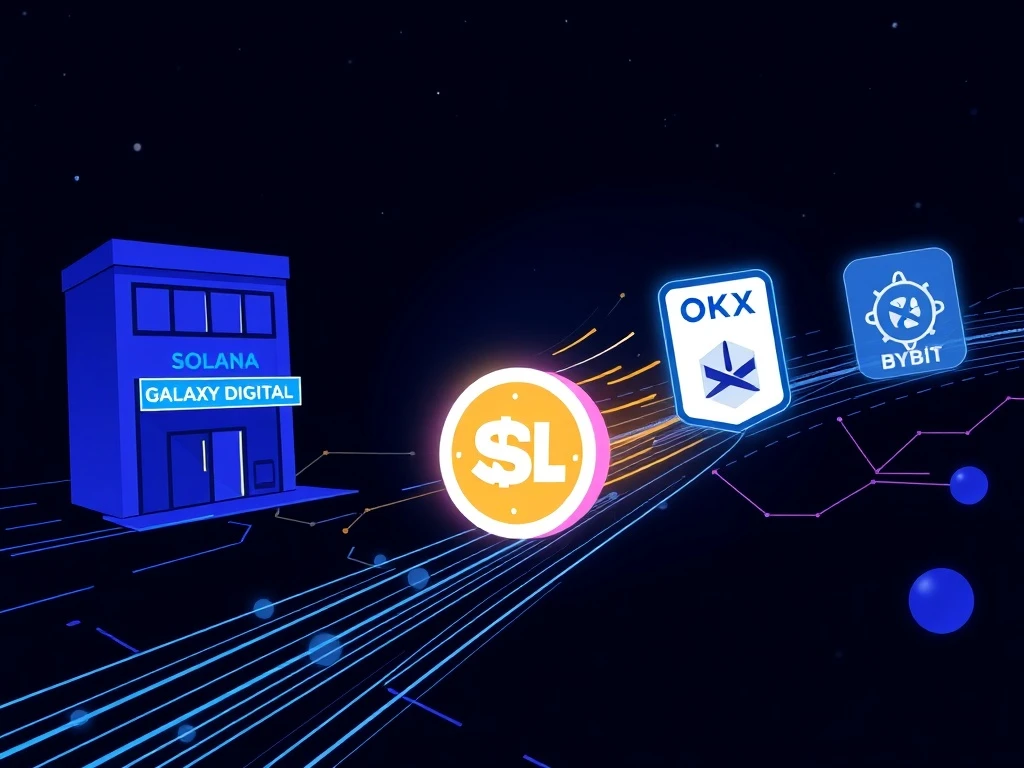
NEW YORK, March 2025 – Galaxy Digital Holdings Ltd., the prominent digital asset financial services firm founded by billionaire investor Mike Novogratz, has executed a significant cryptocurrency transfer involving $16 million worth of Solana (SOL) tokens to three major global exchanges. This substantial movement of digital assets to Binance, OKX, and Bybit platforms arrives during a period of heightened trading activity for the Solana blockchain network, potentially indicating strategic portfolio rebalancing or preparation for upcoming market movements. The transaction, visible on public blockchain explorers, immediately captured attention across cryptocurrency analytics platforms and institutional trading desks worldwide.
Analyzing Galaxy Digital’s $16M Solana Transfer
Blockchain data confirms that Galaxy Digital moved approximately 100,000 SOL tokens from its institutional custody wallets to deposit addresses controlled by Binance, OKX, and Bybit. Consequently, this represents one of the largest single institutional transfers of Solana tokens in recent months. Furthermore, the timing coincides with increased network activity on the Solana blockchain, which has processed over 3,000 transactions per second consistently throughout February 2025. Industry analysts immediately began examining potential motivations behind this substantial transfer, considering both market conditions and Galaxy Digital’s historical trading patterns.
Galaxy Digital maintains a diversified digital asset portfolio that includes Bitcoin, Ethereum, and various altcoins. The firm’s quarterly reports consistently highlight Solana as a core holding within its asset management division. Notably, this transfer follows Galaxy Digital’s recent earnings call where executives emphasized active portfolio management strategies. The company’s chief investment officer specifically mentioned evaluating “liquidity positioning across exchange venues” during that presentation.
Institutional Crypto Movements and Market Context
Institutional transfers to exchanges often precede specific market actions, though interpretations vary significantly. Some analysts view exchange deposits as preparation for potential selling activity, while others interpret them as necessary steps for executing complex trading strategies or providing liquidity. Importantly, Galaxy Digital has historically utilized multiple exchanges for different purposes, including over-the-counter settlements, derivatives trading, and client facilitation.
Exchange Dynamics and Liquidity Considerations
The selection of Binance, OKX, and Bybit specifically reflects strategic considerations about liquidity depth and geographic coverage. Binance consistently maintains the highest Solana trading volumes globally, while OKX dominates Asian markets and Bybit serves substantial derivatives activity. By distributing assets across these three platforms, Galaxy Digital potentially accesses optimal execution across spot and derivatives markets. This approach mirrors methods employed by traditional financial institutions when accessing multiple stock exchanges for large orders.
Recent months have witnessed growing institutional interest in Solana-based financial products. For instance, several asset managers have filed updated prospectuses for Solana exchange-traded funds (ETFs) with regulatory authorities. Additionally, institutional trading desks report increased client inquiries about Solana exposure. The table below illustrates recent significant institutional Solana movements:
| Date | Entity | Amount (SOL) | Destination |
|---|---|---|---|
| Feb 15, 2025 | Unknown Institution | 45,000 | Coinbase Institutional |
| Feb 22, 2025 | Digital Asset Fund | 32,000 | Kraken |
| Mar 3, 2025 | Galaxy Digital | 100,000 | Binance, OKX, Bybit |
Solana Network Fundamentals and Trading Activity
Solana’s blockchain has demonstrated remarkable performance metrics recently, which provides essential context for understanding institutional interest. The network maintains several key advantages that attract both developers and investors:
- Transaction Speed: Solana consistently processes over 3,000 transactions per second
- Fee Structure: Average transaction fees remain below $0.01
- Developer Activity: Over 2,500 monthly active developers build on Solana
- DeFi Growth: Total value locked in Solana decentralized finance exceeds $15 billion
These fundamental strengths have translated into increased trading volumes across cryptocurrency exchanges. Binance, the world’s largest crypto exchange by volume, reported a 40% increase in Solana trading pairs volume during February 2025 compared to January. Similarly, OKX documented a 35% rise in SOL derivatives trading, while Bybit observed particular growth in Solana perpetual swap contracts. This elevated activity creates more favorable conditions for large institutional transactions, as deeper liquidity reduces market impact costs.
Regulatory Environment and Institutional Adoption
The regulatory landscape for digital assets continues evolving, with clearer frameworks emerging in major jurisdictions. Galaxy Digital operates under comprehensive regulatory oversight, holding multiple licenses including New York State BitLicense. The firm’s compliance protocols require thorough documentation for all significant asset movements. This regulatory maturity enables institutions to participate in digital asset markets with greater confidence. Several traditional finance giants have recently announced Solana integration plans for their digital asset divisions, signaling broader acceptance.
Potential Implications for Solana Markets
Large institutional movements inevitably influence market perceptions and sometimes price action. However, the $16 million transfer represents approximately 0.1% of Solana’s daily trading volume, suggesting limited direct price impact. More significantly, the transaction highlights growing institutional engagement with Solana as a core digital asset. Market analysts generally interpret such movements as validation of Solana’s maturity as an investable asset class rather than signals of imminent price direction.
Historical analysis reveals that previous large institutional transfers to exchanges have preceded various outcomes. Sometimes they correlate with price consolidation periods, while other instances align with increased volatility. The critical factor remains the underlying motivation, which institutional players rarely disclose publicly. Galaxy Digital’s transfer occurs alongside several positive Solana developments, including:
- Successful implementation of Firedancer validator client
- Growing non-fungible token (NFT) marketplace volumes
- Expansion of Solana Pay for merchant transactions
- Increased stablecoin transfers on the network
Conclusion
Galaxy Digital’s transfer of $16 million in Solana tokens to Binance, OKX, and Bybit represents a notable institutional cryptocurrency movement that reflects strategic positioning amid rising Solana trading activity. This transaction underscores the maturation of digital asset markets where established financial firms actively manage portfolios across multiple exchange venues. While specific motivations remain undisclosed, the transfer aligns with broader trends of institutional adoption and sophisticated digital asset management. As cryptocurrency markets evolve, such transparent blockchain-visible movements provide valuable insights into institutional behavior and market structure development. The Solana transfer by Galaxy Digital ultimately highlights the growing intersection between traditional finance methodologies and blockchain-native asset management strategies.
FAQs
Q1: Why would Galaxy Digital transfer Solana to multiple exchanges?
Distributing assets across exchanges allows access to deeper liquidity pools, better execution prices, and diversified counterparty exposure. Different exchanges often specialize in specific products or geographic markets.
Q2: Does transferring cryptocurrency to exchanges always mean selling?
No, institutions use exchanges for various purposes including trading, lending, collateral posting, derivatives positions, and client facilitation. Exchange deposits represent accessibility rather than specific intent.
Q3: How significant is a $16 million transfer in cryptocurrency markets?
While substantial for individual investors, $16 million represents a small percentage of Solana’s daily trading volume (typically $2-3 billion). For context, institutional transfers regularly exceed $100 million in Bitcoin markets.
Q4: What makes Solana attractive to institutional investors?
Solana offers high transaction throughput, low fees, a growing developer ecosystem, and established market infrastructure. These characteristics align with institutional requirements for scalability and reliability.
Q5: How can the public see these cryptocurrency transfers?
Blockchain explorers like Solscan for Solana provide transparent viewing of all transactions. Wallet addresses associated with major institutions are often identified by analytics firms through pattern recognition and public disclosures.