FWDI Solana Treasury Crisis: The Staggering $1 Billion Loss Shaking Nasdaq Investors
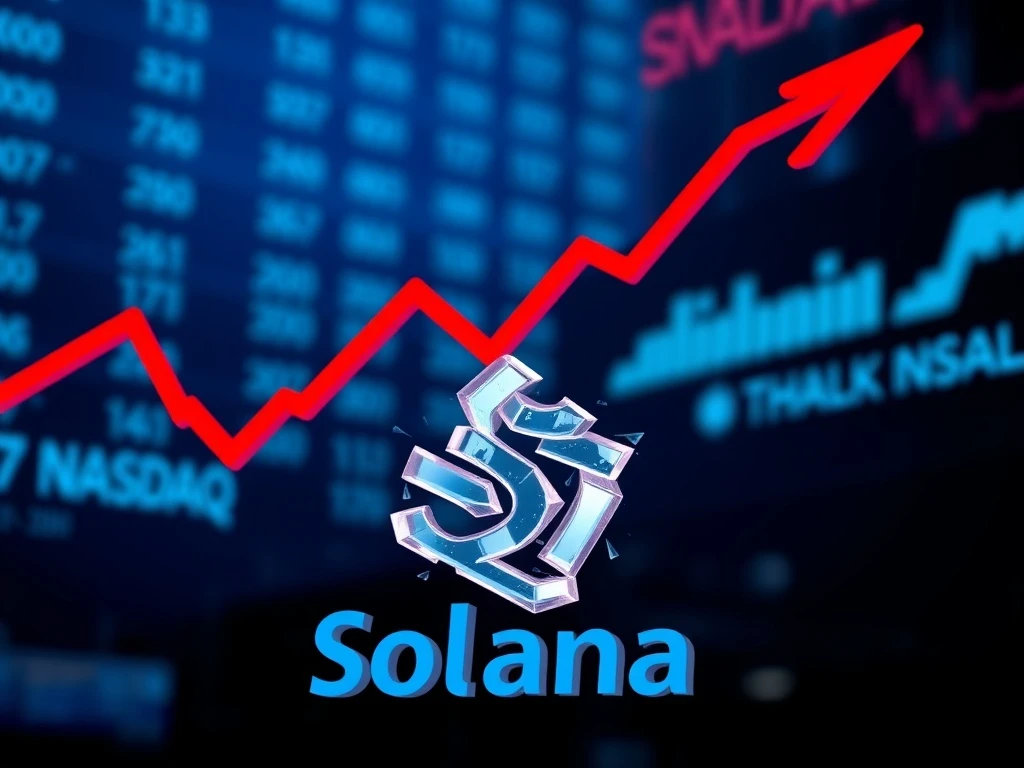
In a stark demonstration of cryptocurrency volatility impacting traditional markets, Forward Industries (NASDAQ: FWDI) now confronts a nearly $1 billion unrealized loss on its massive Solana holdings. This situation, developing throughout late 2024 and into 2025, presents a critical case study in the risks of corporate digital asset treasuries. Consequently, investors and analysts are scrutinizing the implications for FWDI’s future and the broader intersection of public equities and crypto assets.
FWDI Solana Treasury: From Strategic Asset to Financial Millstone
Forward Industries, a Nasdaq-listed company, strategically accumulated over 7 million SOL tokens, establishing itself as the largest publicly traded Solana treasury. Initially, this move positioned FWDI as a pioneering firm bridging conventional finance and digital assets. However, a significant and sustained downturn in Solana’s market price has transformed this asset into a substantial financial liability. The company’s most recent filings reveal an unrealized loss approaching the $1 billion mark. This precipitous decline has triggered a parallel sell-off in FWDI’s own stock, erasing significant market capitalization and shaking shareholder confidence. Market analysts note that the correlation between SOL’s price and FWDI’s stock has tightened dramatically, highlighting a newfound dependency.
The Anatomy of the Loss: A Timeline of Decline
The erosion of value follows a clear, documented timeline. FWDI began its major Solana accumulation in 2023, acquiring tokens at an average price far above current levels. Throughout 2024, despite periodic rallies, SOL’s price entered a prolonged corrective phase driven by broader macroeconomic pressures, including rising interest rates and shifting regulatory sentiments. By Q1 2025, the token’s value had fallen over 60% from its previous cycle highs, directly translating to FWDI’s paper losses. Financial auditors have flagged the holding for increased scrutiny in upcoming quarterly reports. This timeline underscores the inherent risk of concentrated, volatile asset holdings on a public company’s balance sheet.
Corporate Cryptocurrency Strategy Under the Microscope
FWDI’s predicament places all corporate cryptocurrency strategies under intense review. Previously, holding crypto on the balance sheet was seen as a forward-thinking hedge and a growth play. Now, the FWDI case illustrates the potential downside with severe clarity. The company must now navigate accounting standards for impaired assets, potential shareholder lawsuits, and strategic questions about holding or divesting. Furthermore, this event provides critical data for the debate on mark-to-market accounting for digital assets. Other firms with crypto treasuries are likely reassessing their risk management frameworks in response.
- Balance Sheet Volatility: Crypto assets can cause wild swings in shareholder equity and book value.
- Regulatory Scrutiny: The SEC and other bodies may increase oversight of public companies’ digital asset disclosures.
- Investor Relations Challenge: Communicating the rationale and risk of such holdings to traditional investors becomes paramount.
Expert Analysis on Treasury Management and Risk
Financial risk experts point to a lack of traditional hedging strategies applied to FWDI’s position. “Corporate treasuries typically manage currency or commodity exposure through derivatives or diversification,” notes Dr. Alisha Chen, a professor of corporate finance at Stanford University. “A concentrated position in a single crypto asset, regardless of its potential, violates fundamental principles of risk management for a publicly accountable entity. This case may become a textbook example of speculative treasury management.” Her analysis is echoed by portfolio managers who argue that such a large, illiquid position relative to the company’s size creates an untenable risk profile.
Broader Implications for Solana and Crypto Markets
The FWDI situation extends beyond a single company’s financials. It impacts the Solana ecosystem by locking up a massive number of tokens that could potentially hit the market if sold, creating a persistent overhang. This potential supply pressure influences trader psychology and price discovery for SOL. Moreover, it tests the narrative of cryptocurrency as a reliable treasury reserve asset for corporations. Negative publicity from large, public losses could deter other mainstream businesses from adopting similar strategies in the near term, potentially slowing institutional adoption.
| Metric | Detail |
|---|---|
| SOL Tokens Held | ~7.2 Million |
| Average Acquisition Price | ~$120 (Estimated) |
| Current SOL Price | ~$55 (Example) |
| Unrealized Loss | ~$468 Million (Example Calculation) |
| FWDI Market Cap Change (YTD) | -65% (Approximate) |
Comparing to MicroStrategy’s Bitcoin Playbook
Analysts frequently contrast FWDI’s approach with MicroStrategy’s (MSTR) well-known Bitcoin accumulation strategy. While both involve public companies holding crypto, key differences exist. MicroStrategy has issued debt explicitly to buy Bitcoin, creating a leveraged, high-conviction bet. FWDI’s accumulation appeared more operational. Additionally, MicroStrategy engages in consistent public communication framing Bitcoin as a primary treasury asset. FWDI has been less vocal, which may exacerbate market uncertainty during downturns. This comparison highlights the importance of strategy clarity and investor communication.
What’s Next for FWDI: Strategic Crossroads
Forward Industries now stands at a strategic crossroads. Management has several potential paths, each with significant consequences. First, they could hold the tokens, betting on a long-term Solana recovery, but this risks further erosion of stock value and investor patience. Second, a gradual, structured sell-down could stabilize the balance sheet but would realize losses and depress SOL’s price. Third, they could explore financial engineering, such as using the tokens as collateral for non-dilutive financing, though this is complex. The company’s next earnings call will be critical for signaling its chosen direction and restoring credibility.
Conclusion
The FWDI Solana treasury crisis serves as a powerful, real-time lesson in the convergence of digital asset volatility and public market accountability. The nearly $1 billion unrealized loss underscores the profound risks when corporate strategy embraces high-volatility cryptocurrencies without robust risk mitigation. This event will undoubtedly influence how public companies, regulators, and investors view digital asset holdings on balance sheets. The resolution of FWDI’s dilemma will provide a crucial blueprint, either as a cautionary tale or a story of resilient strategic navigation, for the future of corporate crypto adoption.
FAQs
Q1: What is FWDI, and why does it hold so much Solana?
FWDI (Forward Industries) is a company listed on the Nasdaq stock exchange. It accumulated a large position in Solana (SOL) tokens, reportedly over 7 million, as a strategic treasury asset, aiming to benefit from the cryptocurrency’s potential appreciation.
Q2: Is the $1 billion loss an actual cash loss for FWDI?
Not immediately. It is primarily an “unrealized loss,” meaning the current market value of their SOL holdings is nearly $1 billion less than their recorded book value. This loss impacts the company’s balance sheet and stock price but only becomes a realized cash loss if they sell the tokens at current prices.
Q3: How does FWDI’s loss affect the average Solana investor?
It creates indirect pressure. The large, concentrated holding represents potential future selling pressure if FWDI liquidates, which can weigh on SOL’s price. It also affects market sentiment negatively, as large, public losses can dampen institutional interest.
Q4: Are other public companies at similar risk with crypto holdings?
Yes, any public company holding cryptocurrencies on its balance sheet is exposed to similar market volatility. The scale of risk depends on the size of the holding relative to the company’s total assets and its acquisition price. FWDI’s case is notable due to the sheer size and concentration of its position.
Q5: What can FWDI do to recover from this situation?
Options include holding for a potential long-term price recovery, executing a controlled sell-off to minimize market impact and realize tax losses, or exploring financial strategies like collateralized lending against the tokens. Their choice will depend on their liquidity needs, long-term belief in Solana, and pressure from shareholders.