Tesla-SpaceX Merger Could Create Staggering 7th Largest Corporate Bitcoin Holder
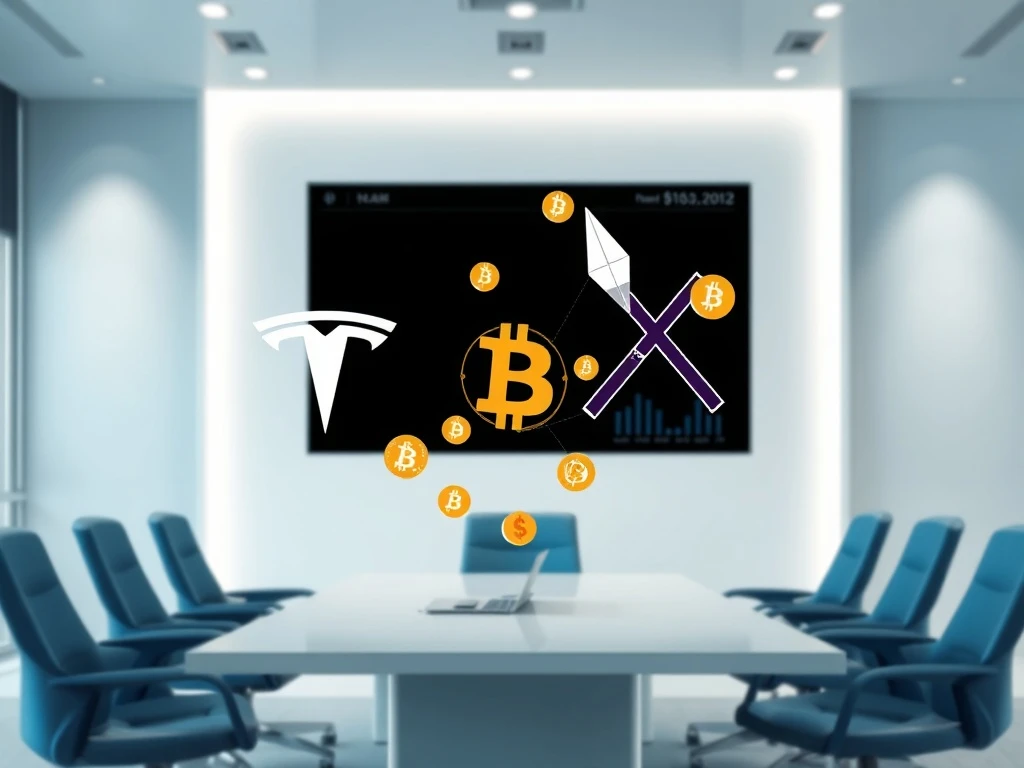
In a development that could reshape corporate cryptocurrency holdings globally, a potential merger between Elon Musk’s Tesla and SpaceX would create the seventh-largest publicly traded Bitcoin holder worldwide. According to recent analysis from CoinDesk, the combined entity would control nearly 20,000 BTC, valued at approximately $1.7 billion based on current market prices. This potential consolidation follows reports from Reuters and Bloomberg about SpaceX considering strategic mergers ahead of its planned initial public offering. The move represents a significant milestone in corporate cryptocurrency adoption, potentially influencing how major companies approach digital asset treasury management.
Tesla-SpaceX Merger Bitcoin Holdings Analysis
Financial analysts have calculated the precise Bitcoin holdings that would result from a Tesla-SpaceX merger. Currently, SpaceX maintains approximately 8,285 BTC in its corporate treasury, representing around $690 million in value. Meanwhile, Tesla holds 11,509 BTC worth approximately $1 billion. Consequently, a combined entity would possess 19,794 BTC, creating one of the most substantial corporate cryptocurrency positions globally. This consolidation would place the merged company behind only MicroStrategy, Marathon Digital Holdings, Galaxy Digital Holdings, Coinbase, Hut 8 Mining, and Riot Platforms in terms of publicly traded Bitcoin holdings.
The potential merger comes at a pivotal moment for both companies and the cryptocurrency market. Tesla initially invested $1.5 billion in Bitcoin during February 2021, though the company later sold approximately 75% of its holdings in 2022. SpaceX reportedly began acquiring Bitcoin around the same period, though the company has maintained more private financial disclosures. Financial experts note that the combined Bitcoin position represents a strategic asset diversification approach that could influence other technology and manufacturing companies.
Corporate Cryptocurrency Adoption Trends
The potential Tesla-SpaceX Bitcoin consolidation reflects broader trends in corporate treasury management. Since 2020, numerous publicly traded companies have allocated portions of their cash reserves to Bitcoin and other digital assets. MicroStrategy currently leads corporate Bitcoin holdings with approximately 226,331 BTC, followed by Marathon Digital with 17,631 BTC. The table below illustrates how the potential Tesla-SpaceX entity would rank among major corporate Bitcoin holders:
| Company | Bitcoin Holdings | Approximate Value | Ranking |
|---|---|---|---|
| MicroStrategy | 226,331 BTC | $19.4 billion | 1 |
| Marathon Digital | 17,631 BTC | $1.5 billion | 2 |
| Galaxy Digital | 16,400 BTC | $1.4 billion | 3 |
| Potential Tesla-SpaceX | 19,794 BTC | $1.7 billion | 7 |
Corporate Bitcoin adoption typically follows several strategic rationales:
- Inflation hedge: Protection against currency devaluation
- Portfolio diversification: Reduced correlation with traditional assets
- Technological alignment: Support for innovative financial systems
- Strategic positioning: Early adoption advantages in digital economies
Expert Perspectives on Corporate Crypto Strategy
Financial analysts and cryptocurrency experts have weighed in on the potential implications of a combined Tesla-SpaceX Bitcoin position. Michael Saylor, Executive Chairman of MicroStrategy, has previously advocated for corporate Bitcoin adoption as a treasury reserve asset. Industry observers note that Elon Musk’s companies have demonstrated consistent interest in cryptocurrency integration, from Tesla’s brief acceptance of Bitcoin payments to SpaceX’s exploration of blockchain applications for space-based internet services.
Regulatory considerations remain crucial for corporate cryptocurrency holdings. The Securities and Exchange Commission continues to monitor how publicly traded companies disclose digital asset investments. Accounting standards for cryptocurrency holdings have evolved significantly since 2021, with clearer guidelines emerging for impairment testing and valuation. A merged Tesla-SpaceX entity would need to establish transparent reporting protocols for its substantial Bitcoin position, potentially setting precedents for other corporations.
Market Impact and Strategic Implications
The potential creation of a seventh-largest corporate Bitcoin holder carries multiple market implications. First, the consolidation would represent approximately 0.1% of Bitcoin’s total circulating supply, creating a substantial institutional position. Second, the move could signal increased confidence in Bitcoin’s long-term value proposition among technology leaders. Third, other corporations might reconsider their treasury strategies following such a high-profile consolidation.
Strategic considerations for the potential merger extend beyond Bitcoin holdings. Both companies operate at the intersection of several transformative technologies:
- Tesla: Electric vehicles, renewable energy, autonomous driving
- SpaceX: Space transportation, satellite internet, Mars colonization
- Shared interests: Artificial intelligence, robotics, sustainable technology
A combined entity could leverage Bitcoin and blockchain technology across multiple business segments. Potential applications include cross-border payments for international operations, supply chain transparency through distributed ledgers, and innovative financing mechanisms for capital-intensive projects. The companies’ existing technological infrastructure might facilitate novel cryptocurrency integrations unavailable to traditional corporations.
Historical Context and Future Projections
The potential Tesla-SpaceX merger discussion emerges within specific historical context. SpaceX has reportedly considered various strategic options ahead of its planned IPO, including potential mergers with Tesla or xAI, Musk’s artificial intelligence company. These considerations reflect the evolving landscape of Musk’s corporate empire and the increasing integration between his various ventures.
Looking forward, several developments could influence the final outcome. Regulatory approvals would be necessary for any merger between two such significant companies. Shareholder considerations, particularly regarding valuation and strategic alignment, would require careful navigation. Market conditions for both technology stocks and cryptocurrency assets would impact timing and structure decisions. Industry observers will monitor how these factors evolve throughout 2025.
Conclusion
The potential Tesla-SpaceX merger represents a landmark development in corporate cryptocurrency adoption. A combined entity would become the seventh-largest publicly traded Bitcoin holder worldwide with nearly 20,000 BTC. This consolidation reflects broader trends in corporate treasury management and technological integration. While merger discussions remain speculative, the implications for Bitcoin markets and corporate strategy are substantial. The situation demonstrates how major technology companies continue to explore innovative approaches to asset management and financial technology integration. As corporate Bitcoin adoption evolves, the potential Tesla-SpaceX position could influence how other global enterprises approach digital asset allocation.
FAQs
Q1: How much Bitcoin would a combined Tesla-SpaceX entity hold?
A combined Tesla-SpaceX entity would hold approximately 19,794 Bitcoin, based on current disclosures of 8,285 BTC from SpaceX and 11,509 BTC from Tesla.
Q2: What ranking would this give them among corporate Bitcoin holders?
The merged company would become the seventh-largest publicly traded corporate Bitcoin holder worldwide, behind MicroStrategy, Marathon Digital, Galaxy Digital, Coinbase, Hut 8 Mining, and Riot Platforms.
Q3: Why are companies like Tesla and SpaceX holding Bitcoin?
Companies typically hold Bitcoin as a treasury reserve asset for portfolio diversification, inflation hedging, technological alignment, and strategic positioning in emerging digital economies.
Q4: What are the regulatory considerations for corporate Bitcoin holdings?
Public companies must follow SEC disclosure requirements, accounting standards for digital assets, and impairment testing protocols. Transparent reporting is essential for investor protection and regulatory compliance.
Q5: How might a Tesla-SpaceX merger affect Bitcoin’s market price?
While any single corporate position represents a small percentage of total Bitcoin supply, high-profile adoption by major companies can influence market sentiment, institutional interest, and long-term valuation perspectives.