Government Shutdown Deal Near: Trump’s Crucial Announcement Leaves Volatile Markets on Edge
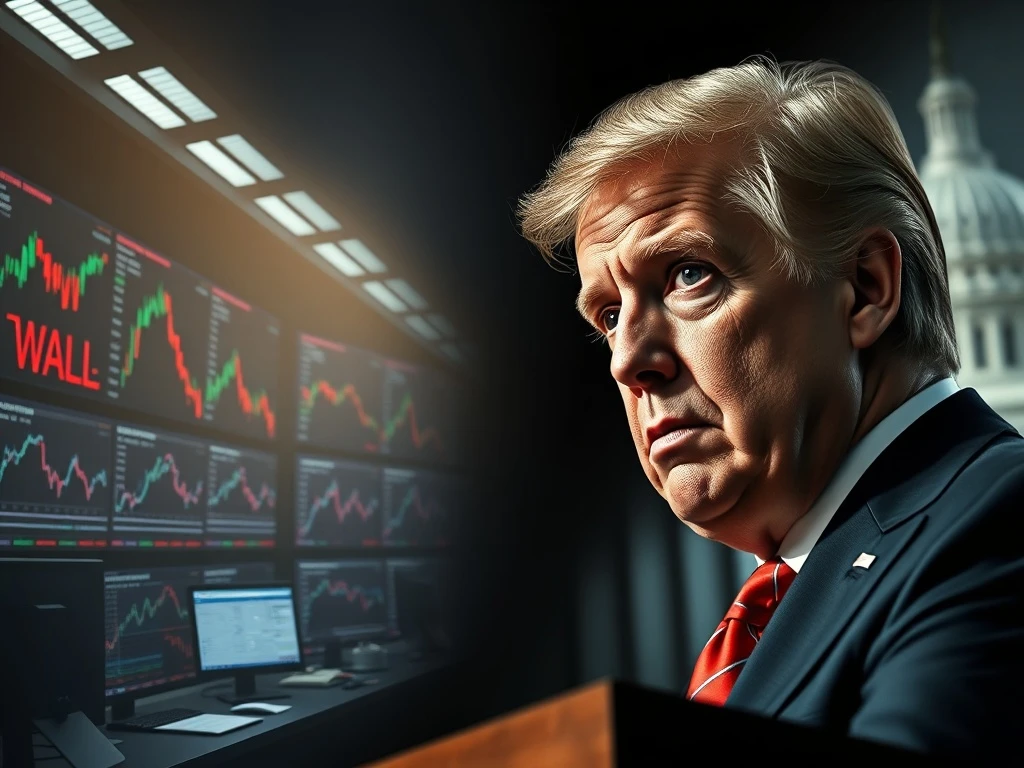
WASHINGTON, D.C. – March 21, 2025: Financial markets worldwide are holding their breath. President Donald Trump declared a tentative bipartisan deal to avert a U.S. government shutdown is imminent. Consequently, investors are navigating a complex web of tightening liquidity and geopolitical tensions. This high-stakes political maneuver arrives just hours before a critical funding deadline. The immediate reaction across cryptocurrency, precious metals, and traditional equities has been a sharp spike in volatility, underscoring the fragile state of global risk sentiment.
Government Shutdown Deal Reached Amid Last-Minute Drama
U.S. Senate leaders and the White House confirmed a bipartisan framework late Thursday. This agreement aims to prevent a partial government shutdown set to begin at midnight Friday, Eastern Time. However, the deal is not yet finalized. It must still pass crucial votes in both chambers of Congress. Negotiations had previously stalled over contentious funding allocations for the Department of Homeland Security and immigration enforcement. President Trump addressed the nation, emphasizing collaboration. “I am working hard with Congress to secure the necessary funding,” he stated. He warned that “another long and damaging Government Shutdown” could significantly slow the country’s progress. This political breakthrough follows a week of intense debates. Lawmakers are now racing against the clock to convert the framework into passable legislation.
The Liquidity Squeeze Hitting Digital Assets
Market analysts immediately linked recent asset price swings to underlying dollar liquidity conditions. Bitcoin plunged to approximately $81,000 this week. Simultaneously, spot Bitcoin and Ether ETFs witnessed nearly $1 billion in collective outflows. Nick Heather, Head of Trading at One.io, provided critical context to Crypto News Insights. He argued this reflects “tightening liquidity conditions” rather than a fundamental loss of faith in crypto. “Bitcoin’s move down to the low-$80,000s looks far more like a liquidity-driven adjustment,” Heather explained. He noted that on-chain data shows “whale wallets remain largely inactive.” This suggests larger holders are not selling en masse, reinforcing the liquidity narrative. Arthur Hayes, BitMEX co-founder, pointed to a $300 billion drop in US dollar liquidity. He attributed this primarily to a rising Treasury General Account (TGA) balance. Essentially, the government is building a cash buffer, which temporarily removes dollars from the financial system. Heather confirmed this pattern: “When the U.S. Treasury rebuilds its cash balance, risk assets tend to come under pressure, and crypto is often one of the first to react.”
Geopolitical Risk Amplifies Market Jitters
Beyond domestic fiscal policy, investor nerves are frayed by escalating international tensions. President Trump declared a national emergency concerning Cuba this week. Furthermore, he signaled a potential reevaluation of military options against Iran’s nuclear program. These developments keep geopolitical risk premiums elevated across all asset classes. Traditionally, such environments boost haven assets like gold and silver. However, these metals have experienced sharp sell-offs after reaching record highs earlier in January. According to data from TradingView, gold briefly tumbled below $5,000 an ounce before recovering. Silver has officially entered a bear market, down 22% from its peak, as reported by The Kobeissi Letter. This counterintuitive movement highlights the dominant role of dollar strength and liquidity. All assets, even havens, are trading through the prism of tighter financial conditions.
| Asset | Key Price Level | Weekly Move | Primary Driver Cited |
|---|---|---|---|
| Bitcoin (BTC) | ~$81,000 | ↓ Significant | US Dollar Liquidity Drain |
| Gold (XAU) | ~$5,100/oz | ↓ Sharp Correction | Liquidity & Dollar Strength |
| Silver (XAG) | Bear Market | ↓ 22% from High | Industrial & Liquidity Pressure |
| Spot BTC/ETH ETFs | Net Outflows | ~$1 Billion | Risk-Off & Liquidity Conditions |
Historical Context: Shutdowns and Market Behavior
Historical analysis of prior government shutdowns provides a crucial framework. These episodes typically produce several consistent economic effects:
- Business & Consumer Confidence: Shutdowns invariably dent sentiment, creating uncertainty.
- Economic Data Delays: Key government statistics on employment, inflation, and GDP are postponed.
- Fiscal Outlook Questions: They raise concerns about long-term U.S. fiscal discipline and governance.
Nick Heather summarized the historical impact on markets. “Historically, government shutdowns create uncertainty rather than direction,” he stated. For Bitcoin specifically, “the immediate impact is usually higher volatility, not a clean trend.” This pattern suggests that even if a shutdown is averted, the mere threat can trigger market turbulence. The current situation is compounded by existing factors. Traders are already dealing with the Federal Reserve’s policy stance and palpable geopolitical risks. Heather concluded, “Until there’s clearer visibility on liquidity and policy, both traditional and digital asset markets are likely to remain sensitive to headlines.”
Conclusion: A Fragile Calm as the Deadline Looms
The announcement of a near government shutdown deal has provided temporary relief but no lasting stability. Markets remain acutely sensitive to headlines from Washington and global hotspots. The core issue is a tightening of dollar liquidity, magnified by political and geopolitical uncertainty. While the immediate crisis may pass, the underlying conditions fostering volatility persist. Investors should prepare for continued abrupt repricing across crypto, commodities, and equities. Clear visibility on U.S. fiscal policy and global liquidity is essential for a return to sustained market calm. The coming days will test whether the tentative political agreement can translate into passed legislation and, ultimately, restored investor confidence.
FAQs
Q1: What is the current status of the U.S. government shutdown deal?
U.S. Senate leaders and the White House have announced a bipartisan framework to avert a shutdown. However, the deal is not final and must still pass critical votes in Congress before the Friday midnight deadline.
Q2: Why did Bitcoin’s price drop amid the shutdown talks?
Analysts attribute Bitcoin’s decline to tightening U.S. dollar liquidity, not crypto-specific weakness. A significant rise in the Treasury’s cash balance (TGA) has drained hundreds of billions from the financial system, pressuring all risk assets.
Q3: Are gold and silver still considered safe-haven assets during this volatility?
While traditionally havens, gold and silver have sold off sharply recently. Their prices are currently being influenced more by the strong U.S. dollar and systemic liquidity conditions than by geopolitical risk alone.
Q4: What is the historical impact of government shutdowns on Bitcoin?
Historically, government shutdowns increase market uncertainty and volatility. For Bitcoin, this typically translates into higher price swings rather than a sustained directional trend up or down.
Q5: What are the key factors keeping markets on edge beyond the shutdown?
Markets are contending with a combination of tightening dollar liquidity, elevated geopolitical risks (involving Iran and Cuba), and the overarching stance of the Federal Reserve, all contributing to a fragile and volatile trading environment.