Vitalik Buterin’s Bold $45M ETH Pledge Fuels Critical Privacy and Open Tech Race

In a significant move that underscores the evolving priorities of the blockchain ecosystem, Ethereum co-founder Vitalik Buterin has personally committed 16,384 Ether—valued at approximately $45 million—to champion a future built on privacy-preserving technologies and open-source infrastructure. Announced on November 28, 2025, this substantial allocation from Buterin’s personal holdings arrives as the Ethereum Foundation itself adopts a posture of strategic resource management, highlighting a pivotal moment for the world’s leading smart contract platform.
Vitalik Buterin’s Strategic $45 Million ETH Allocation
Buterin’s announcement, made via a detailed post on the social platform X, frames the capital as a long-term investment in foundational technologies he deems essential for both personal autonomy and public security. Consequently, the funds will deploy gradually over several years rather than as an immediate lump sum. This patient deployment strategy allows for sustained support and aligns with the developmental timelines of complex hardware and software projects. Furthermore, Buterin indicated the principal might be supplemented through decentralized staking strategies, leveraging the Ethereum network’s own consensus mechanism to potentially generate additional yield for these initiatives.
The earmarked capital targets three interconnected pillars:
- Privacy-Preserving Technologies: Tools that enable transactional and communication privacy without sacrificing verifiability.
- Open Hardware & Silicon: Development of transparent, auditable hardware components, reducing reliance on proprietary black-box systems.
- Secure & Verifiable Software Systems: Creating a full stack of software where security and integrity can be independently verified.
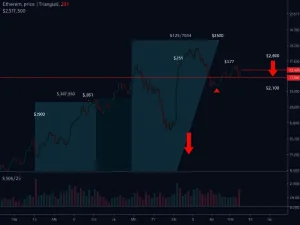
This initiative emerges against a backdrop of a shifting cryptocurrency market. According to data from CoinGecko, Ether’s price has experienced a notable correction, declining roughly 30% from around $3,900 in November 2025 to approximately $2,700 at the time of Buterin’s announcement. While Buterin did not directly link the foundation’s new “mild austerity” to ETH’s market performance, the context of reduced treasury value is an undeniable factor in ecosystem-wide financial planning.
Ethereum Foundation’s Shift to Mild Austerity
The concept of “mild austerity” introduced by Buterin represents a strategic recalibration for the Ethereum Foundation, the non-profit organization central to Ethereum’s research and development. This shift emphasizes greater operational efficiency and a sharper focus on the core technical roadmap. Buterin clarified that his personal funding of these peripheral, yet critical, projects allows the foundation to concentrate its resources on the base blockchain layer—including ongoing work on scalability through danksharding and data availability solutions like PeerDAS.
Historically, the Ethereum Foundation has funded its operations through periodic sales of its ETH treasury, a practice that sometimes drew criticism during market downturns for potentially exerting selling pressure. In recent years, the foundation has publicly explored alternative strategies, including DeFi lending and staking, to generate operational funds without direct asset sales. Buterin’s move can be seen as an extension of this philosophy, using staking rewards to fund public goods while preserving the capital.
Expert Analysis on Funding Open-Source Public Goods
The challenge of sustainably funding open-source software and public good infrastructure is a long-standing issue in technology, acutely felt in the decentralized space. Buterin’s approach—using a substantial personal endowment and planning for yield generation—offers a novel model. Experts in crypto-economics often highlight the “free-rider problem,” where everyone benefits from public goods but few contribute directly to their creation. By dedicating locked capital specifically for this purpose, Buterin creates a predictable funding stream that is insulated from the foundation’s annual budgeting cycles and market sentiment.
This model also demonstrates a maturation in how blockchain ecosystems can self-fund their own critical infrastructure. Instead of relying solely on grants or speculative token launches, it leverages the native properties of the protocol (staking) to support the broader technological stack upon which it depends. Analysts view this as a sign of Ethereum’s deepening institutional logic, moving beyond pure protocol development to fostering the resilient, verifiable computing environment necessary for mainstream adoption.
The Critical Need for Privacy and Open Infrastructure
Buterin’s funding priorities directly address two of the most pressing concerns in modern digital life: the erosion of privacy and the risks of opaque, centralized infrastructure. Privacy-preserving technologies, such as zero-knowledge proofs, allow users to prove statements are true without revealing underlying data. These are vital for bringing confidential transactions and identity attestations to blockchain networks without creating fully anonymous systems that could raise regulatory concerns.
Similarly, the push for open hardware seeks to mitigate supply-chain risks and ensure that the physical devices underpinning our digital world are trustworthy. In an era of sophisticated cyber-attacks and geopolitical tensions over chip manufacturing, verifiable open-source hardware provides a pathway to greater security and sovereignty. Buterin referenced prior support for projects in encrypted communications and “local-first” systems, which keep data primarily on user devices rather than centralized servers.
Importantly, Buterin positioned these efforts as complementary to, not a diversion from, Ethereum’s core mission. A secure, private, and verifiable full technology stack enhances the utility and safety of the decentralized applications built on Ethereum. For instance, a social media dApp built on Ethereum would be far more compelling if it integrated private messaging via open-source secure hardware.
Conclusion
Vitalik Buterin’s decision to earmark $45 million in ETH for privacy and open technology marks a strategic and visionary investment in the foundational layers of the digital future. By personally stewarding this capital towards long-term, high-impact projects in open hardware and privacy tech, Buterin is addressing critical gaps that lie beyond the immediate scope of the Ethereum Foundation’s core protocol work. This move, set against the foundation’s own period of mild austerity, illustrates a sophisticated, multi-pronged approach to ecosystem development—one that balances fiscal prudence with ambitious support for the public goods essential for a truly decentralized and secure technological landscape. The success of this initiative could well define the resilience and integrity of the open web for years to come.
FAQs
Q1: Why is Vitalik Buterin funding this personally instead of through the Ethereum Foundation?
The Ethereum Foundation is entering a phase of “mild austerity” to focus its resources tightly on Ethereum’s core technical roadmap. Buterin’s personal funding allows these critical, adjacent projects in privacy and open tech to proceed without diverting the foundation’s budget, effectively expanding the ecosystem’s total capacity for development.
Q2: What does “privacy-preserving technology” mean in this context?
It refers to tools and protocols, like zero-knowledge proofs, that allow users to interact and transact with verifiable integrity without exposing their personal or transactional data to the public. The goal is to enable confidentiality where needed while maintaining the auditability and security required for trustless systems.
Q3: How will the $45 million in ETH actually be deployed?
The funds will be deployed gradually over the coming years to support research, development, and grants for projects aligned with the stated goals. Buterin also suggested the capital may be placed into decentralized staking strategies to generate staking rewards, which could provide additional, ongoing funding.
Q4: What is “open hardware” and why is it important for crypto?
Open hardware refers to physical devices, like computer chips or servers, whose design specifications are publicly available for anyone to study, modify, and distribute. This is crucial for building verifiable and trustworthy infrastructure, reducing reliance on proprietary technology from a handful of large corporations, and mitigating supply-chain security risks.
Q5: Does this signal a move away from developing the Ethereum blockchain itself?
No. Buterin explicitly stated these efforts are complementary to Ethereum’s development. The Ethereum Foundation remains focused on the core blockchain layer. This funding is for building the broader, secure technological stack that will host and interact with decentralized applications, thereby increasing Ethereum’s overall utility and security.