Spot Gold Price Plummets: A Staggering 5.45% Drop Sends Shockwaves Through Global Markets
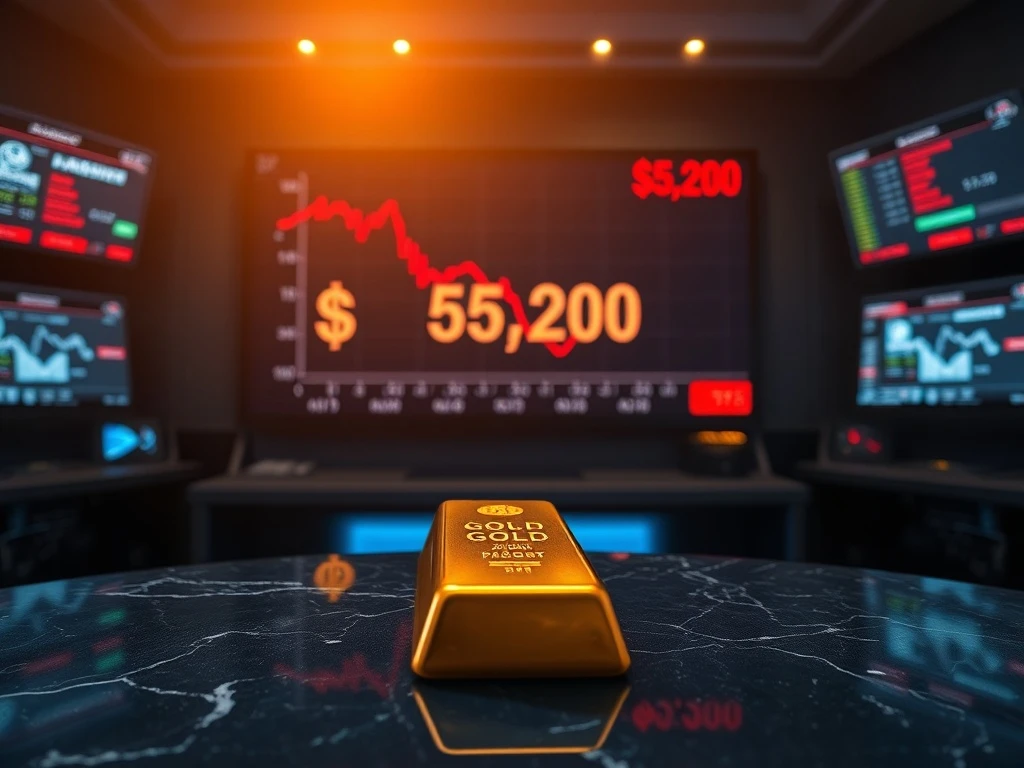
Global financial markets witnessed a sharp correction on Thursday as the spot gold price experienced a dramatic 5.45% single-day decline, tumbling to trade at the $5,200 per ounce level. This significant move, reported by Crypto News Insights, represents one of the most substantial single-session drops for the precious metal in recent years, prompting immediate analysis from traders and economists worldwide regarding its underlying causes and potential ramifications.
Spot Gold Price Plunge: Analyzing the Immediate Data
The reported 5.45% decline in the spot gold price translates to a substantial loss in nominal value. For context, a move of this magnitude for a major benchmark asset like gold is statistically significant and often signals a major shift in market sentiment or macroeconomic conditions. Trading at the $5,200 level, gold has retreated from recent highs, with the sell-off appearing broad-based across major trading hubs including London, New York, and Shanghai. Consequently, market participants are scrutinizing volume data to confirm whether this was a liquidity-driven event or a fundamental repricing.
Furthermore, the volatility spike associated with this drop likely triggered automated trading systems and stop-loss orders, potentially exacerbating the downward momentum. Historical data shows that while gold is traditionally a safe-haven asset, it remains susceptible to sharp corrections, especially following extended periods of bullish sentiment or during periods of extreme dollar strength.
Unpacking the Drivers Behind the Gold Market Crash
Several interconnected factors typically contribute to a rapid decline in the spot gold price. A primary driver is often a surge in the U.S. Dollar Index (DXY). As gold is priced in dollars, a stronger dollar makes gold more expensive for holders of other currencies, dampening demand. Concurrently, rising U.S. Treasury bond yields present a competitive alternative to non-yielding gold, pulling investment capital away from the metal.
- Monetary Policy Expectations: Hawkish signals from central banks, particularly the Federal Reserve, regarding interest rate hikes or quantitative tightening can severely pressure gold prices.
- Risk-On Sentiment: A sudden rally in global equity markets or cryptocurrencies can divert funds from defensive assets like gold.
- Technical Breakdown: The breach of key support levels, such as the 100-day or 200-day moving average, can trigger algorithmic and technical selling.
- Liquidity Events: Large, forced sales by institutions or sovereign wealth funds to cover margins elsewhere can create sudden, disproportionate selling pressure.
Expert Perspective on Market Structure
Market analysts emphasize that the structure of the modern gold market amplifies moves. “The proliferation of gold-backed ETFs and futures contracts means price discovery is now highly leveraged and electronic,” explains a veteran commodities strategist, whose analysis is regularly cited by institutional reports. “A 5% move, while large, can occur swiftly when momentum shifts and ETF units are redeemed in bulk. The critical question is whether this reflects a change in the long-term inflation hedge narrative or a short-term liquidity squeeze.” This perspective underscores the importance of distinguishing between technical corrections and fundamental reversals.
Historical Context and Comparative Analysis
To understand the gravity of a 5.45% drop, it is instructive to examine historical precedents. The table below compares notable single-day declines in the spot gold price over the past two decades:
| Date | Percentage Decline | Primary Catalyst |
|---|---|---|
| April 15, 2013 | ~9.0% | Post-Financial Crisis sell-off, ETF outflows |
| March 2020 | ~5.0% | Initial COVID-19 panic, dash for cash |
| June 2021 | ~4.5% | Stronger-than-expected U.S. jobs data |
| Current Event | 5.45% | Under analysis (DXY, Yields, Policy) |
This historical comparison reveals that such declines, while rare, are not unprecedented and often cluster around periods of major monetary policy transitions or systemic liquidity events. The 2013 event, for example, marked the end of a multi-year bull run and preceded a prolonged period of consolidation.
Broader Impact on Commodity and Financial Markets
The sharp fall in the spot gold price sends ripples across related asset classes. Firstly, other precious metals like silver and platinum often experience correlated selling, though the magnitude may differ based on their industrial demand profiles. Secondly, mining stocks and ETFs (such as GDX) typically see amplified losses due to operational leverage. Thirdly, the foreign exchange market reacts, as currencies of major gold-producing nations like Australia, Canada, and South Africa may face downward pressure.
Moreover, this event influences investor psychology regarding inflation hedges. A falling gold price, if sustained, could be interpreted by some as a signal that market participants see inflationary pressures abating due to aggressive central bank action. Conversely, others might view it as a warning sign of impending deflationary risks or a strengthening dollar that could hurt multinational corporate earnings.
The Role of Digital Asset Markets
In the contemporary financial landscape, the relationship between gold and digital assets like Bitcoin is closely watched. Some analysts frame Bitcoin as ‘digital gold,’ a competing store of value. Therefore, a sharp drop in the spot gold price often prompts analysis of whether capital is rotating into or out of cryptocurrencies. Initial data following this event showed mixed reactions in crypto markets, suggesting the correlation remains complex and situational rather than deterministic.
Conclusion
The 5.45% plunge in the spot gold price to $5,200 is a significant market event that demands careful scrutiny. While the immediate catalysts appear rooted in shifting expectations for interest rates and dollar strength, the long-term implications for the precious metal’s role in portfolios remain to be seen. This decline underscores the inherent volatility even in traditional safe-haven assets during periods of macroeconomic transition. Moving forward, market participants will monitor central bank communications, inflation data, and physical demand trends in key markets like India and China to determine if this is a buying opportunity or the start of a deeper trend reversal for the spot gold price.
FAQs
Q1: What does ‘spot gold price’ mean?
The spot gold price refers to the current market price for immediate delivery and payment of physical gold bullion, as opposed to futures contracts for delivery at a later date.
Q2: Is a 5.45% drop in gold considered normal?
No. While gold is volatile, a single-day move exceeding 5% is statistically significant and rare, typically occurring only a few times per decade during periods of extreme market stress or paradigm shifts.
Q3: How does a strong U.S. dollar affect the gold price?
Gold is dollar-denominated. A stronger U.S. dollar makes gold more expensive to purchase for investors using other currencies, which can reduce global demand and put downward pressure on its price.
Q4: Should investors buy gold after a big drop like this?
Investment decisions depend on individual strategy, risk tolerance, and view on macroeconomic drivers. Some see large drops as buying opportunities, while others wait for confirmation of a new trend. Consulting a financial advisor is recommended.
Q5: Does this drop mean inflation fears are over?
Not necessarily. Gold is one indicator among many. While the drop may reflect market expectations of successful inflation containment by central banks, other data like bond breakeven rates and wage growth must be considered for a complete picture.