Gold Price Shatters $5,500 Barrier in Stunning Rally, Setting Unprecedented Consecutive Highs
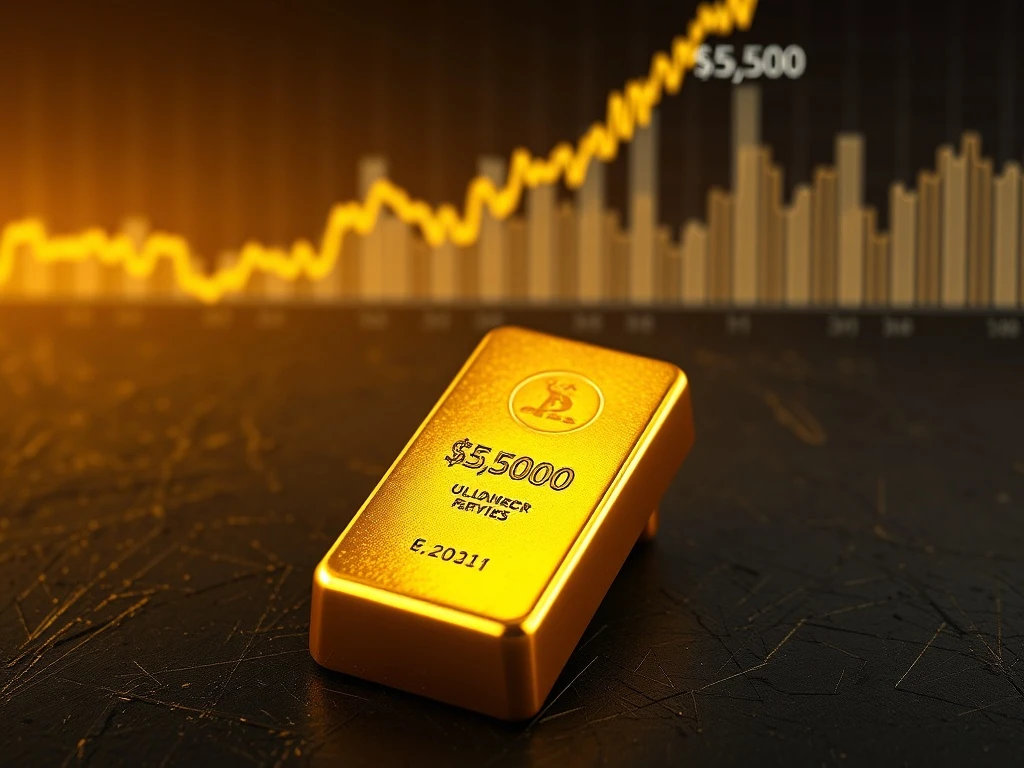
In a landmark move for global financial markets, the spot price of gold has decisively broken through the $5,500 per ounce barrier, setting a new series of consecutive all-time highs and stunning analysts worldwide. This surge, recorded in early 2025, represents not just a milestone but a fundamental shift in the precious metals landscape, driven by a complex confluence of macroeconomic forces. Consequently, investors and central banks are now reassessing their strategies in light of this powerful and sustained rally.
Gold Price Rally: Analyzing the Historic Breakthrough
The recent ascent past $5,400 and subsequently $5,500 per ounce marks a decisive chapter in gold’s long history. This rally is notable for its consistency. Unlike volatile spikes, this movement shows sustained upward pressure. Market data reveals a steady climb over recent quarters, defying traditional seasonal patterns. For instance, trading volumes in major gold ETFs have surged concurrently. Furthermore, central bank purchasing programs have provided a solid foundation for this price floor.
Several key indicators highlight the rally’s strength. The 50-day moving average has remained firmly above the 200-day average. This technical configuration, known as a “golden cross,” signals strong bullish momentum. Additionally, open interest in gold futures contracts on exchanges like COMEX has expanded significantly. This expansion indicates fresh capital entering the market rather than just short-term speculation. Therefore, the current price action reflects deep-seated investor conviction.
Drivers Behind the Precious Metals Surge
Multiple interrelated factors are fueling this unprecedented gold price movement. Primarily, shifting monetary policy expectations play a central role. As major economies signal a potential pause or pivot in interest rate cycles, the opportunity cost of holding non-yielding assets like gold diminishes. Simultaneously, persistent geopolitical tensions continue to drive safe-haven demand. Investors seek a reliable store of value amid global uncertainty.
Another critical driver is sustained central bank demand. Institutions have been net buyers for over a decade, diversifying reserves away from traditional fiat currencies. According to reports from the World Gold Council, this institutional buying has created a consistent and powerful source of demand. Moreover, currency market fluctuations, particularly dollar weakness, have made gold cheaper for holders of other currencies, boosting international buying. Finally, concerns over long-term inflationary pressures, despite recent moderation, keep gold relevant as a historical hedge.
Expert Analysis on Market Dynamics
Financial analysts point to structural changes in the market. “This isn’t a speculative bubble,” notes a senior commodities strategist at a leading investment bank, whose research is frequently cited by the Financial Times. “We are observing a recalibration of portfolio allocations. Pension funds and sovereign wealth funds are increasing their strategic gold holdings for long-term stability.” This sentiment echoes across trading desks, where the narrative has shifted from tactical trading to strategic accumulation.
Historical context is also crucial. The breach of $5,500 represents a gain of over 150% from the price levels seen a decade ago. When adjusted for inflation, however, gold’s real return tells a more nuanced story. Analysts compare this rally to previous cycles, such as the 1970s and the post-2008 period. The current driver mix appears more diversified, combining monetary, geopolitical, and institutional demand rather than a single catalyst. This diversity may contribute to the rally’s perceived durability.
Comparative Impact on Related Asset Classes
The soaring gold price exerts a profound influence on related markets. Silver and other precious metals often experience a sympathetic rally, though with higher volatility. Mining equities, represented by indices like the NYSE Arca Gold BARS Index, have seen significant revaluation. Investors are scrutinizing company margins, as higher gold prices can dramatically improve profitability for producers with stable costs.
Key impacts include:
- Currency Markets: Traditional inverse relationships, like that with the US Dollar Index (DXY), are being tested, though the correlation remains generally negative.
- Bond Markets: Rising gold prices can signal declining confidence in sovereign debt, putting upward pressure on long-term bond yields in some scenarios.
- Digital Assets: The narrative around Bitcoin as ‘digital gold’ faces a new comparison point, with traditional gold asserting its dominance during periods of systemic stress.
| Year | Key Price Level (USD/oz) | Primary Market Catalyst |
|---|---|---|
| 2020 | ~$2,000 | Pandemic-induced stimulus and uncertainty |
| 2022 | ~$2,500 | Inflation fears and initial rate hikes |
| 2024 | ~$4,800 | Peak interest rates and geopolitical strife |
| 2025 | >$5,500 | Rate pivot expectations and sustained institutional demand |
Conclusion
The gold price achieving consecutive highs above $5,500 per ounce is a defining financial event of 2025. This movement stems from a powerful combination of monetary policy shifts, unwavering institutional buying, and persistent global uncertainty. The rally’s structure suggests it is supported by deep market fundamentals rather than fleeting sentiment. As a result, the role of gold in the global monetary system and in investment portfolios is undergoing a significant reassessment. This historic gold price breakthrough will likely influence asset allocation decisions and economic policy discussions for the foreseeable future.
FAQs
Q1: What does “spot gold” price mean?
The spot price is the current market price for immediate delivery and payment of gold. It serves as the global benchmark for pricing physical gold, derivatives, and jewelry.
Q2: Why is gold hitting all-time highs now?
The convergence of anticipated shifts in central bank interest rate policies, continued strong purchases by official sector institutions (central banks), and ongoing geopolitical tensions are the primary, interconnected drivers.
Q3: How does a higher gold price affect the average consumer?
Consumers may face higher prices for gold jewelry and products. Indirectly, it can signal broader economic concerns that may impact investment portfolios and savings, though it does not directly cause general inflation.
Q4: Is it too late to invest in gold after this rally?
Financial advisors stress that gold should be viewed as a long-term portfolio diversifier and hedge, not a short-term trade. Its role depends on individual financial goals and the existing composition of one’s investments.
Q5: What is the difference between gold price performance and gold miner stock performance?
While correlated, mining stocks (equities) carry additional risks like operational costs, management effectiveness, and geopolitical factors in mining regions. They can offer leverage to the gold price but with higher volatility.