Coinbase Prediction Market Achieves Nationwide Breakthrough, Expanding Kalshi Service to All 50 States
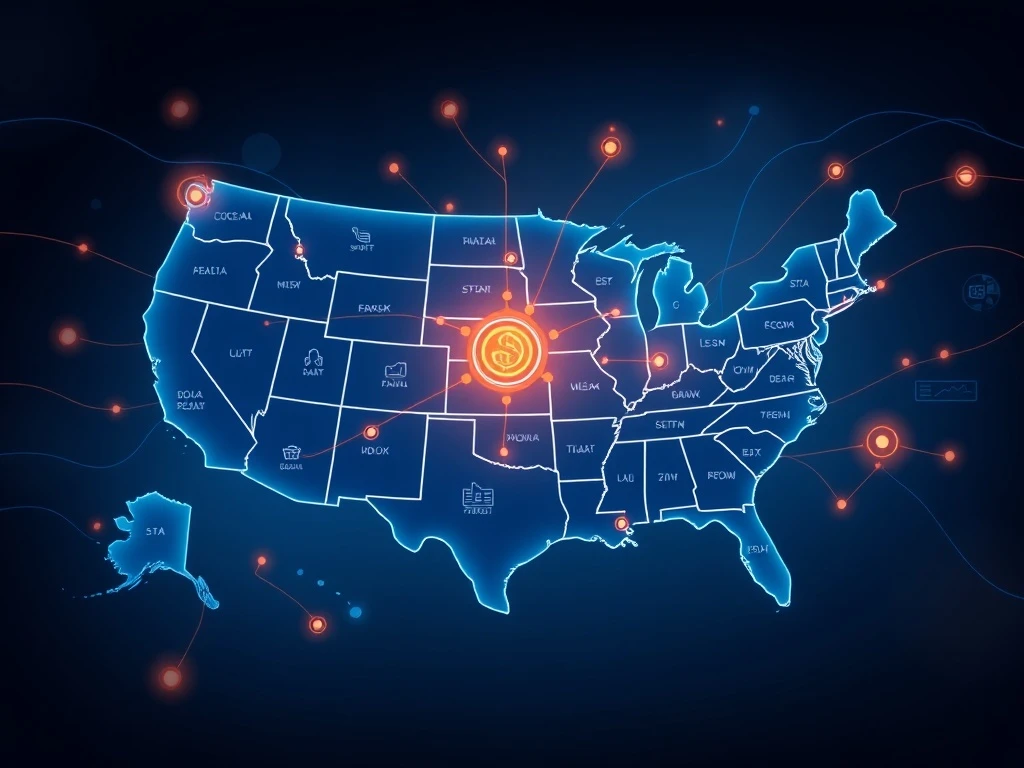
In a significant move for the regulated fintech sector, Coinbase has successfully expanded its Kalshi-based prediction market service to users in all 50 U.S. states as of late 2024, according to a report by The Block. This nationwide rollout marks a pivotal moment for accessible, regulated event-based trading, moving beyond the initial limited user base from its launch just last month. Consequently, millions of eligible U.S. customers can now engage with markets tied to political elections, major sports outcomes, entertainment awards, and key economic indicators, with all transactions securely processed through the CFTC-regulated Kalshi exchange.
Coinbase Prediction Market Enters a New National Phase
The expansion represents a strategic scaling of a novel financial product. Initially, the service operated under a restricted launch, a common practice for testing infrastructure and regulatory compliance. Now, with the green light for all states, Coinbase integrates a unique offering directly into its mainstream platform. This service fundamentally allows users to trade on the probable outcomes of future real-world events, not traditional assets. For instance, a user might take a position on which party will win a Senate seat, whether a specific economic metric will be met, or which team will secure a championship title.
All trading activity flows through Kalshi, a Designated Contract Market (DCM) officially regulated by the U.S. Commodity Futures Trading Commission (CFTC). This regulatory framework is crucial. It provides a layer of oversight and consumer protection distinct from the more common, unregulated prediction markets found online. The CFTC’s role ensures market integrity, transparent pricing, and safeguards against manipulation. Therefore, this expansion is not merely about geographic reach but also about legitimizing event contracts as a credible financial instrument for a broad audience.
The Regulatory Backbone: Kalshi and the CFTC
Kalshi’s status as a CFTC-regulated DCM is the cornerstone of this entire operation. A DCM is an exchange where traders can buy and sell futures, options, or event contracts on a wide range of underlying interests. The CFTC grants this designation only to platforms that meet stringent standards for financial integrity, market surveillance, and anti-fraud measures. By partnering with Kalshi, Coinbase leverages this established regulatory structure rather than navigating the complex process alone. This partnership model allows a cryptocurrency exchange to offer a traditionally separate asset class while maintaining clear regulatory boundaries.
Understanding the Mechanics of Event Contract Trading
For the average user, this service functions similarly to buying shares in a specific outcome. Each event has a corresponding contract, often phrased as a yes/no question. The price of a “Yes” contract fluctuates between $0 and $1 based on the market’s collective assessment of the event’s likelihood. If the event occurs, the contract settles at $1. If it does not, it settles at $0. The profit or loss is the difference between the purchase price and the settlement value.
- Market Types: Contracts span politics (e.g., “Will Candidate X win the 2024 election?”), economics (“Will the Fed raise rates in Q1 2025?”), sports, and entertainment.
- Settlement: All contracts have clearly defined resolution criteria and expiration dates, with outcomes determined by verifiable, neutral sources like official election results or economic data releases.
- Accessibility: Integrated directly into the Coinbase interface, the service aims for a user experience familiar to existing customers.
This model provides a financial tool for hedging risk or expressing a view on future events. However, analysts note it also serves as a powerful aggregator of crowd-sourced information, producing a real-time probability signal on countless topics.
The Strategic Impact on Coinbase and Fintech
This nationwide launch is a clear product diversification play for Coinbase. While cryptocurrency trading remains its core, adding regulated prediction markets broadens its appeal. It attracts users interested in macro trends and event-driven speculation without necessarily engaging with crypto volatility. Furthermore, it positions Coinbase as a more comprehensive financial platform, competing in the broader “future events” market.
The expansion also reflects growing institutional acceptance of prediction markets as legitimate financial instruments. Historically, such markets faced skepticism and regulatory hurdles. The partnership with a CFTC-regulated entity like Kalshi helps normalize the concept. It demonstrates how technology and regulation can converge to create new, compliant market structures. Other fintech and traditional finance players will likely watch the adoption metrics closely, potentially leading to further innovation and competition in this space.
Broader Implications for Information Markets
Beyond finance, the growth of regulated prediction markets has significant implications for information accuracy and public discourse. Academic research has consistently shown that well-designed prediction markets can be highly accurate forecasters, often outperforming polls and expert panels. By giving a large, financially-incentivized audience a platform to trade on events, these markets generate continuous, price-based probability assessments. Policymakers, businesses, and journalists may increasingly look to these markets as a supplementary data source for understanding public expectations on everything from election odds to inflation forecasts.
Conclusion
The nationwide expansion of the Coinbase prediction market service, powered by Kalshi, marks a definitive step in the maturation of event contract trading. By achieving availability in all 50 U.S. states under a clear CFTC regulatory umbrella, Coinbase is democratizing access to a sophisticated financial tool once limited to specialized platforms. This move enhances product diversity for Coinbase, validates the regulatory pathway for prediction markets, and introduces a new mechanism for price discovery on real-world outcomes to a massive user base. The long-term success of this Coinbase prediction market will depend on user adoption, market liquidity, and its ability to maintain robust regulatory compliance as it scales.
FAQs
Q1: What exactly is the Coinbase prediction market?
The Coinbase prediction market is a service, powered by the regulated exchange Kalshi, that lets users trade financial contracts based on the outcomes of real-world events like elections, sports games, or economic reports. Contracts settle at $1 if the event happens and $0 if it does not.
Q2: Is this service legal and regulated?
Yes. All trading is processed through Kalshi, which is a Designated Contract Market (DCM) regulated by the U.S. Commodity Futures Trading Commission (CFTC). This provides a layer of federal oversight for market integrity and consumer protection.
Q3: Who can use the Coinbase prediction market now?
Following the recent expansion, eligible users with accounts in all 50 U.S. states can access the service through the Coinbase platform, subject to standard identity verification and account requirements.
Q4: How is this different from sports betting or gambling?
While conceptually similar, this service operates on a regulated financial exchange (Kalshi) under the CFTC, which classifies these as event contracts. This framework focuses on market structure and transparency, distinguishing it from state-licensed sports betting, which is governed by different laws and agencies.
Q5: What are the risks involved in trading on prediction markets?
As with any speculative trading, users can lose the money they commit. The value of contracts is volatile and tied to uncertain future events. It is essential to understand the contract terms, resolution rules, and to only risk capital one can afford to lose.