Cryptocurrency Payments Surge: A Staggering 40% of US Merchants Now Accept Crypto at Checkout
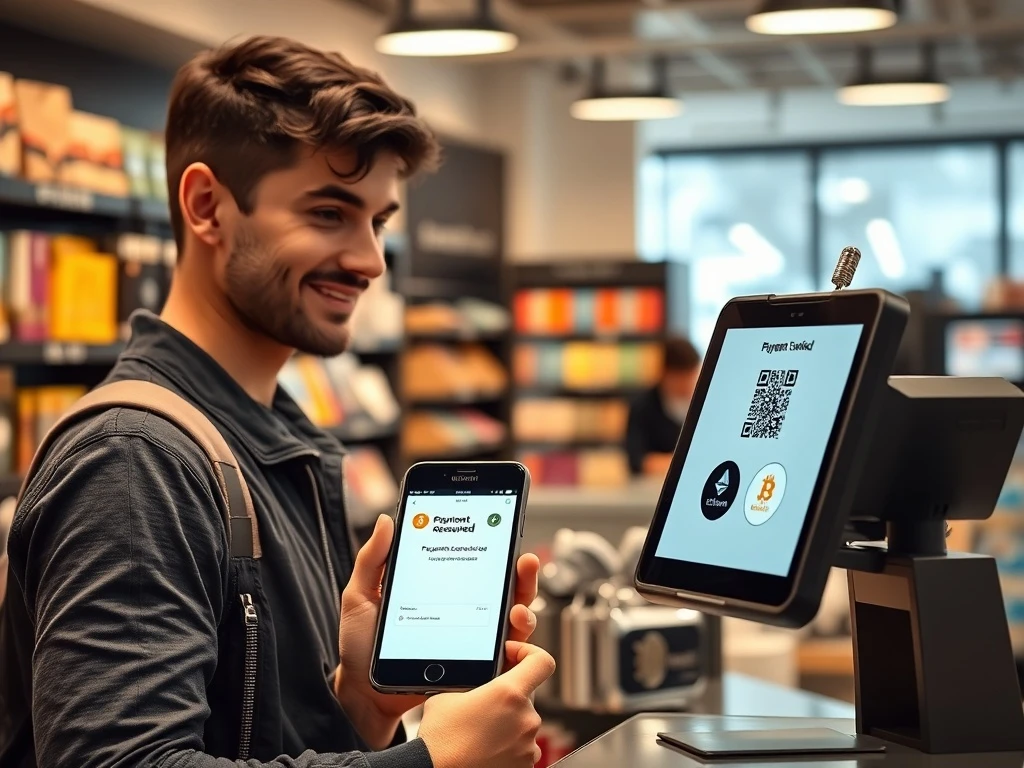
In a landmark shift for digital commerce, nearly 40% of United States merchants now accept cryptocurrency payments directly at checkout, according to a major October 2024 survey highlighted by PayPal. This rapid adoption, moving beyond niche experimentation, signals a profound transformation in everyday financial transactions driven by evolving consumer behavior and technological infrastructure.
Cryptocurrency Payments Enter Mainstream Commerce
The data reveals a clear and accelerating trend. A survey of 619 payment-strategy decision-makers, conducted by the National Cryptocurrency Association, found that almost four in ten businesses have integrated crypto payment options. Furthermore, an overwhelming 84% of these merchants believe cryptocurrency payments will become mainstream within the next five years. This expectation is not based on speculation but on direct market signals. Nearly nine in ten US merchants reported receiving customer inquiries about paying with digital assets, demonstrating significant and growing public interest.
May Zabaneh, Vice President and General Manager at PayPal, contextualized the findings. “What we’re seeing both in this data and in conversations with our customers is that crypto payments are moving beyond experimentation and into everyday commerce,” Zabaneh stated. The driving force is unmistakable: customer demand for faster, more flexible payment methods. Businesses that adopt these systems are reportedly seeing tangible value, with crypto transactions already representing 26% of total sales for merchants who accept them.
Demographic and Industry Drivers of Adoption
Adoption rates are not uniform across all business segments. The survey identified clear leaders based on company size and industry sector. Large enterprises are at the forefront of integration, while 34% of small companies and 32% of midsized businesses have adopted crypto payments. Major US corporations like Starbucks, Walmart, and Home Depot now accept digital currencies, providing a trusted pathway for broader consumer use.
Certain industries are pioneering this change more rapidly than others. The hospitality and travel sector, digital goods marketplaces, and the gaming industry show the strongest adoption rates. These sectors often cater to a global, digitally-native clientele comfortable with alternative financial systems. The demographic correlation is equally significant. Millennials and Generation Z shoppers are proving to be the most crypto-savvy, actively seeking out merchants that offer digital currency payment options and pushing for its wider availability.
The Infrastructure Challenge and Future Outlook
Despite the promising growth, a significant barrier remains. PayPal’s report emphasizes that the payment infrastructure needs simplification to reach the next adoption level. A striking 90% of merchants indicated they would be willing to try accepting cryptocurrency if the process were as straightforward as processing a credit card payment. This sentiment underscores a critical evolution point for the technology.
Stu Alderoty, President of the National Cryptocurrency Association and Chief Legal Officer at Ripple, provided expert analysis on the hurdle. “What this data makes clear is that interest in crypto isn’t the problem; understanding is,” Alderoty explained. The industry’s focus is now shifting from building awareness to enhancing usability. PayPal itself launched a crypto checkout tool in July 2024, allowing US merchants to receive payments in over 100 cryptocurrencies, directly addressing the complexity issue.
The potential benefits fueling this transition are multifaceted. Proponents argue that well-designed cryptocurrency systems can offer transactions that are faster, cheaper, more transparent, and more secure than some traditional methods. For merchants, this can mean lower processing fees and access to new customer bases. For consumers, it can provide greater financial control and convenience, especially for cross-border purchases.
Conclusion
The movement of cryptocurrency payments from the fringe to the financial forefront is undeniable. With nearly 40% of US merchants now accepting digital assets at checkout, driven by demand from younger generations and leading industries, a foundational shift in commerce is underway. The key to unlocking the next wave of adoption lies in simplifying the underlying payment infrastructure to match the seamless experience of established systems. As this happens, cryptocurrency payments are poised to fulfill their predicted trajectory toward becoming a standard feature of the global economic landscape.
FAQs
Q1: What percentage of US merchants currently accept cryptocurrency?
According to the October 2024 survey cited by PayPal, nearly 40% of US merchants now accept cryptocurrency payments at checkout.
Q2: Which industries are leading in crypto payment adoption?
Adoption is strongest in the hospitality and travel sector, the digital goods marketplace, and the gaming industry, as these businesses often engage with a tech-forward, global customer base.
Q3: What is the main barrier to wider crypto payment adoption among merchants?
The primary barrier is complexity. 90% of merchants surveyed said they would try accepting crypto if the process were as simple as accepting a credit card payment, highlighting a need for more user-friendly infrastructure.
Q4: How important are younger consumers to crypto payment growth?
Millennials and Generation Z are critical drivers. They are the most crypto-savvy shopper demographics and actively influence merchants by inquiring about and using digital currency payment options.
Q5: What role is PayPal playing in this trend?
PayPal is a significant facilitator. It launched a crypto checkout tool in mid-2024 that allows US merchants to receive payments in over 100 cryptocurrencies, helping to bridge the gap between digital assets and mainstream commerce.