Polymarket Unveils Revolutionary BTC and ETH Volatility Prediction Markets for 2026
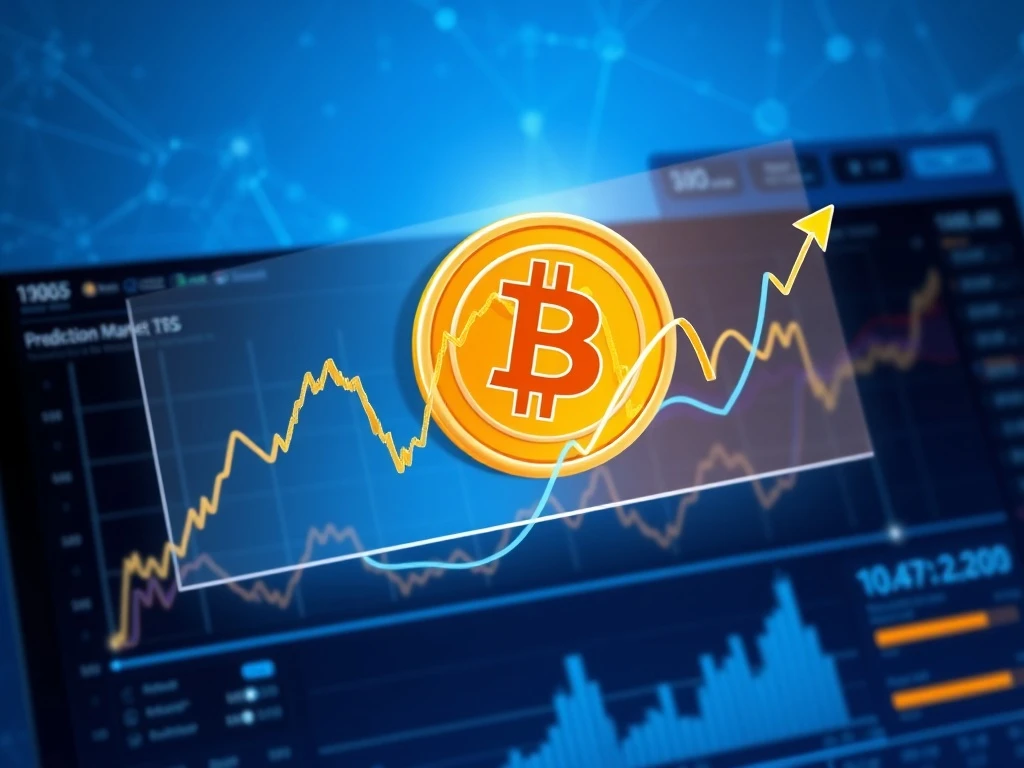
In a significant development for decentralized finance, Polymarket has launched innovative prediction markets specifically designed for Bitcoin and Ethereum volatility, fundamentally changing how traders can approach cryptocurrency risk management for the coming years. This groundbreaking move, first reported by CoinDesk, introduces markets tied directly to Volmex’s 30-day implied volatility indexes, enabling participants to speculate on how turbulent BTC and ETH prices might become by the end of 2026. Consequently, this development represents a major evolution in crypto derivatives and market sentiment tools.
Polymarket Expands Crypto Prediction Markets with Volatility Focus
Polymarket, a leading decentralized prediction market platform, has introduced specialized markets for cryptocurrency volatility. These new offerings specifically track Volmex’s established volatility indexes for Bitcoin and Ethereum. Essentially, traders can now place bets on whether the 30-day implied volatility for these major cryptocurrencies will reach or exceed predetermined levels by December 31, 2026. Therefore, this creates a novel financial instrument within the prediction market ecosystem.
Prediction markets traditionally focus on binary outcomes for events like elections or sports. However, Polymarket’s new volatility markets represent a sophisticated shift toward complex financial metrics. The platform utilizes blockchain technology to ensure transparent and trustless settlement. Moreover, this integration with Volmex indexes provides a credible benchmark derived from established options markets.
The launch timing coincides with increasing institutional interest in cryptocurrency volatility products. Traditional finance has long used volatility indexes like the VIX for equities. Similarly, crypto markets now gain comparable tools for risk assessment. This development follows months of testing and community feedback on the Polymarket platform. Additionally, it aligns with broader trends in decentralized finance innovation.
Understanding Volmex Implied Volatility Indexes
Volmex Labs creates volatility indexes that measure market expectations of future price swings. Their methodology calculates 30-day implied volatility from options trading data. Specifically, the indexes reflect the annualized expected volatility priced into Bitcoin and Ethereum options markets. Consequently, they serve as crucial indicators of market sentiment and perceived risk.
Implied volatility differs significantly from historical volatility. Historical volatility measures past price movements. Conversely, implied volatility represents forward-looking market expectations. These expectations derive from options pricing models. Therefore, the Volmex indexes capture what traders anticipate for future price turbulence.
The relationship between volatility and market cycles presents important patterns. Typically, volatility increases during market downturns and uncertainty periods. Conversely, it often decreases during sustained bull markets. Understanding these patterns helps traders interpret volatility predictions. Furthermore, volatility clustering phenomena frequently occur in cryptocurrency markets.
Mechanics of the New Prediction Markets
The newly launched markets operate on a straightforward yet powerful premise. Participants buy shares representing outcomes on volatility thresholds. For example, a market might ask: “Will Bitcoin’s 30-day implied volatility exceed 80% by December 31, 2026?” Shares for “Yes” and “No” outcomes trade freely on Polymarket. Settlement occurs automatically based on the actual Volmex index value at the deadline.
This structure offers several advantages over traditional volatility trading. First, it provides direct exposure to volatility without complex options strategies. Second, it enables participation with relatively small capital amounts. Third, it creates a continuous market for volatility sentiment throughout the prediction period. Finally, it leverages blockchain for transparent and immutable record-keeping.
Market resolution follows clear, predefined rules. The Volmex index serves as the official oracle for settlement. Polymarket’s smart contracts automatically distribute funds to correct prediction holders. This automated process eliminates counterparty risk and manual intervention. Moreover, it ensures fair outcomes based on verifiable external data.
Broader Implications for Crypto Derivatives and Risk Management
This innovation carries significant implications for cryptocurrency market structure. Traditionally, volatility trading required sophisticated options knowledge and substantial capital. Now, retail and institutional participants alike can access volatility exposure through intuitive prediction markets. This democratization could increase overall market efficiency and liquidity.
The development also enhances cryptocurrency’s financial infrastructure maturity. Robust volatility markets help complete the derivatives ecosystem alongside futures and options. They provide additional tools for hedging and speculation. Furthermore, they generate valuable data about market expectations over extended time horizons. This data could inform trading strategies across multiple asset classes.
Several key benefits emerge from these new markets:
- Enhanced Risk Management: Traders can hedge against or speculate on volatility directly
- Market Sentiment Indicator: Trading activity reveals collective expectations about future turbulence
- Educational Value: Simplified access helps newcomers understand volatility concepts
- Innovation Catalyst: Could inspire similar products for other cryptocurrencies
Potential challenges nevertheless require consideration. Prediction market liquidity remains crucial for accurate price discovery. Regulatory uncertainty persists around crypto derivatives in some jurisdictions. Additionally, oracle reliability for long-term settlements presents technical considerations. The Volmex index methodology must maintain integrity throughout the prediction period.
Historical Context and Market Evolution
Prediction markets have evolved substantially since early implementations. Initially, they focused on political events and entertainment outcomes. Gradually, financial applications gained prominence. Polymarket itself previously launched markets for cryptocurrency prices and regulatory decisions. This volatility focus represents a natural progression toward sophisticated financial instruments.
Cryptocurrency volatility trading previously existed primarily through centralized options platforms. These platforms require significant collateral and understanding of Greek letters. Decentralized alternatives like Opyn and Hegic emerged more recently. However, Polymarket’s prediction market approach offers unique advantages in accessibility and simplicity.
The 2026 timeframe itself warrants examination. Long-dated volatility predictions extend beyond typical options expiries. This creates entirely new data points about multi-year market expectations. Analysts might compare these predictions with traditional macroeconomic forecasts. Additionally, the data could reveal insights about perceived cryptocurrency maturation over time.
Technical Implementation and Security Considerations
Polymarket builds on Ethereum layer-2 scaling solutions for efficiency. The platform uses USDC stablecoin for trading and settlements. Smart contracts handle market creation, trading, and resolution automatically. This decentralized architecture eliminates single points of failure. Moreover, it ensures censorship resistance and global accessibility.
Security measures protect user funds and market integrity. Multi-signature wallets control substantial protocol assets. Regular security audits identify potential vulnerabilities. The platform also implements circuit breakers during extreme volatility events. These precautions align with industry best practices for decentralized finance applications.
Oracle integration represents a critical technical component. Polymarket relies on Volmex’s index calculations as settlement data. The index methodology uses multiple data sources to prevent manipulation. Time-weighted average prices reduce the impact of anomalous readings. This robust approach ensures fair and accurate market resolutions.
Conclusion
Polymarket’s launch of Bitcoin and Ethereum volatility prediction markets marks a pivotal moment for decentralized finance innovation. These new instruments provide accessible exposure to cryptocurrency volatility through 2026, utilizing Volmex’s established indexes for reliable benchmarking. The development enhances market completeness, offers novel risk management tools, and generates valuable forward-looking sentiment data. As cryptocurrency markets continue maturing, such sophisticated derivatives products will likely play increasingly important roles in portfolio management and price discovery. The Polymarket volatility markets specifically demonstrate how prediction platforms can evolve beyond simple binary events toward complex financial metrics, potentially paving the way for further innovation in decentralized derivatives.
FAQs
Q1: What exactly are Polymarket’s new volatility prediction markets?
These are decentralized markets where participants can trade predictions about whether Bitcoin or Ethereum’s 30-day implied volatility will reach specific levels by December 31, 2026, using Volmex indexes as settlement benchmarks.
Q2: How do these markets differ from traditional options trading?
Unlike options requiring knowledge of strikes and expiries, these prediction markets offer simplified yes/no propositions on volatility thresholds with potentially lower capital requirements and different risk profiles.
Q3: What is the Volmex volatility index and how is it calculated?
The Volmex index calculates 30-day implied volatility from Bitcoin and Ethereum options market data, representing annualized expected price swings as priced by options traders using established financial models.
Q4: Who might use these volatility prediction markets?
Traders seeking volatility exposure, investors hedging portfolio risk, analysts studying market sentiment, and educators demonstrating volatility concepts could all utilize these markets for different purposes.
Q5: What happens when the prediction market reaches its December 2026 deadline?
Polymarket’s smart contracts automatically check the Volmex index value against predetermined thresholds and distribute funds to holders of correct predictions based on the verified outcome.