Bitcoin Soars: BTC Price Surges Above $90,000 Milestone in Major Market Rally
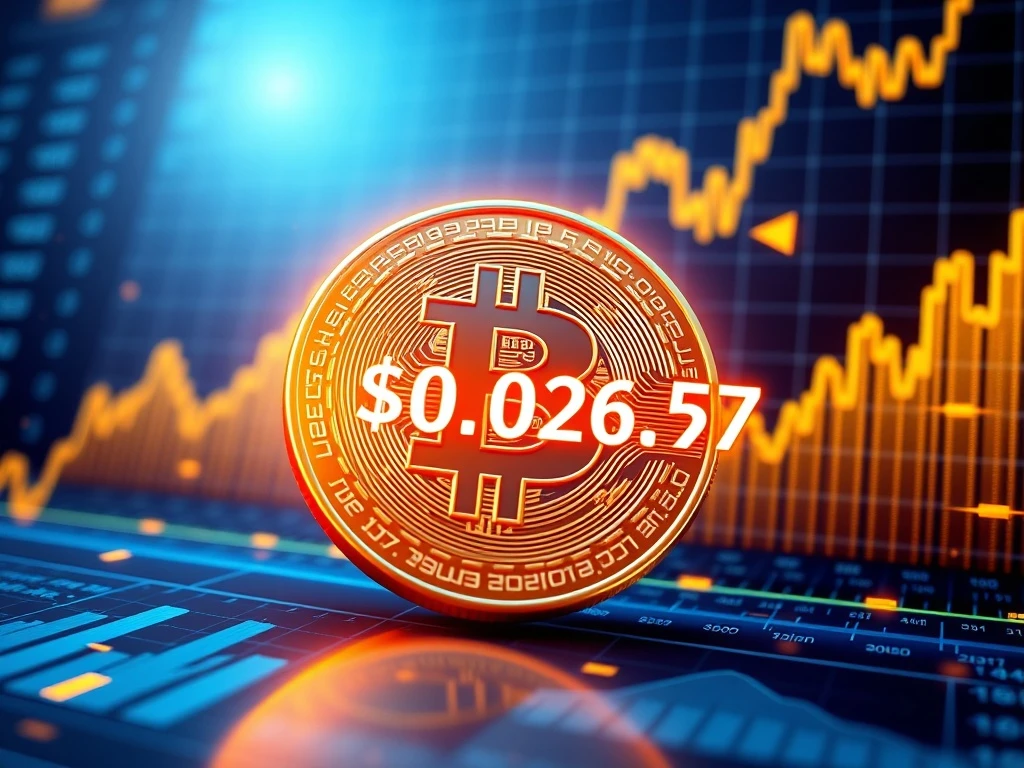
In a significant development for global digital asset markets, the Bitcoin price has decisively broken the $90,000 barrier, trading at $90,026.67 on the Binance USDT market as of March 2025. This milestone represents a pivotal moment for the flagship cryptocurrency, reflecting a confluence of macroeconomic factors and sustained institutional adoption. Market analysts are now closely monitoring whether this breach signals the beginning of a new price discovery phase or a temporary peak before consolidation.
Bitcoin Price Breaches Key Psychological Barrier
The ascent of the Bitcoin price above $90,000 marks a critical juncture. According to data from Crypto News Insights, the move occurred during active Asian and European trading hours. Consequently, trading volume spiked by approximately 35% on major spot exchanges. This price action follows a sustained period of accumulation, often observed in institutional custody reports. For instance, publicly available on-chain data shows a notable decrease in Bitcoin held on exchanges, suggesting a long-term holding mentality among large investors.
Furthermore, the rally appears broad-based. Several other major cryptocurrencies, often called ‘altcoins,’ have posted significant gains alongside Bitcoin. This correlation typically indicates strong overall market sentiment. Market technicians point to the clean break above the previous all-time high resistance zone near $88,000 as a technically bullish signal. The move was accompanied by strong momentum, as measured by the Relative Strength Index (RSI), though it remains below historically overbought thresholds.
Analyzing the Drivers Behind the Cryptocurrency Surge
Multiple verifiable factors contributed to this Bitcoin price movement. Primarily, recent regulatory clarity in several major economies has reduced market uncertainty. Additionally, the continued integration of Bitcoin into traditional finance, such as new spot Bitcoin ETF products, has provided a steady inflow of capital. Macroeconomic conditions, including currency devaluation concerns in certain regions, have also driven demand for perceived stores of value.
- Institutional Adoption: Quarterly reports from publicly traded companies show increased Bitcoin treasury allocations.
- Regulatory Developments: Clearer frameworks in the EU and partial guidance in the US have reduced operational risk for institutions.
- Network Fundamentals: The Bitcoin hash rate, a measure of network security, continues to hit record highs, underscoring robust underlying infrastructure.
- Macro Hedge: Financial analysts cite Bitcoin’s performance amidst global inflationary pressures as a key narrative.
Historical data provides essential context for this move. The journey from Bitcoin’s last major peak to the current $90,000 level involved a prolonged consolidation period. This pattern of rapid appreciation followed by extended basing is consistent with previous market cycles, though each cycle possesses unique catalysts. The current cycle is notably distinguished by the depth of institutional participation compared to earlier retail-driven rallies.
Expert Perspectives on Market Sustainability
Financial market veterans emphasize the importance of volatility management at new price levels. “Reaching a round number like $90,000 is psychologically important,” notes a market strategist from a global macro fund, referencing public commentary. “However, the key metric is sustained trading volume and depth on order books. A thin rally can reverse quickly.” Data from order book aggregators currently shows substantial buy-side support clustered below the new price level, which may act as a cushion against sharp declines.
Blockchain analytics firms contribute another layer of evidence. Their reports indicate that the proportion of Bitcoin supply that hasn’t moved in over a year remains near all-time highs. This metric, often called ‘HODLer’ behavior, suggests strong conviction among long-term investors. Simultaneously, the velocity of Bitcoin—how frequently it changes wallets—has increased moderately, indicating healthy market activity without the frenetic speculation seen at past market tops.
Comparative Market Performance and Future Trajectory
The performance of Bitcoin often sets the tone for the broader digital asset ecosystem. A comparison with traditional asset classes year-to-date reveals a significant divergence.
| Asset Class | YTD Performance (Approx.) | Key Driver |
|---|---|---|
| Bitcoin (BTC) | +45% | Institutional adoption, macro hedge demand |
| S&P 500 Index | +8% | Corporate earnings, interest rate expectations |
| Gold (USD) | +5% | Inflation concerns, geopolitical tension |
| 10-Year US Treasury | -2% (Price) | Shifting yield expectations |
This outperformance raises questions about capital rotation and portfolio strategy. Financial advisors report growing client inquiries about cryptocurrency allocation. The immediate future trajectory likely depends on several upcoming events, including central bank policy announcements and the implementation of new financial infrastructure for digital assets. Technical analysts will watch for a confirmed close above $90,000 on weekly charts to validate the breakout’s strength.
Conclusion
The Bitcoin price achieving a value above $90,000 represents a landmark event driven by concrete factors like institutional adoption, regulatory progress, and macroeconomic trends. This move is supported by strong on-chain fundamentals and trading volume, distinguishing it from mere speculative spikes. While market volatility remains an inherent characteristic, the breach of this psychological barrier underscores Bitcoin’s maturing role within the global financial landscape. Observers will now monitor for sustained momentum and the development of new support levels around this historic Bitcoin price point.
FAQs
Q1: What was the exact Bitcoin price reported when it crossed $90,000?
According to market monitoring data, Bitcoin was trading at $90,026.67 on the Binance USDT perpetual market at the time of the reported breach.
Q2: What are the main reasons experts give for Bitcoin’s rise above $90,000?
Primary reasons include increased institutional investment through new financial products, clearer regulatory frameworks in key markets, and its perceived role as a hedge against currency devaluation and inflation in the current macroeconomic climate.
Q3: How does this price compare to Bitcoin’s historical performance?
This price represents a new all-time high, surpassing the previous record. The journey involved a cycle of appreciation, consolidation, and renewed growth, a pattern observed, though not identically, in prior market cycles.
Q4: Does a price above $90,000 mean the market is in a bubble?
Market analysts assess bubbles using multiple metrics like price-to-network-value ratios, exchange inflows, and leverage levels. Current data shows strong fundamentals like high hash rate and low exchange balances, which are not typical of historical bubble peaks, but analysts always caution that cryptocurrency markets are inherently volatile.
Q5: What should potential investors consider after this price movement?
Potential investors should consider their risk tolerance, investment horizon, and conduct thorough research. They should understand Bitcoin’s volatility, the importance of secure storage, and view it as a potentially high-risk component of a diversified portfolio, not a guaranteed investment. Consulting a qualified financial advisor is recommended.