Hyungji’s Revolutionary Partnership with Arbitrum Transforms Fashion Retail Payments
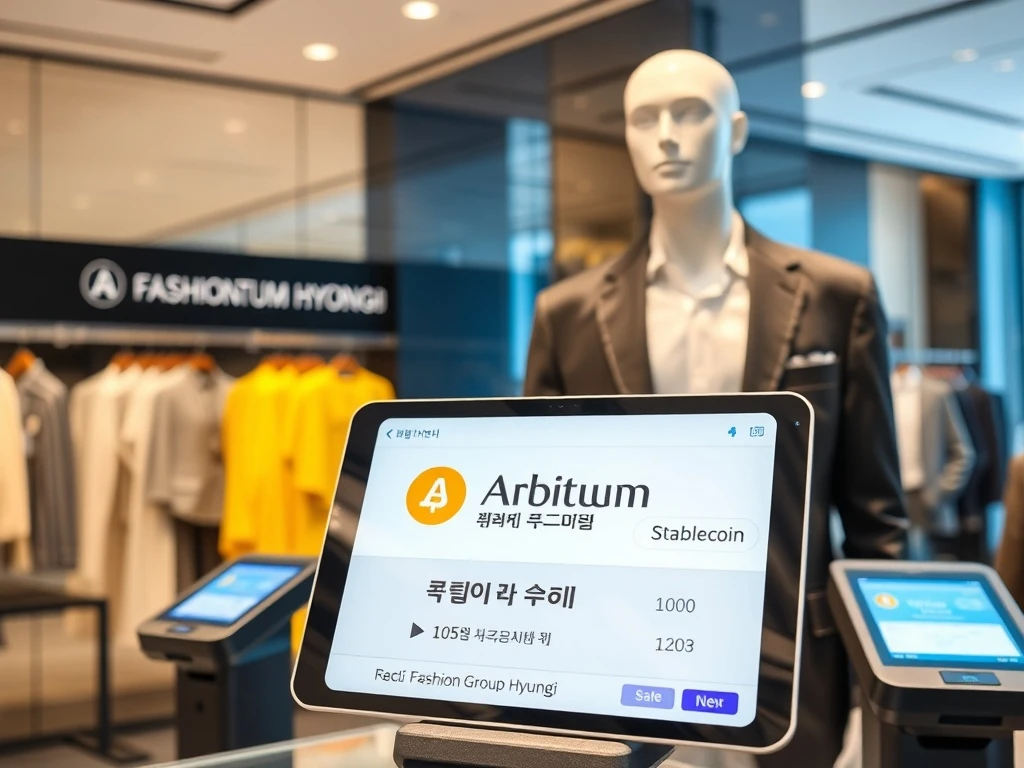
SEOUL, South Korea – January 23, 2025 – Fashion Group Hyungji, a prominent South Korean apparel company, has announced a groundbreaking partnership with the Arbitrum Foundation to develop a stablecoin-based digital payment infrastructure. This strategic move positions the fashion retailer at the forefront of blockchain adoption in traditional retail sectors. The collaboration aims to revolutionize payment systems across Hyungji’s extensive domestic and international distribution networks. Consequently, the initiative promises enhanced transaction convenience and significantly reduced fees for global customers.
Hyungji’s Strategic Move into Blockchain Payments
Fashion Group Hyungji’s Memorandum of Understanding with the Arbitrum Foundation represents a significant milestone in retail technology integration. The South Korean company operates numerous fashion brands across Asia and has been expanding globally. Their decision to implement stablecoin payments follows extensive market research into consumer payment preferences. Moreover, this initiative aligns with South Korea’s broader digital transformation strategy, which actively promotes fintech innovation.
The company plans to phase in the new payment system gradually. Initially, the system will launch in select flagship stores in Seoul and Busan. Subsequently, Hyungji will expand the infrastructure to international locations in Japan, China, and Southeast Asia. The implementation timeline spans approximately 18 months, with full deployment expected by mid-2026. This careful rollout strategy ensures system stability and user adoption.
Understanding Arbitrum’s Layer 2 Technology
Arbitrum operates as an Ethereum Layer 2 scaling solution, specifically designed to enhance transaction speed and reduce costs. The network achieves this through optimistic rollup technology, which processes transactions off the main Ethereum chain. Therefore, Arbitrum provides faster confirmation times and lower gas fees compared to direct Ethereum transactions. These technical advantages make the platform particularly suitable for retail payment applications.
The Arbitrum Foundation, established in 2021, has consistently focused on developer adoption and enterprise partnerships. Their technology already supports numerous decentralized applications and traditional business integrations. For instance, several global companies have previously explored Arbitrum for supply chain management and loyalty programs. However, Hyungji represents one of the first major fashion retailers to commit to full payment system integration.
Technical Implementation and Security Measures
Hyungji’s technical team will work closely with Arbitrum developers to create a customized payment gateway. This system will convert stablecoin payments into local fiat currencies automatically. Importantly, the architecture includes multiple security layers to protect consumer data and transaction integrity. The companies have committed to regular third-party security audits throughout the development process.
The payment infrastructure will utilize USD-pegged stablecoins initially, with plans to incorporate additional currency options. Transaction settlements will occur nearly instantaneously, providing customers with immediate purchase confirmation. Additionally, the system will generate detailed digital receipts stored securely on the blockchain. These receipts will facilitate easier returns and warranty claims for consumers.
Stablecoin Advantages for Global Fashion Retail
Stablecoins offer several distinct advantages for international retail operations. First, they eliminate traditional currency conversion fees that typically range from 1-3% per transaction. Second, they provide settlement finality within minutes rather than days. Third, they reduce exposure to currency volatility through their peg mechanisms. These benefits collectively address longstanding pain points in cross-border fashion commerce.
The global fashion industry processes approximately $1.7 trillion in annual transactions. International sales represent a growing percentage of this total, particularly for Asian fashion brands expanding westward. Traditional payment systems often create friction through delayed settlements and hidden fees. Stablecoin infrastructure directly addresses these inefficiencies while maintaining regulatory compliance.
Comparative Analysis: Traditional vs. Stablecoin Payments
| Payment Aspect | Traditional System | Stablecoin System |
|---|---|---|
| Transaction Speed | 1-3 business days | 2-5 minutes |
| Cross-Border Fees | 2-5% + currency spread | 0.1-0.5% flat rate |
| Settlement Finality | Reversible for 30-90 days | Immediate and irreversible |
| Currency Conversion | Multiple intermediary banks | Direct blockchain conversion |
| Operating Hours | Banking hours only | 24/7/365 availability |
Market Context and Competitive Landscape
The fashion retail sector has shown increasing interest in blockchain technology throughout 2024. Several European luxury brands have experimented with NFT-based digital collectibles. Meanwhile, North American retailers have tested cryptocurrency payments with limited success. Hyungji’s approach differs fundamentally by focusing on stablecoins rather than volatile cryptocurrencies. This distinction addresses consumer concerns about price fluctuations during transactions.
South Korea’s regulatory environment has evolved to support such innovations. The country’s Financial Services Commission established clear guidelines for stablecoin issuance and usage in 2023. These regulations require proper reserves, regular audits, and consumer protection measures. Hyungji’s partnership with Arbitrum complies fully with these requirements, ensuring regulatory approval for their payment system.
Expert Perspectives on Retail Blockchain Adoption
Industry analysts have responded positively to the announcement. Dr. Min-ji Park, a fintech researcher at Seoul National University, commented on the strategic implications. “Hyungji’s move represents a pragmatic approach to blockchain integration,” she noted. “By focusing on payment efficiency rather than speculative assets, they address real business needs. Furthermore, their partnership with an established Layer 2 solution demonstrates technical sophistication.”
Retail technology consultant David Chen emphasized the operational benefits. “Global fashion retailers lose millions annually to payment processing inefficiencies,” Chen explained. “Stablecoin infrastructure could reduce these costs by 60-80% while improving customer experience. The key challenge remains user education and interface design.” Both experts agreed that successful implementation would likely inspire similar initiatives across Asia’s retail sector.
Implementation Timeline and Consumer Education
Hyungji has outlined a comprehensive implementation strategy spanning four distinct phases. The initial phase involves backend system development and integration testing. Subsequently, the company will conduct employee training programs across all retail locations. The third phase includes consumer education through in-store demonstrations and digital tutorials. Finally, the full rollout will commence with promotional incentives for early adopters.
The consumer education component represents a critical success factor. Many retail customers remain unfamiliar with blockchain payment mechanisms. Hyungji plans to address this knowledge gap through multiple channels:
- In-store digital kiosks with interactive tutorials
- Mobile application guides featuring step-by-step instructions
- Dedicated customer service representatives trained in blockchain payments
- Multilingual support materials for international customers
This educational approach mirrors successful fintech rollouts in other Asian markets. Japanese e-commerce platforms employed similar strategies when introducing QR code payments. Consequently, those platforms achieved adoption rates exceeding 70% within two years.
Potential Impact on Fashion Industry Standards
Hyungji’s initiative could establish new industry standards for retail payments. Successful implementation would demonstrate the commercial viability of stablecoin systems at scale. Other fashion retailers would likely follow suit to remain competitive. This domino effect could accelerate blockchain adoption across multiple retail categories beyond fashion.
The partnership also highlights the growing convergence between traditional retail and Web3 technologies. As more consumers become comfortable with digital assets, their expectations for payment options will evolve. Forward-thinking retailers like Hyungji position themselves advantageously for this transition. Their early investment in blockchain infrastructure creates potential first-mover advantages in key markets.
Conclusion
Fashion Group Hyungji’s partnership with Arbitrum Foundation represents a significant advancement in retail payment technology. The stablecoin-based infrastructure promises tangible benefits for both the company and its customers. Reduced transaction fees and enhanced convenience could transform international fashion commerce. Moreover, this initiative demonstrates how blockchain technology can solve real-world business challenges beyond speculative trading. As implementation progresses throughout 2025, industry observers will monitor adoption rates and operational outcomes closely. The success of Hyungji’s stablecoin payment system may well determine the pace of blockchain integration across global retail sectors.
FAQs
Q1: What exactly is Fashion Group Hyungji implementing with Arbitrum?
Hyungji is building a stablecoin-based digital payment infrastructure using Arbitrum’s Layer 2 technology. This system will allow customers to pay for purchases using cryptocurrency-pegged stablecoins across domestic and international stores.
Q2: Why did Hyungji choose Arbitrum instead of other blockchain platforms?
Arbitrum offers faster transaction speeds and lower fees than the main Ethereum network. Its Layer 2 technology provides the scalability needed for retail payment volumes while maintaining security through Ethereum’s underlying infrastructure.
Q3: When will customers be able to use stablecoin payments at Hyungji stores?
The implementation will occur in phases throughout 2025, with select flagship stores launching first. Full deployment across all domestic and international locations is scheduled for completion by mid-2026.
Q4: How will this benefit international customers specifically?
International customers will experience significantly reduced currency conversion fees, faster transaction settlements, and elimination of cross-border banking delays. The system automatically converts stablecoins to local currencies at point of sale.
Q5: What security measures protect customer transactions and data?
The system incorporates multiple security layers including encryption, regular third-party audits, and blockchain’s inherent transparency. Customer data receives protection through pseudonymous transaction recording and compliance with South Korea’s strict data privacy regulations.