Self-Sovereign Computing: Vitalik Buterin’s Urgent 2026 Blueprint to Reclaim Digital Freedom
In a decisive move that signals a pivotal shift for the tech industry, Ethereum co-founder Vitalik Buterin has publicly declared 2026 as the critical year to reclaim self-sovereign computing. Announced via a detailed social media post on Friday, Buterin’s personal tech stack overhaul from centralized platforms to encrypted, open-source alternatives provides a tangible blueprint for digital autonomy. This declaration arrives amid escalating global debates over data sovereignty, government surveillance, and the ethical boundaries of artificial intelligence, positioning Buterin’s actions as a bellwether for a broader technological and cultural movement.
Buterin’s 2026 Blueprint for Self-Sovereign Computing
Vitalik Buterin’s roadmap for self-sovereign computing is both practical and symbolic. He initiated this transition in 2025 by making two major software changes. First, he switched almost entirely to Fileverse, a decentralized and open-source document platform that functions as a privacy-preserving alternative to Google Docs. Secondly, he adopted Signal decisively as his primary messaging application. Buterin’s choice highlights a critical technical distinction in data handling. Signal employs end-to-end encryption by default for all communications and maintains minimal metadata. Conversely, platforms like Telegram only offer robust encryption in optional ‘secret chats,’ storing standard messages and metadata on centralized servers—a model facing increased scrutiny from privacy advocates and regulators alike.
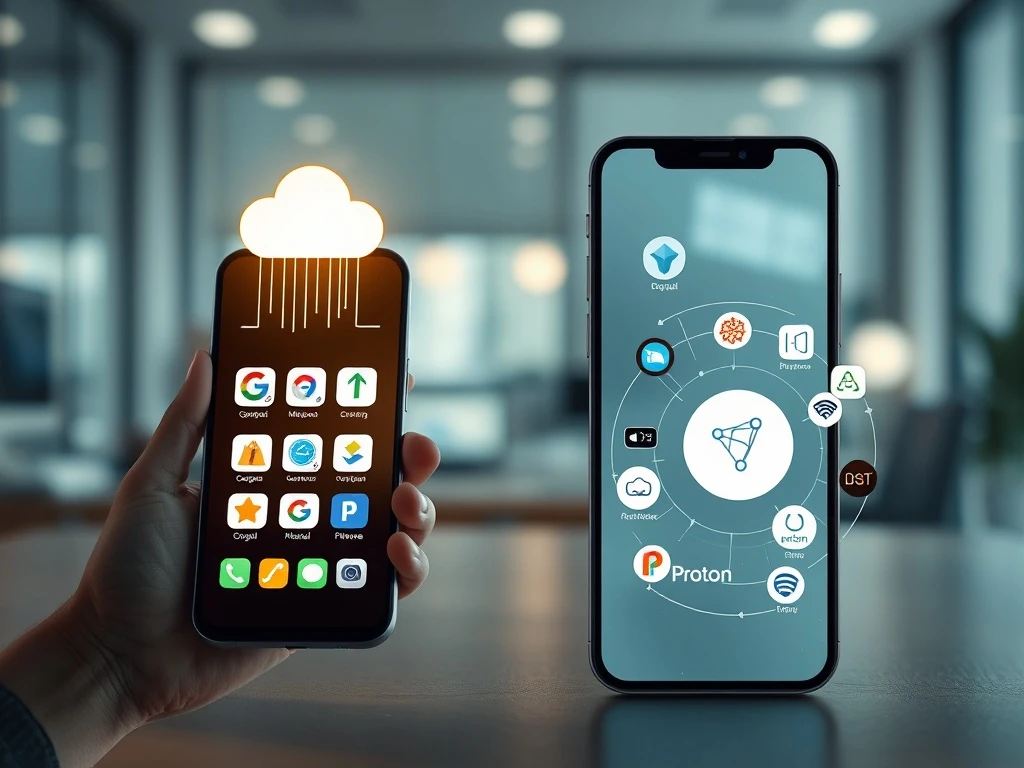
For the current year, Buterin has expanded his migration. He has replaced Google Maps with OrganicMaps, which utilizes the open-source OpenStreetMap data. Additionally, he has transitioned from Gmail to Proton Mail, a service renowned for its end-to-end encrypted email. Buterin also emphasized prioritizing decentralized social media platforms, which return control of content and algorithms to users. His systematic app-by-app replacement strategy demonstrates that achieving self-sovereign computing is an incremental process, not an all-or-nothing proposition. This approach makes the concept accessible to mainstream users who may be hesitant to abandon familiar tools overnight.
The Critical Role of Local AI and Self-Hosting
A cornerstone of Buterin’s vision involves repatriating data processing from corporate clouds to personal hardware. He detailed ongoing experiments with locally hosting large language models (LLMs), arguing that routing all queries to third-party AI services is increasingly unnecessary. Advances in hardware efficiency and model optimization now allow powerful AI tools to run on consumer-grade devices. Buterin acknowledged that better user interfaces and deeper system integrations are required to make local AI a seamless default. However, he noted there has already been ‘huge progress’ compared to just one year ago, suggesting an accelerating trend toward decentralized artificial intelligence.
The Broader Shift in Digital Privacy Advocacy
Buterin’s public commitment echoes and amplifies a longstanding message from digital privacy advocates. Naomi Brockwell, founder of NBTV and a prominent privacy educator, has consistently championed running AI models locally as the most private method available. She argues this approach prevents sensitive prompts and documents from ever leaving a user’s device. Brockwell frames privacy not as secrecy but as fundamental autonomy—the power to control one’s personal information flow. For years, she has encouraged mainstream audiences to adopt tools like encrypted messengers, self-hosted services, and cryptocurrencies such as Bitcoin to diminish the surveillance power of both corporations and governments.
This advocacy is gaining urgency due to contemporaneous regulatory developments. The European Union’s controversial Chat Control proposal, for instance, has sparked intense debate. Initial drafts included measures for pre-encryption scanning of private messages to detect illicit material, a technique known as client-side scanning. Technologists and civil liberties groups universally warn that such mechanisms create dangerous backdoors, fundamentally undermining the trust and security of encrypted communication apps. Buterin’s personal tech migration, therefore, exists within a pressing geopolitical context where the very future of private digital communication is under legislative review.
| Function | Previous Tool (Centralized) | New Tool (Self-Sovereign) | Key Privacy Feature |
|---|---|---|---|
| Document Editing | Google Docs | Fileverse | Decentralized, open-source, user-controlled data |
| Messaging | Telegram/Standard SMS | Signal | End-to-end encryption by default, minimal metadata |
| Gmail | Proton Mail | End-to-end encrypted email service | |
| Maps/Navigation | Google Maps | OrganicMaps (OpenStreetMap) | Open-source data, no tracking of location history |
| AI/LLM Access | Cloud-based APIs (e.g., ChatGPT) | Locally-hosted models | Data never leaves the user’s device |
Real-World Impacts and the Path Forward
The movement toward self-sovereign computing carries significant implications. For individual users, it promises greater control over personal data, reduced exposure to mass surveillance, and freedom from algorithmic manipulation. For the technology industry, it challenges the dominant ‘data-as-revenue’ business model, potentially spurring innovation in privacy-first software and services. Furthermore, this shift supports the core ethos of the cryptocurrency and web3 space, which is built on principles of decentralization and individual sovereignty. Buterin’s status as a leading figure in blockchain lends considerable weight to his advocacy, likely influencing both developers and users within and beyond the crypto ecosystem.
However, barriers to widespread adoption remain. The user experience of many decentralized applications (dApps) and self-hosted solutions often lags behind their polished, centralized counterparts. There is also a knowledge gap; migrating one’s digital life requires technical confidence that many users lack. The solution, as modeled by advocates like Brockwell and now Buterin, involves continuous education, improved software design, and highlighting the tangible risks of the status quo. The progressive ‘swap-out’ strategy demonstrates that the journey to self-sovereign computing can begin with a single change, such as installing an encrypted messenger.
Conclusion
Vitalik Buterin’s declaration that 2026 is the year for self-sovereign computing is more than a personal resolution; it is a strategic call to action. By meticulously detailing his own migration from Big Tech platforms to encrypted, open-source, and local alternatives, he provides a viable template for reclaiming digital autonomy. This movement, supported by parallel advocacy from privacy experts and fueled by contentious regulatory proposals, represents a fundamental renegotiation of the relationship between individuals, their data, and technology platforms. As tools for local AI and decentralized services continue to mature, Buterin’s blueprint may well define the next era of personal computing—one where users finally become the sovereigns of their own digital domains.
FAQs
Q1: What does ‘self-sovereign computing’ mean?
Self-sovereign computing refers to a model where individuals have full ownership and control over their digital data and tools. It involves using software that prioritizes user privacy, often through encryption, open-source code, and local data processing instead of relying on centralized corporate platforms that collect and monetize user information.
Q2: Why did Vitalik Buterin switch from Telegram to Signal?
Buterin switched to Signal because it provides end-to-end encryption by default for all chats and stores minimal user metadata. Telegram, in contrast, only offers this level of encryption in optional ‘secret chats,’ while standard messages and metadata are stored on its servers, making them more susceptible to data requests and surveillance.
Q3: Is it really feasible to run AI models locally on a personal computer?
Yes, it is increasingly feasible. Advances in hardware, along with more efficient and smaller large language models (LLMs), now allow powerful AI tools to run on consumer laptops and desktops. While the most advanced models may still require cloud access, many practical applications for summarization, writing assistance, and analysis can be handled locally, enhancing privacy.
Q4: What is the EU Chat Control proposal, and why is it relevant?
The Chat Control proposal is a legislative effort in the European Union that initially sought to mandate the scanning of private messages, including encrypted ones, for illegal content. Privacy experts warn that the required ‘client-side scanning’ technology creates security vulnerabilities and undermines encryption. Buterin’s push for self-sovereign tools is partly a response to such threats against private communication.
Q5: How can an average person start moving toward self-sovereign computing?
Start incrementally. Begin by switching one commonly used app to a more private alternative—for example, replace your default messenger with Signal or your email provider with Proton Mail. Explore using a privacy-focused browser like Firefox with strict tracking protection. Educate yourself on the data practices of the services you use. Each small change reduces your digital footprint and increases your data autonomy.