Crypto Adoption’s Stark Reality: PwC Exposes Uneven Global Growth Amid Institutional Surge
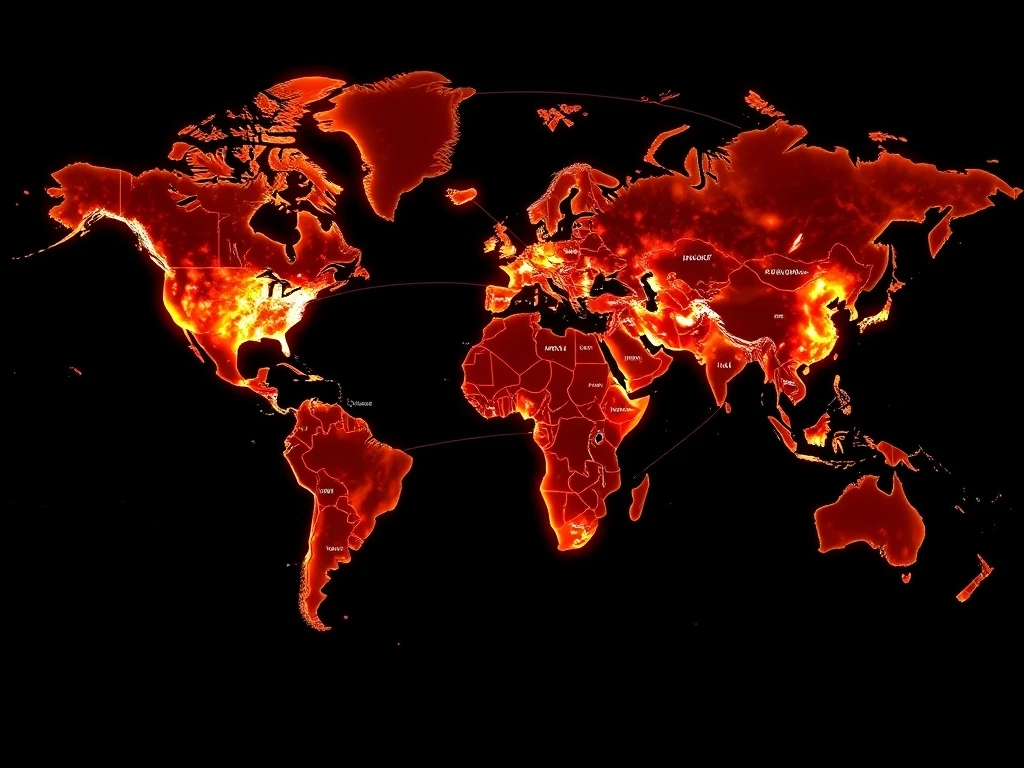
Global cryptocurrency adoption is advancing at dramatically different speeds across world regions, creating a fragmented landscape where economic conditions and financial infrastructure determine market maturity, according to PricewaterhouseCoopers’ comprehensive 2026 Global Crypto Regulation Report released this week. The accounting giant’s analysis reveals that while blockchain networks operate without borders, their practical implementation faces significant geographical constraints that shape everything from payment systems to institutional investment patterns.
Crypto Adoption’s Geographical Divide
PricewaterhouseCoopers’ extensive research demonstrates that cryptocurrency adoption patterns vary substantially between developed and emerging economies. The firm’s global analysis identifies several key factors driving this geographical fragmentation. Regional economic stability, existing financial infrastructure quality, and levels of financial inclusion all contribute to uneven adoption rates. Consequently, cryptocurrency serves fundamentally different purposes across various markets.
In developed economies with robust banking systems, cryptocurrency primarily functions as an alternative investment vehicle and technological innovation platform. Meanwhile, emerging markets with limited traditional financial access increasingly utilize digital assets for essential services. These services include cross-border remittances, inflation hedging, and basic savings mechanisms. This divergence creates what PwC describes as a “fragmented global ecosystem” where identical technologies address completely different socioeconomic challenges.
Institutional Momentum Reaches Critical Mass
PwC’s report delivers a significant finding about institutional engagement with digital assets. The accounting firm asserts that institutional interest has definitively “crossed the point of reversibility.” Major financial institutions including banks, asset managers, and payment providers now systematically integrate cryptocurrency into their core operations. This integration encompasses infrastructure development, balance sheet management, and fundamental operating models.
According to PwC analysts, institutional participation has evolved from optional experimentation to essential business strategy. This transformation carries profound implications for market structure and governance standards. As traditional financial entities increase their cryptocurrency exposure, they inevitably reshape market norms around scale, governance, resilience, and accountability. Institutional practices gradually displace earlier crypto-native approaches, potentially increasing market stability while reducing volatility.
Quantifying Institutional Bitcoin Accumulation
Recent data from analytics firm CryptoQuant substantiates PwC’s institutional momentum observations. CryptoQuant CEO Ki Young Ju revealed that institutional funds accumulated approximately 577,000 Bitcoin over the past twelve months. This accumulation represents roughly $53 billion in value at current market prices. Ju emphasized that “institutional demand for Bitcoin remains strong” despite periodic market fluctuations and regulatory uncertainties.
This substantial institutional accumulation demonstrates growing confidence in Bitcoin’s long-term value proposition. However, analysts debate whether this institutional participation will directly translate into dramatic price appreciation. The relationship between institutional investment and cryptocurrency valuation appears more complex than simple linear correlation.
Regional Adoption Drivers and Barriers
PwC’s regional analysis identifies specific adoption patterns across major global markets. North America shows strong institutional and regulatory development, particularly following recent pro-crypto legislative initiatives. The European Union demonstrates coordinated regulatory progress through comprehensive frameworks like MiCA (Markets in Crypto-Assets). Meanwhile, Asia-Pacific markets display diverse approaches ranging from Singapore’s progressive licensing regime to China’s continued restrictions.
Emerging markets in Africa, Latin America, and Southeast Asia exhibit different adoption characteristics. These regions often prioritize practical cryptocurrency applications over speculative investment. Key use cases include:
- Cross-border remittances: Reducing transfer costs and increasing speed
- Inflation hedging: Preserving purchasing power amid currency volatility
- Financial inclusion: Providing banking alternatives for unbanked populations
- Microtransactions: Enabling small-scale digital commerce
This regional specialization creates distinct cryptocurrency ecosystems with unique regulatory challenges and growth trajectories. Consequently, global cryptocurrency adoption resembles a patchwork of specialized implementations rather than uniform worldwide expansion.
Regulatory Landscape and Political Influences
The current regulatory environment significantly impacts cryptocurrency adoption patterns across different jurisdictions. PwC’s report highlights how political leadership changes can dramatically alter institutional confidence and market development. The analysis specifically references how crypto-friendly policies under recent U.S. administrations have accelerated institutional product launches and market participation.
However, PwC analysts caution that regulatory progress remains vulnerable to political shifts. Future leadership changes could potentially reverse current pro-crypto sentiment, particularly if different administrations prioritize alternative policy objectives. This regulatory uncertainty creates ongoing challenges for institutions planning long-term cryptocurrency strategies and infrastructure investments.
International regulatory coordination presents another significant challenge. Despite growing recognition of cryptocurrency’s borderless nature, regulatory approaches remain predominantly national or regional. This jurisdictional fragmentation complicates compliance for global institutions and may eventually require new international frameworks for digital asset governance.
Price Impact Realities Versus Market Expectations
While institutional cryptocurrency interest continues growing, some analysts question whether this participation will generate expected price appreciation. Macro researcher and FFTT founder Luke Gromen recently expressed skepticism about institutional investors driving dramatic Bitcoin price increases without significant external catalysts. Gromen noted that expecting institutions alone to push Bitcoin from current levels to new highs might prove unrealistic without major market-moving events.
This perspective suggests that cryptocurrency markets may require broader adoption drivers beyond institutional investment to achieve sustained valuation growth. Potential catalysts could include widespread retail adoption, significant technological breakthroughs, or major macroeconomic developments that increase digital asset attractiveness relative to traditional investments.
Tokenization’s Uneven Global Implementation
PwC’s report extensively examines tokenization adoption disparities across different regions. Tokenization—representing real-world assets as digital tokens on blockchain networks—shows particularly uneven implementation patterns. Developed financial markets with sophisticated legal frameworks demonstrate more advanced tokenization projects, particularly for traditional assets like real estate, commodities, and financial instruments.
Emerging markets face greater tokenization challenges due to less developed legal and regulatory infrastructures. However, these regions sometimes exhibit faster adoption of novel tokenization applications, particularly for assets previously lacking efficient markets. This innovation asymmetry creates opportunities for cross-regional learning and technology transfer as tokenization matures globally.
Future Trajectories and Market Evolution
PwC’s analysis suggests several probable development paths for global cryptocurrency adoption. Regional specialization will likely continue, with different markets focusing on specific use cases matching their economic conditions and regulatory environments. Institutional participation should keep increasing, though its market impact might evolve as traditional finance entities develop more sophisticated cryptocurrency strategies.
Regulatory harmonization efforts may gradually reduce some fragmentation, particularly within economic blocs like the European Union. However, significant global regulatory divergence will probably persist due to differing national priorities and risk tolerances. This ongoing regulatory diversity will continue shaping regional adoption patterns and market structures.
Technological advancements could potentially reduce adoption barriers across all regions. Improvements in scalability, interoperability, and user experience might accelerate cryptocurrency integration into mainstream financial systems. Meanwhile, evolving economic conditions—particularly regarding inflation, currency stability, and cross-border trade—will continually reshape cryptocurrency’s value proposition across different markets.
Conclusion
PricewaterhouseCoopers’ comprehensive analysis reveals cryptocurrency adoption’s complex, uneven global progression. Regional economic conditions, financial infrastructure, and regulatory approaches create a fragmented landscape where identical technologies address fundamentally different challenges. Institutional participation has reached irreversible levels, though its price impact remains debated among analysts. As cryptocurrency markets continue maturing, understanding these regional adoption disparities becomes increasingly essential for investors, regulators, and technology developers navigating the evolving digital asset ecosystem.
FAQs
Q1: What does PwC mean by “uneven crypto adoption” across regions?
PwC’s analysis indicates that cryptocurrency implementation advances at different speeds worldwide due to varying economic conditions, financial infrastructure quality, and regulatory approaches. Developed markets often focus on investment and innovation applications, while emerging economies frequently prioritize practical uses like remittances and inflation protection.
Q2: Has institutional cryptocurrency interest really passed a “point of no return”?
According to PwC’s research, major financial institutions have moved beyond experimental cryptocurrency engagement to systematic integration into core operations. This shift includes infrastructure development, balance sheet management, and fundamental business model adjustments that would prove difficult to reverse completely.
Q3: How much Bitcoin have institutional investors accumulated recently?
CryptoQuant data indicates institutional funds accumulated approximately 577,000 Bitcoin over the past year, representing roughly $53 billion in value. This substantial accumulation demonstrates growing institutional confidence in Bitcoin’s long-term value proposition despite market volatility.
Q4: Will institutional investment automatically drive cryptocurrency prices higher?
Some analysts question whether institutional participation alone will generate dramatic price appreciation without additional catalysts. While institutional demand provides market support, sustained valuation growth may require broader adoption drivers including technological breakthroughs or significant macroeconomic developments.
Q5: How do regulatory differences affect global cryptocurrency adoption?
Regulatory approaches vary significantly between jurisdictions, creating compliance challenges for global institutions and shaping regional adoption patterns. While some coordination exists within economic blocs, substantial global divergence persists due to differing national priorities and risk assessments regarding digital assets.