Stablecoin Fears Dismissed as ‘Totally Absurd’ by Circle CEO in Explosive Davos Defense
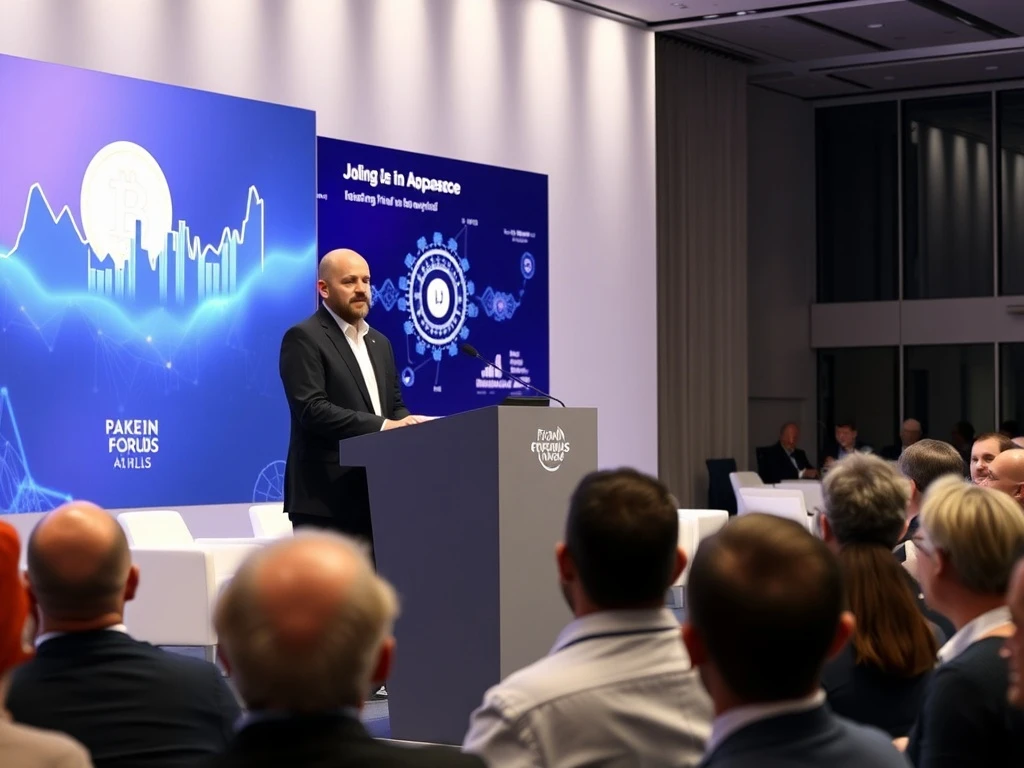
DAVOS, SWITZERLAND – January 2026: Circle CEO Jeremy Allaire delivered a forceful rebuttal to banking sector concerns about stablecoins during the World Economic Forum, characterizing widespread fears about financial stability as “totally absurd” in a session that highlighted the deepening divide between traditional finance and emerging digital asset ecosystems. The stablecoin fears discussion has moved from regulatory backrooms to center stage at global economic gatherings, reflecting the asset class’s growing importance in both traditional and crypto-native financial systems.
Stablecoin Fears Meet Reality in Davos Debate
Financial stability concerns surrounding dollar-pegged digital currencies dominated cryptocurrency discussions at Davos 2026. Major banking institutions, including Bank of America, have circulated analysis suggesting up to $6 trillion in deposits could migrate to yield-bearing stablecoins if regulatory frameworks permit their widespread adoption. However, Jeremy Allaire presented compelling counter-evidence during his panel appearance. He noted that American money market funds currently manage over $7 trillion in assets without destabilizing the banking system. This coexistence demonstrates that multiple liquid, yield-bearing instruments can operate alongside traditional deposit accounts. The Circle CEO emphasized that stablecoins like USDC operate with greater transparency than many traditional financial products. They maintain full reserve backing with cash and short-duration U.S. Treasuries, providing daily attestations of their holdings. This operational model contrasts with fractional reserve banking, where banks lend out deposited funds while maintaining only partial reserves.
The Political Battle Behind Technical Concerns
Industry observers recognize that the stablecoin debate extends beyond technical financial considerations. The discussion occurs against the backdrop of the proposed CLARITY Act legislation in the United States Congress. This regulatory framework seeks to establish comprehensive rules for stablecoin issuers, including reserve requirements, redemption policies, and operational standards. Circle has positioned itself as a proactive participant in these regulatory conversations. The company maintains licenses in multiple jurisdictions and emphasizes compliance with existing financial regulations. This approach contrasts with earlier cryptocurrency projects that operated in regulatory gray areas. Banking industry resistance often centers on competitive concerns rather than systemic risk. Traditional institutions recognize that stablecoins could disintermediate their role in payment systems and deposit gathering. This competitive dynamic explains much of the opposition to regulatory clarity for digital dollar tokens.
Credit Market Evolution and Stablecoin Integration
Financial markets have undergone significant transformation in recent years. Credit creation has increasingly shifted from bank balance sheets to capital markets and, more recently, to tokenized finance platforms. Data from the Federal Reserve indicates that market-based debt financing has supported substantial portions of recent economic growth. Stablecoins serve as natural bridges between these evolving systems. They provide the liquidity and settlement finality required for efficient capital market operations while maintaining the stability necessary for traditional finance participants. This hybrid functionality explains their rapid adoption across multiple financial sectors. Circle’s USDC has emerged as a preferred settlement asset in decentralized finance protocols and traditional finance experiments. Its regulatory compliance, transparency, and liquidity make it suitable for institutional adoption while maintaining utility in crypto-native environments.
Artificial Intelligence and the Future of Automated Finance
Jeremy Allaire expanded the stablecoin discussion beyond human-centric finance during his Davos presentation. He predicted that billions of autonomous artificial intelligence agents will require programmable, stable payment mechanisms within the next decade. These AI entities will engage in economic activities ranging from micro-transactions for computational resources to large-scale automated trading and investment decisions. Circle is developing Arch, a specialized blockchain infrastructure designed specifically for AI-to-AI and AI-to-application transactions. This platform recognizes that traditional payment systems lack the programmability and interoperability required for machine-driven economies. Stablecoins provide the necessary settlement layer for these automated interactions. The company’s vision positions digital dollars as the universal language of future automated finance. This perspective has gained traction among other industry leaders, including former Binance CEO Changpeng Zhao and Galaxy Digital founder Mike Novogratz, who have echoed similar sentiments about AI’s financial infrastructure needs.
Comparative Analysis: Stablecoins vs. Traditional Alternatives
| Feature | Stablecoins (USDC) | Money Market Funds | Bank Deposits |
|---|---|---|---|
| Transparency | Daily attestations, public blockchain | Monthly holdings reports | Quarterly financial statements |
| Accessibility | Global, 24/7 | Market hours, account required | Branch hours, account required |
| Settlement Speed | Seconds to minutes | 1-2 business days | Instant to 3 business days |
| Programmability | Native smart contract support | Limited automation | Basic scheduled payments |
| Regulatory Status | Evolving framework | Established regulation | Heavily regulated |
The Path to Hybrid Financial Systems
Financial industry evolution points toward integration rather than displacement. Silicon Valley investor David Sacks noted during Davos discussions that the artificial separation between traditional finance and cryptocurrency is ending. This convergence reflects practical realities as institutions adopt blockchain technology for settlement, custody, and issuance purposes. Major financial entities now participate in digital asset markets through various channels:
- Asset tokenization platforms for traditional securities
- Blockchain-based settlement systems for cross-border payments
- Digital custody solutions for institutional clients
- Regulated trading venues for cryptocurrency derivatives
This institutional adoption creates natural bridges between systems. Stablecoins serve as the settlement layer connecting these diverse platforms and participants. Their stability and digital nature make them ideal for moving value across traditional and blockchain-based systems. The future financial landscape will likely feature hybrid architectures. These systems will combine the regulatory compliance and risk management of traditional finance with the efficiency and innovation of cryptocurrency ecosystems. Stablecoins represent the foundational layer enabling this integration.
Global Regulatory Landscape and Market Implications
International regulatory approaches to stablecoins have diverged significantly. The European Union implemented its Markets in Crypto-Assets (MiCA) regulation in 2024, establishing comprehensive rules for stablecoin issuers operating within its jurisdiction. Singapore, Japan, and the United Kingdom have developed their own regulatory frameworks with varying requirements and approaches. The United States continues to debate its regulatory path. The CLARITY Act represents one legislative approach, while multiple regulatory agencies claim jurisdiction over different aspects of stablecoin operations. This regulatory uncertainty has prompted some projects to establish operations in more clearly defined jurisdictions. Market responses to regulatory developments have been measured but significant. TradFi institutions have increased their stablecoin usage for specific functions while awaiting clearer regulatory guidance. This cautious adoption reflects both the utility of stablecoins and the perceived regulatory risks associated with their use.
Conclusion
Jeremy Allaire’s dismissal of stablecoin fears as “totally absurd” reflects deeper industry tensions between innovation and incumbency. The Davos 2026 discussions highlighted that stablecoins have evolved from speculative cryptocurrency trading instruments to foundational financial infrastructure. Their role extends beyond cryptocurrency markets into traditional finance settlement, cross-border payments, and emerging AI-driven economies. The stablecoin fears expressed by banking institutions often mask competitive concerns rather than genuine systemic risks. Evidence from existing financial markets demonstrates that multiple liquid, yield-bearing instruments can coexist without destabilizing banking systems. The path forward involves regulatory clarity that recognizes stablecoins’ unique characteristics while addressing legitimate concerns about consumer protection and financial stability. As financial systems continue their digital transformation, stablecoins will likely serve as critical bridges between traditional and emerging economic architectures.
FAQs
Q1: What specific fears about stablecoins did Jeremy Allaire address at Davos?
Allaire specifically addressed concerns that yield-bearing stablecoins could trigger bank runs by attracting deposits away from traditional banking institutions. He characterized these fears as “absurd,” noting that money market funds already manage trillions in assets without destabilizing banks.
Q2: How does Circle’s USDC maintain its dollar peg?
USDC maintains its 1:1 dollar peg through full reserve backing. Circle holds equivalent dollar amounts in cash and short-duration U.S. Treasury securities for every USDC in circulation. Independent accounting firms provide monthly attestations of these reserves.
Q3: What is the CLARITY Act and how does it relate to stablecoins?
The CLARITY Act is proposed U.S. legislation that would establish a regulatory framework for stablecoin issuers. It addresses reserve requirements, redemption policies, operational standards, and oversight mechanisms for dollar-pegged digital currencies.
Q4: How might artificial intelligence use stablecoins in the future?
Autonomous AI agents could use stablecoins for machine-to-machine payments, computational resource allocation, automated trading, and investment decisions. Their programmability and stability make them suitable for automated economic activities that require predictable settlement assets.
Q5: What advantages do stablecoins offer over traditional payment systems?
Stablecoins provide global accessibility, 24/7 operation, faster settlement times, lower transaction costs, and native programmability through smart contracts. These features make them particularly useful for cross-border payments and automated financial applications.
Related Crypto News
- Saga Blockchain Faces Devastating $7M Exploit: Chainlet Halted After Cross-Chain Attack Triggers Stablecoin Crisis
- Ethereum Upgrade Risks: JPMorgan's Critical Analysis Reveals Hidden Vulnerabilities in Fusaka Update
- A7A5 Token: The Shocking $100 Billion Russian Sanctions Evasion That Exposed Crypto's Regulatory Gaps