Gold Price Soars to Staggering New All-Time High Above $4,900 as Investors Seek Safety
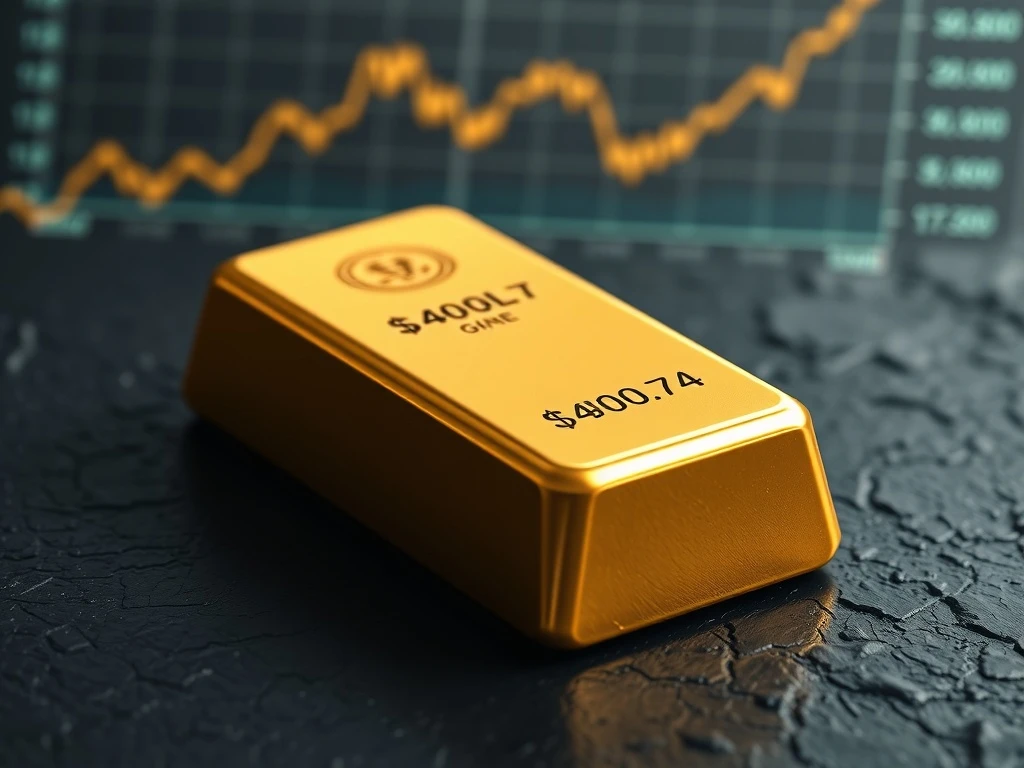
Global financial markets witnessed a historic moment today as the spot gold price shattered records, surging past the monumental $4,900 per ounce barrier. This staggering new all-time high, recorded at $4,900.74, marks a rapid acceleration in the precious metal’s relentless rally, coming just 48 hours after it first breached $4,800. Consequently, this latest surge underscores a profound shift in global investor sentiment and portfolio strategy.
Gold Price Achieves Unprecedented Milestone
The London Bullion Market Association (LBMA) fixing confirmed the spot gold price at $4,900.74 during early trading. This represents a significant 1.4% gain from the previous session’s close. Moreover, the rally has added approximately $600 to the price of an ounce of gold since the beginning of the calendar year. This parabolic move is not occurring in isolation; it reflects deep-seated macroeconomic currents. For instance, central bank demand has remained robust, with institutions like the People’s Bank of China continuing to diversify reserves away from traditional fiat currencies.
Analysts immediately contextualized the move. “The velocity of this ascent is remarkable,” noted a senior commodities strategist at a major investment bank, citing publicly available trading data. “We are observing a classic flight-to-quality event, but on a scale amplified by structural changes in the global monetary system.” Historical comparisons are inevitable. The current price represents a gain of over 150% from the peaks seen in the aftermath of the 2008 financial crisis, adjusting for inflation.
The Technical and Fundamental Drivers
Several converging factors are fueling this historic gold price rally. Primarily, escalating geopolitical tensions in multiple regions have intensified demand for traditional safe-haven assets. Simultaneously, persistent concerns about inflationary pressures, despite central bank policies, are eroding the real value of cash and bonds. Furthermore, a weakening U.S. dollar index has provided a direct tailwind for dollar-denominated commodities like gold.
The following table illustrates the rapid pace of the recent ascent:
| Date | Key Price Level (per oz) | Event |
| Early January | ~$4,300 | Year-opening price |
| 48 Hours Ago | $4,800 | Previous record broken |
| Today | $4,900.74 | New all-time high established |
Market microstructure also plays a role. Trading volumes in gold ETFs and futures contracts have spiked, indicating participation from both institutional and retail investors. Additionally, physical buying in key Asian markets has provided a solid floor for prices.
Broader Impacts on Financial Markets
The reverberations of gold’s record-breaking price are being felt across adjacent asset classes. Notably, other precious metals are experiencing sympathetic rallies. Silver, often called ‘poor man’s gold,’ has seen its ratio to gold contract slightly. Meanwhile, mining equities have outperformed broader equity indices significantly this quarter. However, the rising gold price presents challenges for central banks and jewelry consumers in key markets like India, where demand is highly price-sensitive.
From a portfolio perspective, financial advisors are reassessing traditional allocation models. The 60/40 stock-bond portfolio has faced stress in recent years, leading many to consider a permanent strategic allocation to gold. “Gold is demonstrating its core function as a non-correlated asset and a store of value during periods of systemic uncertainty,” explained a portfolio manager specializing in alternative assets. This sentiment is echoed in fund flow data showing consistent inflows into commodity-focused funds.
Historical Context and Future Trajectory
To understand the present, one must examine the past. The journey to $4,900 has been decades in the making, punctuated by major economic events. The gold price broke $1,000 during the 2008 crisis, $2,000 during the early 2020 pandemic, and $3,000 amid the inflationary spikes of the mid-2020s. Each milestone corresponded with a crisis of confidence in other parts of the financial system. Therefore, the current level suggests a market pricing in significant ongoing risk.
Looking forward, analysts are closely watching several indicators. Key among them are real interest rates, central bank policy statements, and geopolitical developments. While some technical indicators suggest the market may be overbought in the short term, the fundamental drivers appear firmly intact. Most major investment banks have revised their year-end price targets upward, with several now forecasting a test of the $5,000 psychological level if current conditions persist.
Conclusion
The breach of the $4,900 level for spot gold is a definitive market event with far-reaching implications. This new all-time high confirms gold’s enduring role as a premier safe-haven asset during times of economic and geopolitical strain. The rally is supported by a powerful confluence of fundamental factors, including robust central bank buying, currency dynamics, and pervasive investor caution. As markets digest this milestone, the gold price will remain a critical barometer of global risk sentiment and a key component of diversified investment strategies.
FAQs
Q1: What is the current spot gold price and how does it compare to history?
The current spot gold price is $4,900.74 per ounce. This is a new all-time high, surpassing the previous record of $4,800 set just two days prior. The price has gained roughly $600 since the start of the year.
Q2: What are the main reasons gold is hitting record highs?
The primary drivers are a combination of geopolitical instability, concerns about persistent inflation, a softening U.S. dollar, and sustained strong buying from global central banks seeking to diversify their foreign exchange reserves.
Q3: How does a rising gold price affect the average consumer or investor?
For investors, it can boost the value of gold holdings, ETFs, or mining stocks. For consumers, it leads to higher prices for gold jewelry and coins. It also signals broader economic caution, which can impact other investment decisions.
Q4: Is it too late to invest in gold at these price levels?
Financial advisors stress that timing the market is difficult. Many recommend gold as a long-term strategic hedge rather than a short-term trade. The decision should be based on individual portfolio goals, risk tolerance, and a view of the ongoing macroeconomic drivers.
Q5: What other assets typically move with the gold price?
Other precious metals like silver and platinum often see correlated moves. Shares of gold mining companies are highly leveraged to the gold price. Sometimes, assets like certain cryptocurrencies (e.g., Bitcoin) are discussed as alternative ‘digital havens,’ though their correlation is less consistent.