Bitcoin’s Precarious Position: How Trump’s Greenland Retreat Reveals Cryptocurrency’s Geopolitical Vulnerability
DAVOS, SWITZERLAND — January 23, 2025: Bitcoin’s recent price surge to $90,000 following President Donald Trump’s announcement that he would not pursue military action against Greenland provides temporary relief but underscores a troubling reality for cryptocurrency investors. The digital asset’s 3.4% gain on Wednesday evening reveals its continued sensitivity to geopolitical developments, challenging narratives about Bitcoin’s role as a haven during international tensions.
Bitcoin Price Swings Amid Greenland Geopolitical Drama
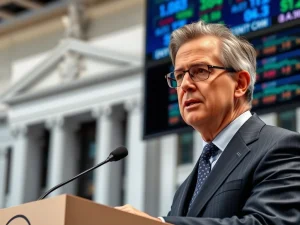
President Trump’s hour-long Davos speech triggered immediate market reactions across multiple asset classes. Bitcoin, trading around $87,000 before the announcement, climbed to $90,000 as details emerged about the administration’s softened stance. This price movement continues a volatile pattern that began in November 2025 when Bitcoin declined from approximately $110,000 to below $90,000 by November 21. The cryptocurrency has subsequently struggled to maintain momentum above the $90,000 threshold.
Market analysts immediately noted the significance of this correlation. Chris Beauchamp, chief market analyst at IG, observed in a January 19 research note that “cryptocurrencies offered no haven from the wave of selling that washed over global markets in response to Trump’s threat.” His analysis highlighted how Bitcoin’s attempt to reach $100,000 stalled amid escalating tensions, with the $90,000 level representing a critical psychological barrier for traders.
The Arctic Flashpoint: From Military Threats to Negotiated Framework
The Greenland situation developed rapidly throughout January 2025. The White House initially escalated rhetoric about acquiring the autonomous Danish territory, framing the potential acquisition as necessary for countering Russian and Chinese influence in the Arctic region. These discussions included references to potential military action and additional 25% tariffs on countries opposing the acquisition plans.
Danish officials expressed concern throughout this period. Foreign Minister Lars Løkke Rasmussen acknowledged the improved diplomatic atmosphere following Trump’s Davos comments, stating on social media platform X: “The day is ending on a better note than it began. We welcome that POTUS has ruled out taking Greenland by force and paused the trade war.” However, market participants remain cautious about long-term implications.
Trade War Dynamics and Cryptocurrency Vulnerability
The Greenland controversy intersects with broader trade policy developments affecting global markets. Certain agreements have already faced cancellation due to escalating rhetoric from Washington. On January 21, the European Parliament suspended work on the “Turnberry proposals,” a trade agreement in development since July that would have reduced U.S. tariffs on most European goods from 30% to 15%.
Bernd Lange, chair of the European Parliament’s International Trade Committee, explained the decision: “We have been left with no alternative but to suspend work on the two Turnberry legislative proposals until the U.S. decides to re-engage on a path of cooperation rather than confrontation.” This development followed French President Emmanuel Macron’s reference to potential European retaliation using what he termed the “trade bazooka”—the EU’s Anti-Coercion Instrument (ACI).
Cryptocurrency market participants recognize these trade dynamics as significant factors. Cory Klippsten, CEO of Swan Bitcoin, noted on Wednesday: “The biggest drag on Bitcoin price the past year has been tariffs. That’s the drag on risk assets in general, and in particular with Bitcoin, there’s just uncertainty around what’s gonna happen.” His comments reflect broader market sentiment about policy unpredictability.
Expert Analysis: Bitcoin’s Evolving Risk Profile
Financial analysts increasingly categorize Bitcoin alongside traditional risk assets rather than as a distinct safe haven. Market analyst Kshitiz Kapoor wrote at the end of 2024: “Macro pressure, tariffs, tightening liquidity, and shifting risk sentiment pulled price back. By year-end, Bitcoin never came close to those targets.” He emphasized that “markets don’t move on conviction alone. They move on liquidity, positioning, and macro” factors.
This analytical perspective gains support from recent price action. During the week preceding Trump’s Davos speech, Bitcoin declined from $96,000 to $88,000, reflecting broader market anxiety. The cryptocurrency’s recovery to $90,000 represents a partial rebound rather than a decisive breakout, suggesting ongoing uncertainty among traders.
Institutional Perspective on Geopolitical Risk
Financial institutions monitoring the situation express measured concern. Nigel Green, CEO of deVere Group, commented: “A negotiated pause could limit immediate disruption, but uncertainty would persist because leverage has been established.” He further explained that “transatlantic trade underpins confidence across global supply chains. Disruption there feeds into investment decisions, currency stability, and diplomatic alignment worldwide.”
This institutional viewpoint acknowledges Bitcoin’s maturation within global financial systems. As cryptocurrency adoption increases across multiple countries, digital assets become more integrated with traditional economic mechanisms. Consequently, Bitcoin exhibits greater sensitivity to the same geopolitical factors influencing conventional markets.
Comparative Market Reactions
Other financial markets displayed similar patterns during the Greenland tensions:
- Traditional Safe Havens: Gold experienced moderate gains while the Swiss Franc remained stable
- Equity Markets: European indices declined while U.S. markets showed mixed performance
- Currency Markets: The Danish Krone stabilized following initial pressure
- Commodities: Oil prices reflected broader geopolitical uncertainty in Arctic regions
Bitcoin’s correlation with these movements suggests its evolving role within portfolio construction. The cryptocurrency no longer operates in isolation from traditional risk factors, particularly during periods of geopolitical stress.
Regulatory and Legislative Context
The Greenland situation developed alongside significant cryptocurrency regulatory developments. Major exchange Coinbase recently withdrew support from a crypto framework bill, creating additional uncertainty for market participants. This regulatory ambiguity compounds the geopolitical pressures affecting Bitcoin’s price discovery mechanisms.
Market participants now monitor multiple policy fronts simultaneously. Trade policy, cryptocurrency regulation, and geopolitical developments collectively influence investment decisions. This complex environment requires sophisticated analysis beyond simple narratives about Bitcoin’s inherent properties.
Historical Precedents and Future Implications
Previous geopolitical events provide context for current market reactions. The 2024 U.S.-China trade tensions similarly affected cryptocurrency prices, demonstrating Bitcoin’s sensitivity to international trade dynamics. Market analyst observations from that period mirror current concerns about policy unpredictability and its effects on risk assets.
Looking forward, several factors will determine Bitcoin’s trajectory:
- Trade Policy Stability: Continued U.S.-EU negotiations regarding Arctic security and trade
- Regulatory Clarity: Progress on cryptocurrency framework legislation in multiple jurisdictions
- Market Structure: Evolving institutional participation in cryptocurrency markets
- Macroeconomic Conditions: Interest rate policies and liquidity conditions affecting all risk assets
Conclusion
Bitcoin’s price reaction to the Greenland geopolitical developments reveals the cryptocurrency’s maturation within global financial systems. The digital asset’s sensitivity to trade policy, international relations, and risk sentiment demonstrates its integration with conventional market mechanisms. While Bitcoin achieved temporary gains following reduced tensions, its inability to serve as a consistent haven during geopolitical stress challenges earlier narratives about its unique properties. Market participants must now account for complex interdependencies between cryptocurrency prices and traditional risk factors, particularly as digital assets gain broader acceptance and face increased regulatory scrutiny. The Greenland episode provides a case study in Bitcoin’s evolving relationship with geopolitical developments, offering insights for investors navigating increasingly interconnected financial markets.
FAQs
Q1: How did Bitcoin’s price react to Trump’s Greenland announcement?
Bitcoin increased from approximately $87,000 to $90,000 following President Trump’s statement that he would not pursue military action against Greenland, representing a 3.4% gain during the trading session.
Q2: Why is Bitcoin sensitive to geopolitical events like the Greenland situation?
As Bitcoin gains broader institutional adoption and integration with traditional financial systems, it becomes more correlated with conventional risk assets and their sensitivity to geopolitical developments, trade policy, and international relations.
Q3: What trade policy developments accompanied the Greenland tensions?
The European Parliament suspended work on the “Turnberry proposals” trade agreement, and discussions emerged about potential EU retaliation using the Anti-Coercion Instrument, creating uncertainty about transatlantic trade relations.
Q4: How do analysts currently categorize Bitcoin relative to other assets?
Many financial analysts now classify Bitcoin alongside traditional risk assets rather than as a distinct safe haven, noting its correlation with macroeconomic factors, liquidity conditions, and geopolitical developments.
Q5: What factors will influence Bitcoin’s price following this geopolitical episode?
Key factors include ongoing U.S.-EU negotiations, cryptocurrency regulatory developments, institutional market participation trends, and broader macroeconomic conditions affecting all risk assets.