SEC Probe into Zcash Concludes: A Landmark Decision for Privacy Coin Regulation
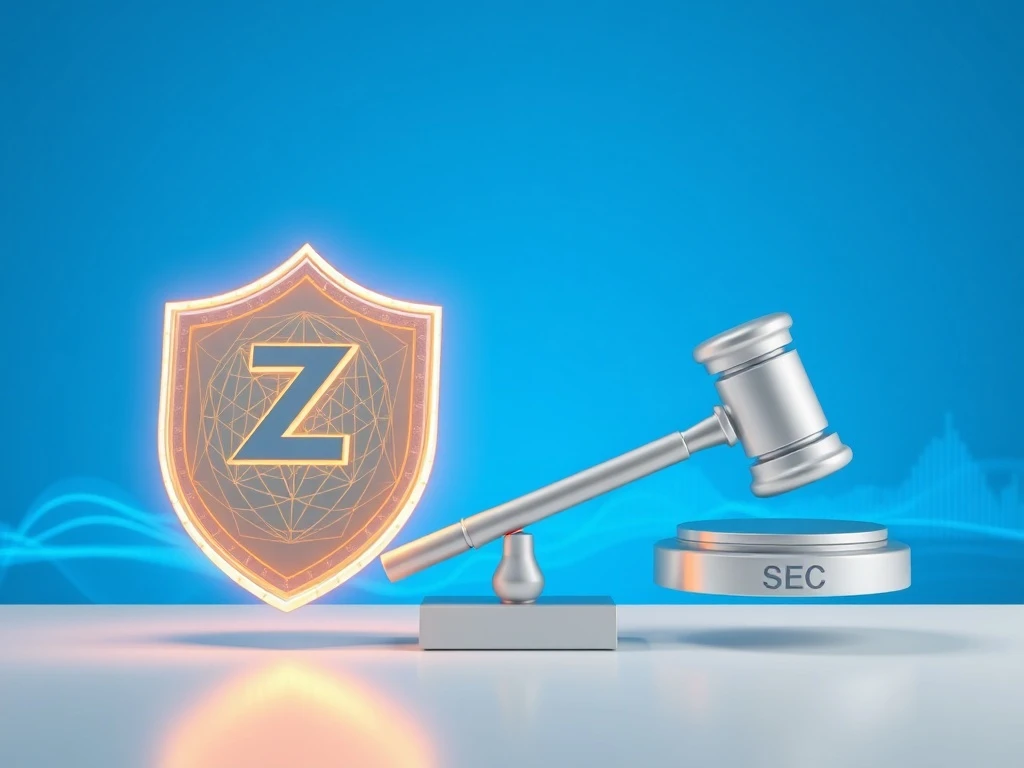
In a significant development for the cryptocurrency sector, the U.S. Securities and Exchange Commission (SEC) has formally closed its 2023 investigation into Zcash (ZEC), a leading privacy-focused digital asset. The Zcash Foundation announced the regulatory closure on Wednesday, marking a pivotal moment for privacy-enhancing technologies within the evolving U.S. regulatory landscape of 2025. This decision arrives amidst a broader reassessment of crypto enforcement priorities, potentially signaling a new chapter for digital asset oversight.
SEC Probe into Zcash: A Detailed Timeline and Resolution
The regulatory scrutiny began in August 2023 when the Zcash Foundation received a formal subpoena from the SEC. The subpoena centered on a “matter of certain crypto asset offerings,” a broad category that has historically triggered enforcement actions. Consequently, the foundation engaged with the regulator over the subsequent months, providing documentation and clarifications regarding Zcash’s structure and operations. The investigation concluded this week without any recommended enforcement actions or mandated changes to Zcash’s protocol or foundation activities.
“This outcome reflects our commitment to transparency and compliance with applicable regulatory requirements,” stated the Zcash Foundation in its official notice. The foundation further emphasized its ongoing mission: “Zcash Foundation remains focused on advancing privacy-preserving financial infrastructure for the public good.” This closure allows the foundation to continue its development work without the immediate overhang of a potential SEC lawsuit, a relief for developers and users within the ecosystem.
The Broader Context of SEC Crypto Enforcement in 2025
The conclusion of the Zcash probe is not an isolated event. Over the past year, the SEC under the current administration has notably concluded several high-profile investigations into crypto entities. For instance, the agency recently ended a four-year probe into decentralized finance protocol Aave. Similarly, other enforcement actions have been dropped or settled with less severe penalties than initially anticipated. This pattern suggests a potential strategic shift or recalibration in the regulator’s approach to digital assets.
Analysts point to several factors influencing this trend. First, ongoing legislative efforts in Congress aim to provide clearer regulatory frameworks, potentially guiding enforcement discretion. Second, court rulings in various cryptocurrency cases have established more nuanced legal precedents regarding what constitutes a security. Finally, the operational reality of regulating a global, decentralized technology may be prompting a more targeted enforcement strategy focused on clear cases of fraud rather than novel technological applications.
Expert Analysis: What the Zcash Decision Means for Privacy Tech
Legal and industry experts view the SEC’s decision as cautiously positive for privacy-preserving cryptocurrencies. “The closure of this probe, without action, indicates the SEC may be applying a more nuanced analysis to tokens that function primarily as mediums of exchange with enhanced privacy features,” notes a financial technology attorney specializing in digital assets. However, experts universally caution that this does not establish a blanket precedent. Regulatory scrutiny will likely continue for projects where fundraising activities (ICOs, IEOs, etc.) are central, or where control is highly centralized.
The distinction between a privacy coin like Zcash and an anonymous coin is also critical in this context. Zcash uses advanced zero-knowledge cryptography (zk-SNARKs) to provide selective transparency; users can shield transactions but also provide view keys for auditing purposes. This optional privacy model, which supports regulatory compliance, may have been a differentiating factor in the SEC’s review compared to other protocols with different design philosophies.
Understanding Zcash and the Privacy Coin Landscape
Zcash, launched in 2016, is a fork of the Bitcoin codebase with a fundamental addition: the ability to conduct fully shielded transactions. In these transactions, the sender, recipient, and amount are encrypted on the blockchain, visible only to participants with the appropriate keys. This technology addresses a key critique of Bitcoin and Ethereum—their fully transparent ledgers—which can compromise user financial privacy.
The privacy coin sector, however, faces unique challenges. Several global jurisdictions have expressed concerns about such assets potentially facilitating illicit finance. Consequently, many centralized exchanges have delisted privacy coins in certain regions. The SEC’s decision to close its probe, therefore, provides a degree of U.S.-centric legitimacy that could influence global perceptions and exchange policies. The table below outlines key characteristics of Zcash compared to a transparent ledger:
| Feature | Zcash (Shielded) | Bitcoin / Transparent Ledgers |
|---|---|---|
| Transaction Visibility | Encrypted; private to participants | Fully public on blockchain |
| Audit Capability | Possible with view keys | Always available |
| Primary Use Case | Private peer-to-peer transactions | Transparent value transfer |
| Regulatory Scrutiny | High, focused on compliance tools | High, focused on AML/KYC at entry points |
This regulatory clarity allows the Zcash community to double down on its core value proposition: providing financial privacy as a default human right while building tools for necessary compliance. Projects can now explore integrations with traditional finance and decentralized applications with reduced regulatory uncertainty, at least from the SEC’s perspective.
Implications for Investors and the Crypto Market
The market response to regulatory clarity is often positive. For ZEC holders and prospective investors, the removal of a major regulatory overhang reduces a significant risk factor. It allows the project’s value to be assessed more on its technological merit, adoption rate, and utility rather than fear of a sudden enforcement action. Furthermore, this development may encourage other projects building privacy-enhancing features to engage proactively with regulators, demonstrating how their technology can coexist within existing legal frameworks.
For the broader cryptocurrency market, the signal is one of maturation. As regulators engage with and close investigations without action, it helps delineate the boundaries of acceptable practice. This process, though slow, is essential for building the long-term institutional confidence required for mass adoption. It moves the conversation from blanket hostility to specific, technology-aware regulation.
Conclusion
The SEC’s decision to close its probe into Zcash represents a landmark moment for privacy-focused cryptocurrencies and regulatory clarity in the digital asset space. This action, viewed within the context of other concluded investigations, suggests an evolving and potentially more precise enforcement approach by U.S. regulators in 2025. For the Zcash Foundation and its community, the outcome validates a commitment to compliant innovation. For the industry, it underscores the importance of transparent engagement with regulators and the development of technologies that balance individual privacy with legitimate regulatory oversight. The path forward for privacy coins remains complex, but this decision marks a critical step toward their sustainable integration into the global financial ecosystem.
FAQs
Q1: What exactly did the SEC investigate regarding Zcash?
The SEC’s 2023 probe, initiated by a subpoena, focused on a “matter of certain crypto asset offerings.” This typically examines whether the asset was sold as an unregistered security. The investigation concluded without any enforcement action, meaning the SEC did not pursue charges that Zcash was an illegal securities offering.
Q2: Does this mean all privacy coins are now compliant with SEC rules?
No. The closure is specific to the Zcash investigation and does not create a legal precedent for all privacy-enhancing cryptocurrencies. Each project’s technology, launch history, and governance structure are evaluated on a case-by-case basis by regulators.
Q3: Why is the Zcash investigation closure significant in 2025?
It is significant because it is part of a pattern of the SEC concluding several crypto-related probes without action. This trend indicates a potential shift in regulatory strategy or a more refined understanding of different crypto asset models under the current administration’s policy direction.
Q4: How does Zcash’s privacy technology work with regulations?
Zcash uses zk-SNARKs to enable shielded transactions, but it also allows users to generate view keys. These keys can be provided to auditors, tax authorities, or regulators to prove compliance without revealing all transaction details to the public, offering a balance between privacy and regulatory needs.
Q5: What should investors take away from this news?
Investors should see this as a reduction in a specific regulatory risk for Zcash. It allows the market to focus on the project’s fundamentals. However, investors must always remember that the crypto regulatory environment remains fluid, and all investments carry inherent risk.