Bitcoin Price Defies Gravity: Soars to $97K Amidst Surging PPI Inflation and Fed Uncertainty
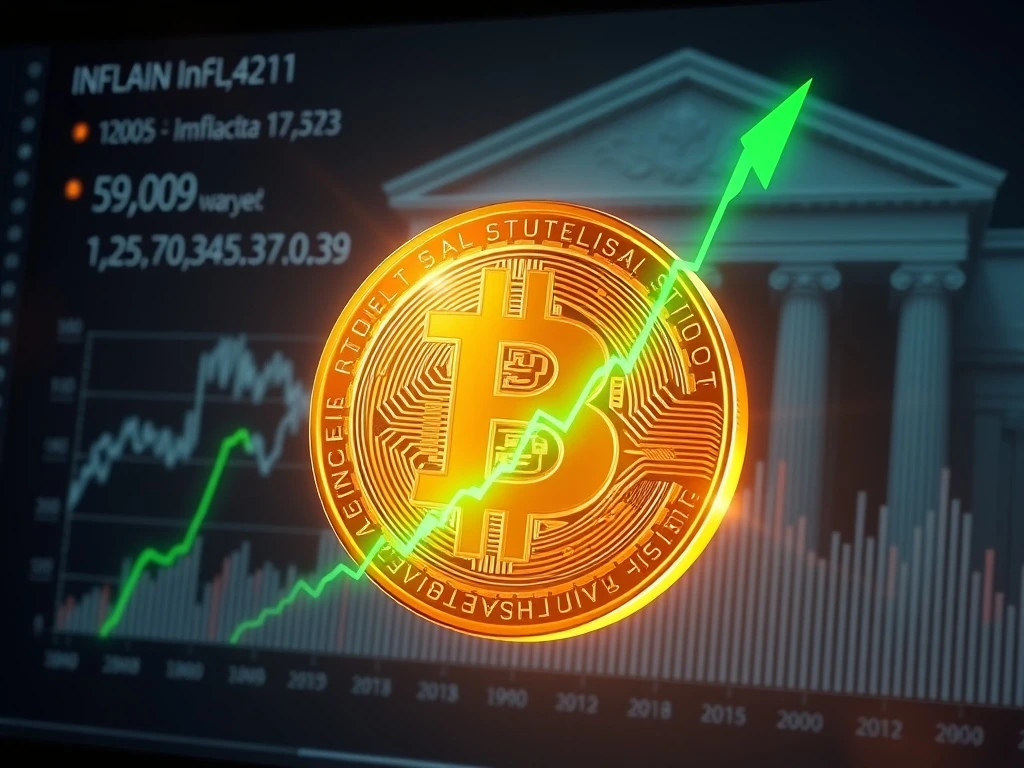
In a stunning display of market resilience, the Bitcoin price catapulted to a fresh eight-week high of $97,000 on Wednesday, December 10, 2025, decisively shrugging off hotter-than-expected US inflation data and ongoing macroeconomic uncertainty. This powerful move, which occurred at the Wall Street open, highlights a growing divergence between cryptocurrency assets and traditional risk markets, as traders increasingly focus on Bitcoin’s unique technical structure and long-term value proposition.
Bitcoin Price Defies Macroeconomic Headwinds
The Bureau of Labor Statistics confirmed a significant uptick in the Producer Price Index for November 2025. Consequently, both headline and core PPI printed at 3.0%, notably surpassing economist forecasts of 2.7%. This data point, representing wholesale inflation, typically signals future consumer price pressures and often prompts a hawkish response from the Federal Reserve. Historically, such an environment constrains liquidity and dampens enthusiasm for speculative assets like cryptocurrencies. However, Bitcoin’s price action told a different story entirely, showcasing a remarkable decoupling from traditional market narratives.
Market analysts immediately noted the divergence. “The November increase in prices for final demand can be traced to a 0.9-percent advance in the index for final demand goods,” the BLS stated officially. Despite this clear inflationary signal, Bitcoin buying pressure intensified during US traditional finance trading hours. This suggests that participants had already priced in a more cautious Federal Reserve, with the CME Group’s FedWatch Tool indicating a near-certain pause in interest rate adjustments at the upcoming January 28 FOMC meeting.
The Federal Reserve’s Delicate Balancing Act
The Federal Reserve now faces a complex policy dilemma. On one hand, persistent inflation above its 2% target argues against premature monetary easing. On the other hand, overly restrictive policy could threaten economic growth. Trading resource The Kobeissi Letter summarized the sentiment on social media platform X: “PPI inflation is now up to its highest level since July 2025. The Fed will PAUSE rate cuts in 2 weeks.” This anticipated pause, rather than further tightening, appears to have provided a floor for Bitcoin’s valuation, allowing bulls to regain control.
Technical Analysis and the Critical $93,500 Level
Beyond macroeconomics, technical factors are driving trader behavior. Prominent analyst Rekt Capital emphasized the paramount importance of the weekly closing price. He argued that a sustained hold above the pivotal $93,500 level—which aligns with the 2025 yearly open—could catalyze a significant bullish phase. “Bitcoin is now hovering above $93500, on the cusp of positioning itself for a repeat of November 2024 and April 2025 history,” Rekt Capital told his followers, referencing previous instances where Bitcoin consolidated at key levels before explosive rallies.
The historical precedent is compelling. In April 2025, Bitcoin weathered a dip below $75,000, partly driven by tariff-related news, before embarking on a dramatic 50% bull run over subsequent weeks. The current price structure shows similar consolidation characteristics, suggesting that a successful weekly close above $93,500 could signal the start of a comparable upward trajectory. Traders are now closely monitoring for a potential retest of this level as new support, which would further confirm bullish strength.
Supreme Court Inaction Provides Market Relief
Adding to the supportive backdrop was the absence of a ruling from the US Supreme Court on a closely watched international trade tariff case. Financial markets had braced for potential volatility stemming from a decision. However, the Court’s schedule remains non-public, and no ruling materialized on Wednesday. This non-event removed a key source of immediate macro risk, allowing cryptocurrency markets to focus on internal momentum and technical setups without an external negative catalyst.
Comparative Market Performance and Investor Sentiment
Bitcoin’s performance stands in stark contrast to major US stock indices, which faltered following the inflation data release. This divergence underscores a shifting perception among investors. Cryptocurrencies, led by Bitcoin, are increasingly viewed not merely as a risk-on proxy for tech stocks but as a distinct asset class with its own demand drivers. These drivers include adoption cycles, institutional investment flows, and its perceived role as a hedge against currency debasement over the long term.
The following table summarizes the key data points from December 10, 2025:
| Metric | Result | Expectation | Market Impact |
|---|---|---|---|
| Bitcoin Price (High) | $97,000 | N/A | Bullish Breakout |
| November PPI Inflation | 3.0% | 2.7% | Theoretically Bearish |
| Key Technical Level | $93,500 | Support/Resistance Flip | Critical for Trend |
| Fed Rate Pause Probability (Jan 28) | >95% | High | Market Stabilizing |
This data illustrates the conflicting signals that markets are processing. The bullish price action, in the face of bearish inflation data, points to a market that is looking beyond short-term economic prints and focusing on longer-term structural trends within the digital asset ecosystem.
Conclusion
The Bitcoin price rally to $97,000 amidst elevated PPI inflation represents a pivotal moment for cryptocurrency market maturity. It demonstrates a growing capacity to absorb macroeconomic shocks and trade on its own technical merits. The immediate focus for traders and analysts remains the weekly candle close relative to the $93,500 threshold. A successful hold above this level could open the door for a significant advance, echoing historical bullish patterns. While Federal Reserve policy and inflation data remain critical background factors, Bitcoin’s market action confirms its evolving and increasingly resilient role within the global financial landscape. All market participants should conduct independent research, recognizing that volatility and risk are inherent to cryptocurrency trading.
FAQs
Q1: Why did the Bitcoin price rise despite high inflation data?
Bitcoin’s price rose because markets had largely anticipated the inflation print and had already priced in a Federal Reserve pause. Traders focused instead on Bitcoin’s strong technical setup and its potential decoupling from traditional inflation-sensitive assets.
Q2: What is the significance of the $93,500 level for Bitcoin?
The $93,500 level represents Bitcoin’s yearly open price for 2025. In technical analysis, flipping such a major level from resistance to support is a strongly bullish signal, often preceding sustained upward trends, as seen in historical patterns from late 2024 and April 2025.
Q3: How does PPI inflation affect cryptocurrency markets?
Higher PPI inflation suggests rising wholesale prices, which can lead to higher consumer inflation. This often pressures central banks, like the Federal Reserve, to maintain or implement tighter monetary policy, reducing liquidity in the financial system. This can be a headwind for risk assets, including cryptocurrencies, though the impact can be mitigated if the policy response is already expected.
Q4: What was the impact of the Supreme Court not ruling on tariffs?
The lack of a ruling removed an immediate source of potential macroeconomic volatility and uncertainty. Markets dislike uncertainty, so the absence of a disruptive decision allowed traders to focus on existing technical and fundamental factors without a new negative catalyst, providing a clearer path for Bitcoin’s momentum.
Q5: What does a “decoupling” from stocks mean for Bitcoin?
Decoupling refers to Bitcoin moving independently of traditional stock market indices like the S&P 500. If sustained, it strengthens the argument that Bitcoin is a unique asset class with distinct value drivers, rather than just a speculative tech stock proxy. This can attract a broader range of investors seeking portfolio diversification.