Crypto Futures Liquidations Trigger $104 Million Hourly Carnage as Market Volatility Intensifies
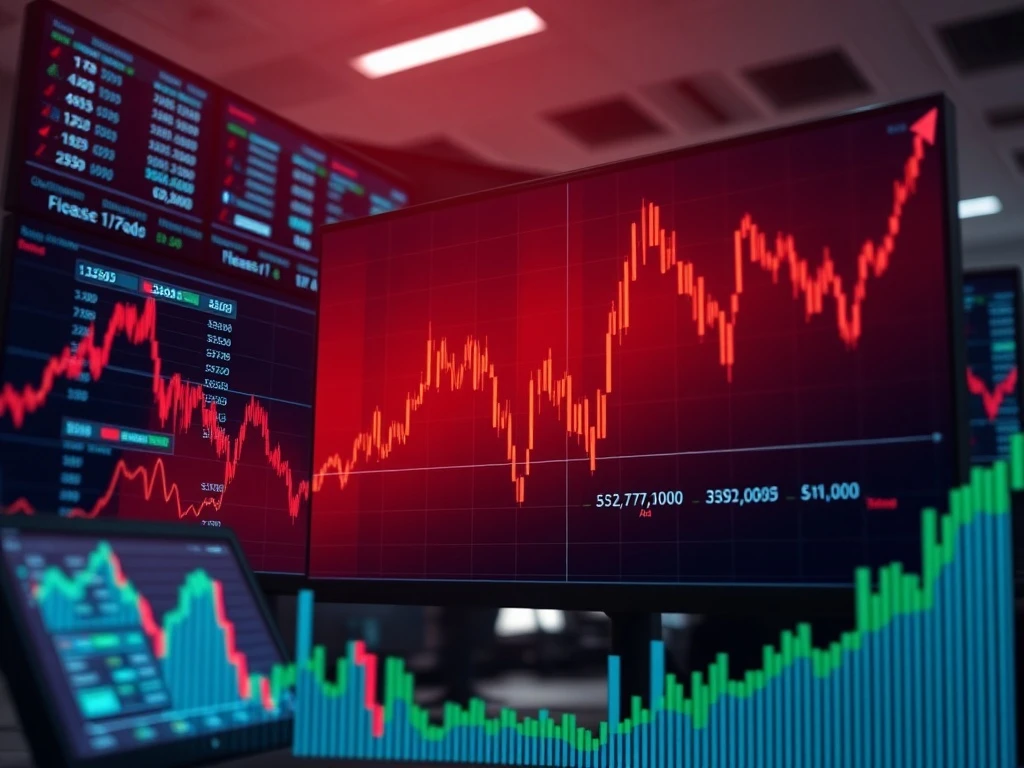
Global cryptocurrency markets experienced significant turbulence today as $104 million worth of futures positions faced liquidation within a single hour, signaling heightened volatility across major trading platforms. According to aggregated exchange data from March 2025, this rapid liquidation event contributed to a substantial $768 million in total futures liquidations over the preceding 24-hour period. Market analysts immediately began examining the underlying causes and potential implications for both retail and institutional traders navigating increasingly complex derivative markets.
Crypto Futures Liquidations Reveal Market Stress Points
Major cryptocurrency exchanges including Binance, Bybit, and OKX reported concentrated liquidation activity during the volatile trading session. The $104 million hourly liquidation figure represents one of the most significant short-term deleveraging events in recent months. Consequently, market participants faced immediate margin calls as positions moved against leveraged traders. Typically, such liquidations occur when traders cannot meet margin requirements during rapid price movements.
Historical data shows that futures liquidations often cluster during periods of heightened volatility. For instance, similar patterns emerged during the March 2024 market correction when approximately $900 million liquidated within 24 hours. However, today’s concentrated hourly liquidation suggests particularly rapid price action. Market structure analysts note that excessive leverage frequently amplifies these volatility events across cryptocurrency derivatives markets.
Understanding Futures Market Mechanics
Cryptocurrency futures contracts allow traders to speculate on price movements without owning underlying assets. These derivative instruments enable both long and short positions with significant leverage. When prices move against leveraged positions, exchanges automatically close positions to prevent losses exceeding collateral. This process, known as liquidation, protects both traders and exchange platforms from cascading failures.
Liquidation Triggers and Market Impact
Several factors typically trigger concentrated liquidation events. First, unexpected news or macroeconomic developments can create rapid price movements. Second, large institutional orders sometimes overwhelm available liquidity. Third, cascading liquidations themselves can create feedback loops as forced selling pressures prices further. Market surveillance data indicates today’s event involved both long and short position liquidations across multiple cryptocurrencies.
The following table illustrates recent significant liquidation events for comparison:
| Date | Hourly Liquidations | 24-Hour Total | Primary Market |
|---|---|---|---|
| March 2025 | $104 million | $768 million | Multiple |
| January 2025 | $87 million | $512 million | Bitcoin/Ethereum |
| November 2024 | $156 million | $1.2 billion | Bitcoin |
Risk Management Strategies for Volatile Markets
Professional traders employ several strategies to mitigate liquidation risks. These approaches include:
- Position sizing: Limiting leverage to manageable levels
- Stop-loss orders: Setting automatic exit points before liquidation levels
- Portfolio diversification: Spreading exposure across uncorrelated assets
- Volatility monitoring: Tracking implied and realized volatility metrics
Exchange platforms also implement protective measures. For example, many now offer isolated margin modes that limit losses to specific positions. Additionally, some platforms provide liquidation price calculators and real-time margin ratio monitoring. Risk management experts emphasize that understanding liquidation mechanics remains crucial for all derivatives traders.
Market Context and Historical Patterns
The cryptocurrency derivatives market has grown substantially since 2020. Open interest across major exchanges now regularly exceeds $30 billion. This expansion increases both market efficiency and potential systemic risks. Historical analysis reveals that liquidation events often precede or accompany significant trend changes. However, correlation does not necessarily imply causation in complex market environments.
Regulatory developments also influence derivatives trading. Several jurisdictions have implemented leverage limits for retail traders. These measures aim to reduce excessive risk-taking and protect inexperienced participants. Meanwhile, institutional adoption continues driving sophisticated risk management practices throughout cryptocurrency markets.
Expert Perspectives on Market Structure
Financial analysts note that liquidation events provide valuable market microstructure insights. The concentration and timing of liquidations reveal leverage distribution across price levels. Furthermore, these events test exchange infrastructure and risk management systems. Market surveillance teams monitor liquidation patterns for potential market manipulation or structural vulnerabilities.
Derivatives specialists emphasize that liquidations represent normal market functioning rather than systemic failures. Properly managed exchanges handle these events without disrupting continuous trading. However, extreme volatility can temporarily overwhelm even robust systems. Consequently, exchanges continually upgrade their risk management frameworks and liquidation engines.
Conclusion
The $104 million crypto futures liquidation event highlights ongoing volatility in cryptocurrency derivatives markets. These liquidations, totaling $768 million over 24 hours, demonstrate the risks associated with leveraged trading during uncertain market conditions. Market participants must understand liquidation mechanics and implement appropriate risk management strategies. As cryptocurrency markets mature, both traders and platforms continue developing more sophisticated approaches to managing derivatives exposure and volatility.
FAQs
Q1: What causes cryptocurrency futures liquidations?
Futures liquidations occur when traders cannot meet margin requirements during price movements. Exchanges automatically close positions to prevent losses exceeding collateral. This protects both traders and platforms from cascading failures.
Q2: How do liquidations affect cryptocurrency prices?
Liquidations can create additional selling or buying pressure as positions close automatically. This sometimes amplifies price movements through feedback loops. However, market impact varies based on liquidation size and available liquidity.
Q3: What percentage of traders typically face liquidation?
Exact percentages vary by market conditions and leverage levels. During extreme volatility, leveraged positions face higher liquidation risks. Most exchanges report liquidation rates between 1-5% of open interest during significant events.
Q4: Can traders prevent futures liquidations?
Traders can manage liquidation risks through proper position sizing, stop-loss orders, and margin monitoring. Many exchanges provide tools to calculate liquidation prices and monitor margin ratios in real time.
Q5: Do all cryptocurrency exchanges handle liquidations similarly?
While basic mechanisms remain consistent, implementation details vary across platforms. Differences include margin calculation methods, liquidation fee structures, and partial liquidation policies. Traders should understand specific exchange protocols before trading.