Zcash Price Surges 10%: A Revealing Rally Fueled by Speculative Frenzy
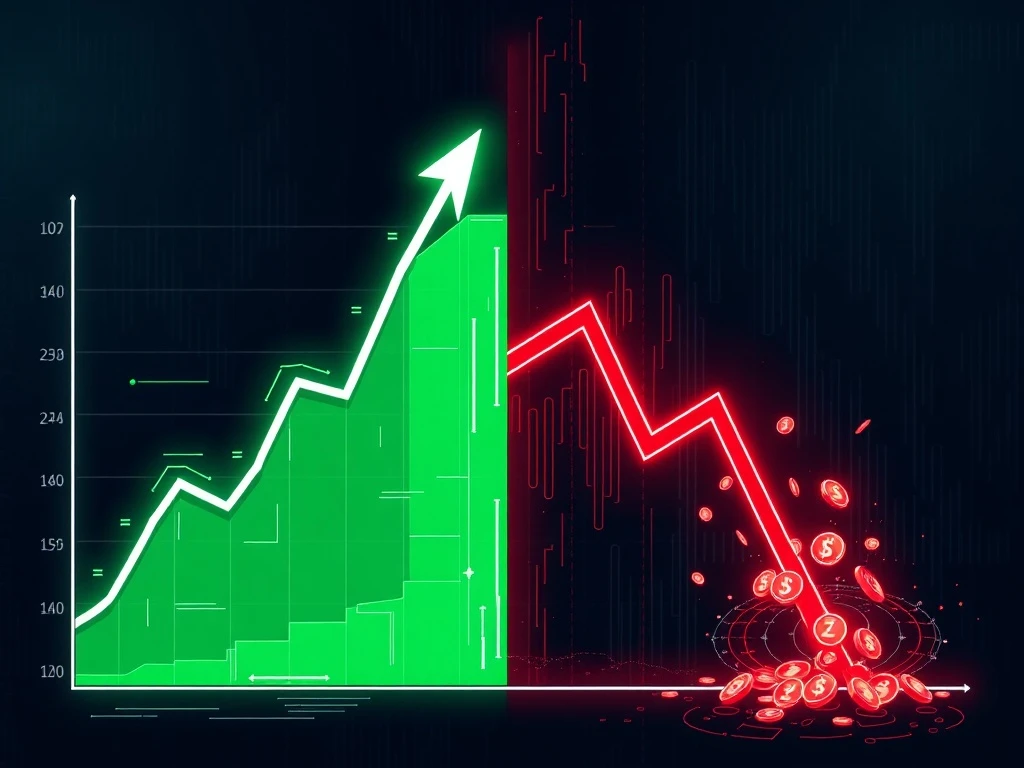
On January 28, 2026, the cryptocurrency Zcash (ZEC) staged a remarkable and isolated 10% price surge, reclaiming the $384 level while the broader digital asset market showed notable restraint. This sudden move by the privacy-focused token immediately captured analyst attention, not just for its magnitude but for the underlying market mechanics driving it. A deep dive into on-chain and derivatives data reveals a critical and growing divergence between speculative futures traders and spot market participants, painting a complex picture of the rally’s potential sustainability.
Zcash Price Rally Stands Apart in a Cautious Market
Zcash’s performance was a clear outlier in the recent trading session. While other major cryptocurrencies and even assets within the privacy coin category struggled to attract consistent capital inflows, ZEC demonstrated significant upward momentum. This kind of solo rally often signals a unique catalyst or a shift in specific market sentiment. However, the immediate question for investors and analysts became whether this move represented a fundamental revaluation or a technically driven speculative event. The answer, as subsequent data shows, appears to lean heavily toward the latter, highlighting the fragile nature of momentum in the current crypto landscape.
Also read: Ethereum's $2,500 Challenge: Market Data and the Rise of Pepeto
Market participants are increasingly scrutinizing the sources of liquidity. A rally supported by broad-based buying across both long-term holders and new entrants typically carries more weight. Conversely, a price pump driven primarily by leveraged positions in the derivatives market can be more susceptible to sharp reversals. The Zcash scenario provides a textbook case study of this dynamic, offering valuable insights for traders navigating volatile conditions.
The Speculative Engine: Perpetual Futures Fuel the Ascent
The most evident driver behind ZEC’s 10% gain was activity in the perpetual futures market. Perpetual contracts, which lack an expiry date, are popular instruments for speculative trading. Key metrics from this market told a compelling story:
Also read: Crypto Listing Scams: Binance CEO Changpeng Zhao Issues Critical Warning to Investors
- Open Interest (OI) Increase: A substantial $71.26 million flowed into ZEC perpetual contracts over the 24-hour period. Open Interest measures the total number of outstanding contracts, and a rise indicates fresh capital entering the market, creating new positions.
- Positive Funding Rate: The funding rate remained positive at approximately 0.0061%. This metric is a periodic payment exchanged between long and short traders to keep the contract’s price aligned with the spot price. A positive rate means traders holding long positions (betting on price increases) are paying a fee to those holding short positions.
This combination—rising OI with a positive funding rate—strongly suggests that the new capital was predominantly deployed by bullish, long-side speculators. These traders were willing to pay a premium to maintain their positions, creating significant buying pressure that directly influenced ZEC’s spot price on exchanges. This mechanism demonstrates how derivatives activity can temporarily decouple an asset’s price from its underlying spot market demand.
A Historical Perspective on Speculative Rallies
Financial historians and crypto analysts often point to similar patterns in traditional and digital markets. Rallies primarily fueled by leverage and futures speculation, without corresponding growth in real asset adoption or spot market volume, frequently precede periods of consolidation or correction. The 2021 meme stock phenomenon and several altcoin cycles have shown that when the leverage unwinds, prices can revert rapidly to levels supported by organic demand. This context is crucial for understanding the potential risks in the current Zcash setup.
The Counter-Narrative: Spot Traders Withdraw Support
While perpetual traders were piling in, a starkly different trend emerged in the spot market, where actual cryptocurrency assets are bought and sold for immediate delivery. Data from spot exchange netflows, which track the movement of coins onto and off of trading platforms, revealed a significant sell-off. Over a 48-hour window surrounding the rally, spot sales totaled $31.37 million, representing a clear capital outflow.
To put this into perspective, spot traders offloaded an amount equivalent to roughly 44% of the new capital that entered the perpetual futures market. This divergence is a critical red flag. It indicates that while speculators were betting on higher prices using leverage, holders of the actual asset were using the price strength as an opportunity to exit their positions. This creates a fundamental imbalance; the rally lacks the foundational support of genuine, long-term buying interest.
| Market Segment | Key Metric | Observation | Implied Sentiment |
|---|---|---|---|
| Perpetual Futures | Open Interest Change | +$71.26M | Bullish Speculation |
| Perpetual Futures | Funding Rate | +0.0061% | Longs Paying Premium |
| Spot Market | Netflow | -$31.37M Outflow | Distribution/Selling |
Technical Outlook and Downside Risk Assessment
With the market sending mixed signals, technical analysis tools become essential for gauging potential future price action. The liquidation heatmap, which visualizes clusters of liquidity where stop-loss orders and liquidations are likely concentrated, offers clues. For ZEC, the most significant liquidity cluster currently sits below the current price, around the $350 region.
Price often gravitates toward these high-liquidity zones. The presence of a strong cluster below, combined with the spot-perpetual divergence, increases the probability of a downward move to test these levels. This does not guarantee a drop to $350, but it establishes a key area of interest should bullish momentum from futures traders begin to fade. Traders will watch for a break and hold below immediate support levels as a confirmation of shifting sentiment.
The Role of Broader Market Sentiment
Zcash does not trade in a vacuum. Broader cryptocurrency market sentiment, often driven by Bitcoin’s performance, regulatory news, and macroeconomic factors, will play a decisive role. A positive shift in the overall market could attract the missing spot demand for ZEC, validating the futures-led rally. Conversely, a downturn in the wider crypto complex would likely accelerate selling pressure on ZEC, potentially triggering a sharp unwind of the leveraged long positions that fueled its rise.
Conclusion
The 10% Zcash price surge presents a nuanced case study in modern cryptocurrency market dynamics. The rally is demonstrably built on a foundation of speculative futures trading, as evidenced by soaring Open Interest and a positive Funding Rate. However, this speculative frenzy stands in direct opposition to the actions of spot market participants, who are capitalizing on the price strength to exit positions. This divergence between leverage-driven speculation and organic spot demand creates a vulnerable setup for ZEC. While the short-term momentum may persist, the sustainability of the move is highly questionable without a subsequent influx of genuine, long-term buying interest. Investors should monitor the convergence or further divergence of these two key market segments closely, as it will likely dictate the next major move for the Zcash price.
FAQs
Q1: What caused Zcash to jump 10%?
The primary driver was a surge in speculative trading in the perpetual futures market, where over $71 million in new capital entered, mostly from traders taking long (bullish) positions.
Q2: Why are analysts concerned about this ZEC rally?
Analysts are concerned because the rally is not supported by spot market demand. Data shows significant net outflows from spot exchanges, meaning holders were selling into the price strength, creating a fragile foundation.
Q3: What is the difference between spot trading and perpetual futures trading?
Spot trading involves buying and selling the actual cryptocurrency asset for immediate delivery. Perpetual futures trading involves speculating on the future price of the asset using leverage, without ever owning the underlying coin.
Q4: What does a positive Funding Rate indicate?
A positive Funding Rate indicates that traders holding long positions are paying a fee to traders holding short positions. It typically reflects a market where bullish, leveraged speculation is dominant.
Q5: What is a key technical level to watch for Zcash now?
Analysts are watching the $350 level, as liquidity heatmaps show a significant cluster of buy and sell orders in that region, which could act as a magnet for price if the current bullish momentum fades.

This article was produced with AI assistance and reviewed by our editorial team for accuracy and quality.