XRP Whale Activity: Binance Records Staggering 31M Surge as Upbit Follows with 14.8M Inflows
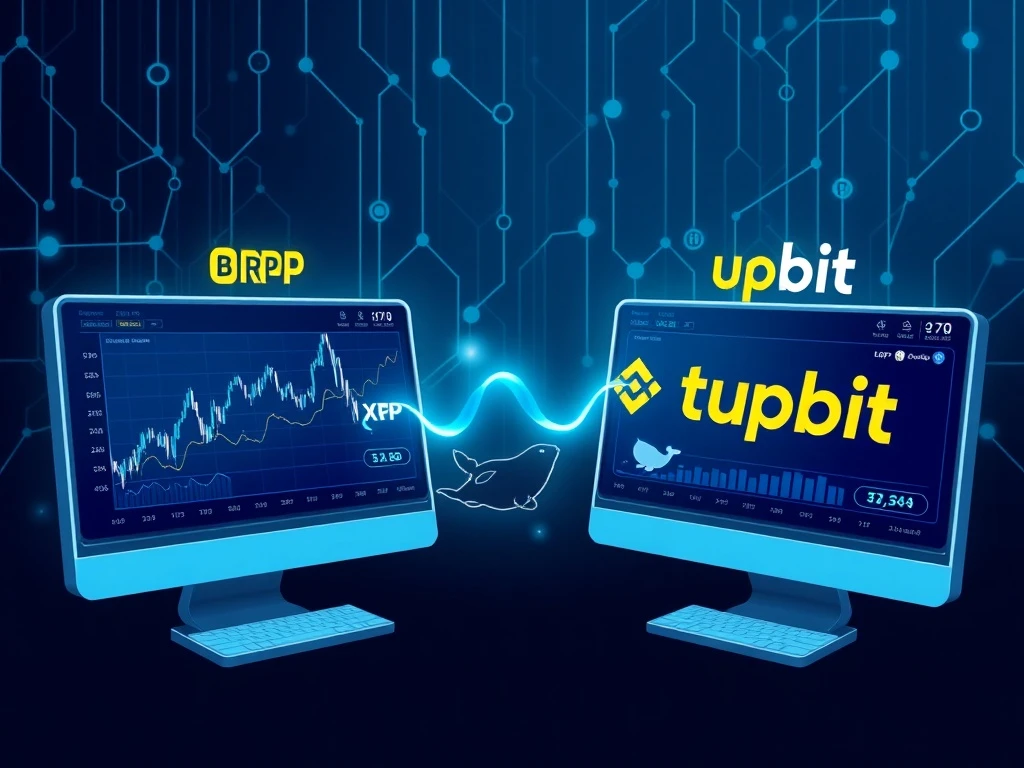
Significant whale movements have reshaped XRP’s market space this week, with Binance recording a remarkable 31 million XRP inflow while South Korea’s Upbit exchange simultaneously absorbed 14.8 million additional tokens. These substantial transfers occurred as XRP traded within the $1.35 to $1.40 range, representing a critical juncture following the cryptocurrency’s 40% year-to-date decline. Market analysts now scrutinize these movements for potential signals about institutional positioning and future price direction.
XRP Whale Activity: Analyzing the Binance and Upbit Inflows
Cryptocurrency exchanges witnessed rare XRP movements during a single 24-hour session that captured market attention globally. Specifically, Binance processed more than 31 million XRP tokens flowing into its wallets, while Upbit simultaneously recorded 14.8 million XRP in additional inflows. These coordinated movements suggest sophisticated market participants, commonly called “whales,” executed strategic positioning. Consequently, the cryptocurrency community now debates whether these transfers represent accumulation before a potential price reversal or simply portfolio rebalancing between exchanges.
Also read: Bitcoin Mining Difficulty Plummets: Network Data Signals 14% Downward Adjustment
Blockchain analytics firms identified several large transactions originating from anonymous wallets. These transfers typically move through multiple intermediary addresses before reaching exchange deposit wallets, a common practice among institutional traders seeking to obscure their exact entry points. Furthermore, the timing coincides with XRP’s consolidation phase between $1.35 and $1.40, a price range that has provided both support and resistance throughout 2024. Market data reveals that similar whale activity preceded previous XRP rallies in 2021 and 2023.
Cryptocurrency Market Context and Historical Patterns
The current XRP whale activity unfolds against a complex market backdrop characterized by regulatory developments and shifting institutional sentiment. Notably, XRP has declined approximately 40% year-to-date, underperforming against major cryptocurrencies like Bitcoin and Ethereum during the same period. This underperformance stems partly from ongoing legal uncertainties surrounding Ripple Labs’ SEC litigation, though recent court developments have provided some clarity. Additionally, global cryptocurrency adoption continues expanding, with traditional financial institutions increasingly exploring digital asset integration.
Also read: BlockDAG's Stunning 79,900% Surge Targets $1 as Litecoin and Dogecoin Struggle
Exchange-Specific Dynamics and Regional Implications
Binance and Upbit represent distinct market segments with different user demographics and trading behaviors. As the world’s largest cryptocurrency exchange by volume, Binance attracts global institutional and retail traders. Conversely, Upbit dominates the South Korean market, where cryptocurrency adoption rates rank among the world’s highest. The simultaneous large inflows to both platforms suggest coordinated action across geographical boundaries. South Korean traders historically demonstrate strong interest in XRP, often creating price premiums on Upbit compared to international exchanges.
The table below illustrates recent XRP exchange flow patterns:
| Exchange | XRP Inflow (24h) | Percentage Change | Notable Timing |
|---|---|---|---|
| Binance | 31,000,000 XRP | +215% vs. 7-day average | Asian trading hours |
| Upbit | 14,800,000 XRP | +187% vs. 7-day average | Korean market open |
| Combined Total | 45,800,000 XRP | +201% aggregate increase | Coordinated session |
Several key factors distinguish this whale activity from ordinary market movements:
- Volume Magnitude: The combined 45.8 million XRP represents approximately $62 million at current prices
- Temporal Concentration: Most transfers occurred within a compressed 6-hour window
- Geographical Distribution: Flows targeted exchanges serving different regional markets
- Price Context: Activity clustered around psychologically significant price levels
Technical Analysis and Price Implications
XRP’s technical structure reveals important context for interpreting the recent whale movements. The cryptocurrency currently tests the upper boundary of a descending channel that has contained price action since early 2024. Moreover, the $1.35 to $1.40 range represents a historical support zone that previously facilitated significant rallies. Trading volume patterns show increasing activity as price approaches this critical level, suggesting growing market interest. Technical indicators including the Relative Strength Index (RSI) and Moving Average Convergence Divergence (MACD) show early signs of potential momentum shifts.
Market analysts highlight several possible scenarios following such substantial exchange inflows. Historically, large deposits to exchanges sometimes precede selling pressure as traders move assets to liquid positions. However, the current situation differs because the inflows arrived during a consolidation phase rather than after a sharp price increase. Additionally, exchange net flow metrics, which track the difference between inflows and outflows, provide more nuanced signals than inflow data alone. These metrics currently show balanced activity rather than extreme one-directional movement.
Regulatory Environment and Institutional Adoption
The regulatory space surrounding XRP continues evolving with significant implications for price discovery. Ripple Labs’ ongoing legal proceedings with the U.S. Securities and Exchange Commission have created uncertainty that likely contributed to XRP’s year-to-date underperformance. However, recent developments suggest potential resolution pathways that could remove this overhang. Simultaneously, institutional adoption of blockchain technology accelerates, with major financial institutions exploring XRP’s underlying technology for cross-border payments. These fundamental developments provide essential context for understanding whale behavior beyond technical chart patterns.
Market Psychology and Sentiment Indicators
Cryptocurrency market sentiment represents a important factor influencing whale decision-making. Currently, fear and greed indicators show moderate fear levels across digital asset markets, typically creating favorable accumulation conditions for sophisticated investors. Social media analysis reveals increasing discussion about XRP’s potential reversal, though sentiment remains cautiously optimistic rather than euphoric. Additionally, derivatives market data shows balanced positioning without extreme tap into that often precedes sharp corrections. This psychological backdrop suggests whales might view current levels as offering favorable risk-reward ratios for medium-term positions.
Several on-chain metrics provide objective sentiment measurements:
- Network Activity: Daily active addresses increased 18% week-over-week
- Holder Distribution: Addresses holding 1M+ XRP grew modestly this month
- Exchange Reserves: Overall exchange balances remain below yearly averages
- Transaction Value: Mean transaction size increased 42% during inflow period
Conclusion
The substantial XRP whale activity involving Binance and Upbit exchanges represents a significant market development worthy of careful analysis. These coordinated movements of 31 million and 14.8 million XRP tokens respectively occurred at technically and psychologically important price levels following a 40% year-to-date decline. While exchange inflows sometimes signal impending selling pressure, the current context suggests potential accumulation by sophisticated market participants. Market observers should monitor subsequent price action and exchange flow patterns for confirmation of whether this XRP whale activity represents strategic positioning ahead of a potential trend change or routine portfolio rebalancing between cryptocurrency exchanges.
FAQs
Q1: What does “whale activity” mean in cryptocurrency markets?
Whale activity refers to large transactions typically executed by institutional investors, hedge funds, or extremely wealthy individuals holding substantial cryptocurrency positions. These movements often influence market prices and sentiment due to their size relative to average trading volumes.
Q2: Why do simultaneous inflows to Binance and Upbit matter?
Simultaneous inflows to exchanges serving different geographical markets suggest coordinated action rather than isolated regional events. This pattern often indicates sophisticated cross-border strategies rather than retail investor behavior, potentially signaling institutional involvement.
Q3: How does XRP’s 40% year-to-date decline affect current whale behavior?
Substantial price declines often create accumulation opportunities for long-term investors who believe assets have reached undervalued levels. Whale activity during such periods sometimes precedes trend reversals when combined with other technical and fundamental factors.
Q4: What technical levels are most important for XRP price analysis?
The $1.35 to $1.40 range represents a critical historical support zone that has facilitated previous rallies. Additionally, XRP must break above the descending channel that has contained price action since early 2024 to signal potential trend change.
Q5: How can ordinary investors monitor whale activity?
Several blockchain analytics platforms provide whale tracking features, including large transaction alerts, exchange flow monitoring, and holder distribution analysis. These tools help identify unusual market movements that might signal important developments.

This article was produced with AI assistance and reviewed by our editorial team for accuracy and quality.