XRP Short Squeeze Unleashes Dramatic Liquidation Wave Following CPI Shock
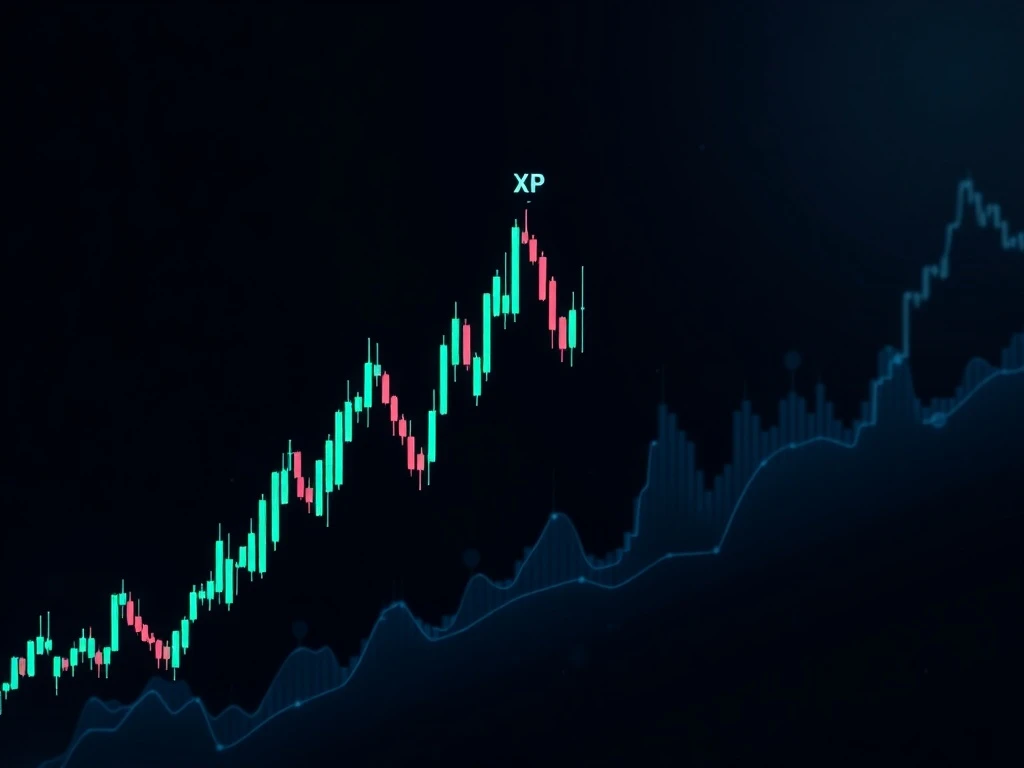
The cryptocurrency derivatives market experienced a seismic shift on January 13, 2025, when XRP recorded a staggering 1,122% liquidation imbalance following the latest U.S. Consumer Price Index release, revealing exceptional structural tensions in digital asset trading.
XRP Short Squeeze Triggers Market-Wide Repositioning
Market analysts observed a brutal repositioning across cryptocurrency derivatives as traders scrambled to adjust positions following unexpected inflation data. The XRP market became the epicenter of this activity, with $76,450 in liquidations occurring within a single hour. This rapid movement created what traders term a “short squeeze,” where forced buying from liquidated short positions accelerates upward price momentum.
Also read: AI Trading Agents: The Revolutionary Path to Mastering Your Crypto Portfolio in 2025
Data from major derivatives exchanges revealed a striking asymmetry in position closures. Short position liquidations reached $70,180 during the critical hour, while long position liquidations amounted to only $6,270. This 1,122% imbalance indicates that market participants had overwhelmingly positioned for XRP price declines before the CPI announcement. The subsequent price movement forced these positions to unwind rapidly, creating a feedback loop that pushed prices higher.
Macroeconomic Catalyst Exposes Derivative Vulnerabilities
The Consumer Price Index release served as the primary catalyst for this market movement. Inflation data that diverged from market expectations triggered immediate reactions across financial markets, with cryptocurrency derivatives proving particularly sensitive. This event highlighted how macroeconomic indicators increasingly influence digital asset markets, especially in derivatives trading where use amplifies both gains and losses.
Also read: RunBot AI Trading Bot: Revolutionizing Automated Cryptocurrency Strategies with Machine Learning
Comparative Market Impact Analysis
While other major cryptocurrencies experienced liquidations during the same period, XRP’s disproportionate reaction revealed unique market characteristics. Bitcoin recorded $4.72 million in liquidations, and Ethereum saw $3.39 million, but neither exhibited the extreme ratio between short and long position closures observed in XRP markets. This differential suggests XRP may serve different functions in trader portfolios, potentially acting as a vehicle for short-term directional bets or hedging strategies.
The technical space surrounding XRP added context to the liquidation event. Analysts had previously identified the $2.08 price level as a critical resistance point. The CPI-triggered surge tested this level, raising questions about market depth and liquidity at key technical junctures. Market structure analysis suggests that shallow order books around these levels can exacerbate price movements when large positions unwind simultaneously.
Derivative Market Structure Under Microscope
Beyond the immediate price action, the liquidation event raised important questions about cryptocurrency derivative market structure. The concentration of speculative positions in XRP derivatives, particularly on the short side, indicates that certain assets attract disproportionate attention for directional trading. This concentration can create vulnerability to sudden sentiment shifts or unexpected news events.
Market depth analysis reveals that XRP’s derivative markets may be particularly susceptible to liquidity events. The rapid price movement following the CPI release suggests that available liquidity at key price points was insufficient to absorb the volume of position adjustments. This characteristic makes XRP derivatives a potential leading indicator for broader market stress, as imbalances manifest more quickly in less liquid instruments.
Historical Context and Market Evolution
This event continues a pattern observed in cryptocurrency derivatives since their emergence as significant market components. Previous instances of extreme liquidation imbalances have typically occurred around major news events or regulatory announcements. However, the increasing correlation between traditional macroeconomic data and cryptocurrency market movements represents an evolution in market dynamics.
Derivative market participation has grown substantially since 2023, with institutional involvement increasing market sophistication while potentially introducing new vulnerabilities. The XRP liquidation event demonstrates how even established cryptocurrency assets remain subject to rapid sentiment shifts and derivative flow adjustments. Market participants must now consider macroeconomic indicators alongside traditional technical and fundamental analysis when positioning in cryptocurrency derivatives.
Regulatory and Institutional Implications
The dramatic liquidation event occurred against a backdrop of increasing regulatory scrutiny of cryptocurrency derivatives. Market observers note that extreme volatility events often prompt regulatory review, particularly when retail investors may be disproportionately affected. The concentration of liquidations in short positions suggests that certain trader cohorts may have been particularly exposed to this market movement.
Institutional participation in XRP derivatives has grown following developments in the regulatory space surrounding Ripple. This increased institutional presence may have contributed to the scale of the liquidation event, as larger positions require more significant adjustments when market conditions change. The event provides valuable data for risk managers and regulators studying cryptocurrency market stability.
Technical Analysis and Forward Outlook
Technical analysts emphasize the importance of the $2.08 resistance level following the liquidation event. The rapid approach to this level during the short squeeze suggests that technical factors interacted with fundamental news to create the observed price action. Market technicians will monitor whether this level holds as resistance or becomes support in subsequent trading sessions.
Volume analysis indicates unusually high trading activity during the liquidation period, suggesting that both algorithmic and human traders participated in the repositioning. The velocity of price movement points to automated trading systems responding to the CPI data, with these systems potentially amplifying the initial market reaction through rapid position adjustments.
Conclusion
The XRP short squeeze and subsequent liquidation wave revealed significant structural characteristics of cryptocurrency derivative markets. The 1,122% imbalance between short and long position liquidations highlighted how macroeconomic data now directly impacts digital asset trading. This event demonstrated XRP’s particular sensitivity to derivative market flows and its potential role as a leading indicator for broader market stress. As cryptocurrency markets continue maturing, events like this provide vital insights into market structure, participant behavior, and the evolving relationship between traditional finance and digital assets.
FAQs
Q1: What caused the XRP short squeeze?
The short squeeze was triggered by unexpected U.S. Consumer Price Index data that forced traders who had bet on XRP price declines to rapidly buy back their positions, creating upward price pressure.
Q2: How significant was the liquidation imbalance?
The imbalance reached 1,122%, with $70,180 in short position liquidations versus only $6,270 in long position liquidations within one hour, representing an extreme market dislocation.
Q3: How does this event compare to other cryptocurrency liquidations?
While Bitcoin and Ethereum saw larger total liquidation amounts, XRP exhibited the most extreme ratio between short and long position closures, suggesting unique market dynamics.
Q4: What does this mean for XRP’s market structure?
The event suggests XRP derivative markets may have shallower liquidity at key price points, making them more susceptible to rapid price movements when large positions adjust simultaneously.
Q5: Could similar events occur in the future?
Similar events may occur as cryptocurrency markets remain sensitive to macroeconomic data, particularly in derivatives markets where apply amplifies position adjustments.

This article was produced with AI assistance and reviewed by our editorial team for accuracy and quality.