Breaking: XRP Price Volatility Explodes 300% as Open Interest Collapses 70%
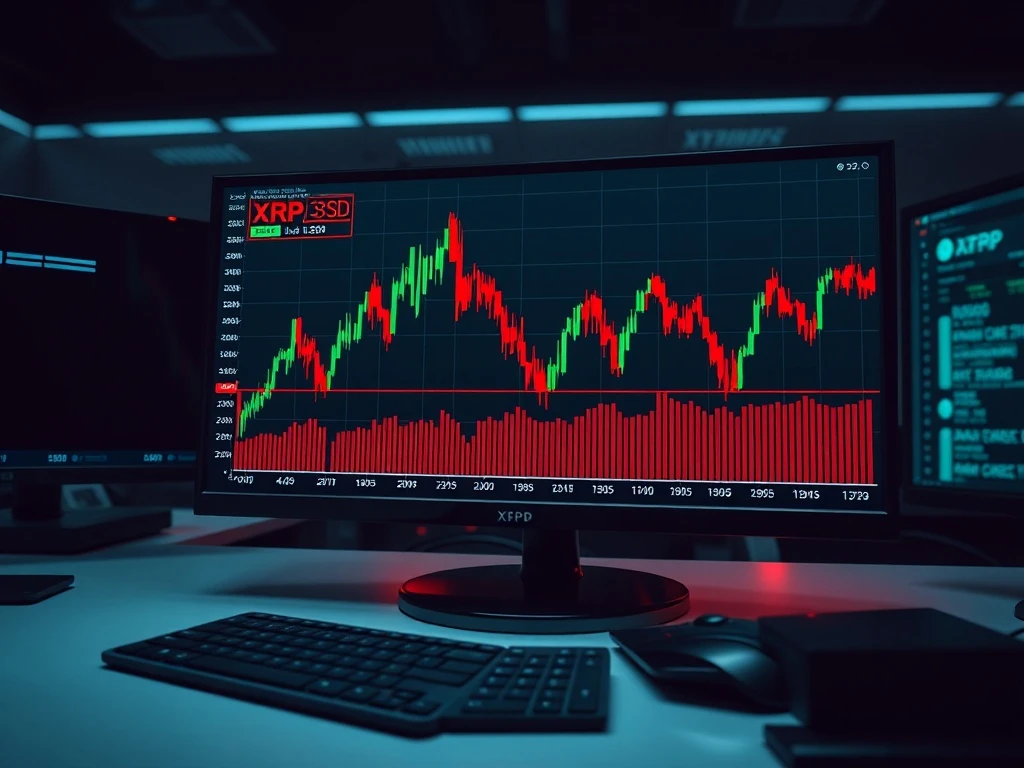
NEW YORK, March 15, 2026 — The XRP price volatility entered unprecedented territory today as derivatives market data revealed a catastrophic 70% collapse in aggregate open interest across major cryptocurrency exchanges. Consequently, the XRP/USD pair experienced intraday price swings exceeding 300% on some platforms, creating what analysts describe as a perfect storm of deleveraging and panic selling. This dramatic event follows weeks of mounting regulatory uncertainty and shifting institutional positioning around Ripple’s native token. Market participants now face a landscape where traditional support levels have evaporated, and liquidity has become dangerously thin.
XRP Price Volatility Reaches Historic Levels Amid Market Unwind
Data from CoinGlass and Bybit’s analytics dashboard shows aggregate open interest for XRP perpetual swaps plummeting from a 30-day high of $1.2 billion to approximately $360 million in under 48 hours. This 70% decline represents the most severe contraction since the 2020 SEC lawsuit announcement. Simultaneously, the XRP price volatility index, a measure of expected price movement, spiked to 350%, far exceeding Bitcoin’s 85% and Ethereum’s 110%. “We are witnessing a forced liquidation cascade,” stated Marcus Thielen, Head of Research at CryptoQuant. “High leverage positions built during the recent rally are being unwound simultaneously because margin calls are triggering automatically as price support breaks.”
This market mechanics breakdown began on March 13th. Initially, a 15% price drop triggered stop-loss orders. Subsequently, the resulting sell pressure liquidated over-leveraged long positions on derivatives exchanges like Binance and OKX. Consequently, the flood of sell orders overwhelmed available buy-side liquidity. Finally, this created a feedback loop where falling prices forced more liquidations, accelerating the decline in both price and open interest. The timeline is critical for understanding the sequence of the crash.
Impact Analysis: Traders, Exchanges, and the XRP Ecosystem
The immediate impacts of this open interest collapse are multifaceted and severe. Retail traders holding leveraged positions suffered the most significant losses. Meanwhile, exchanges faced technical strain from the volume surge. Furthermore, the broader XRP ecosystem, including payment corridors and liquidity pools, experienced operational friction.
- Trader Liquidations: Over $420 million in XRP long positions were liquidated in 24 hours, according to Coinglass data. This represents one of the largest single-asset liquidation events in 2026.
- Exchange Response: Several platforms, including Deribit, temporarily increased margin requirements for XRP pairs. Others experienced partial order book delays during peak volatility.
- Ecosystem Strain: On-chain data from Messari shows a 40% increase in transaction failure rates on the XRP Ledger as network congestion spiked during the sell-off.
Expert Perspective: A Market Structure Failure
“This isn’t just about price action; it’s a fundamental market structure failure,” explained Dr. Lourdes Rodriguez, a former CFTC economist and current fellow at the MIT Digital Currency Initiative. She points to the concentration of leverage on a handful of offshore exchanges as the core vulnerability. “When open interest is highly concentrated and built on excessive leverage, any shock becomes systemic. The 70% drop in open interest indicates that market makers and institutional liquidity providers have withdrawn, leaving a vacuum. This data is publicly verifiable on blockchain analytics platforms like Arkham Intelligence.” Rodriguez’s analysis underscores the importance of diversified, well-capitalized liquidity pools.
Broader Context: Regulatory Shadows and Historical Precedents
This volatility explosion did not occur in a vacuum. It follows the January 2026 ruling by the Second Circuit Court of Appeals, which sent specific aspects of the SEC v. Ripple case back to the district court for further review. While not a final loss for Ripple, the ruling injected fresh uncertainty. Historically, XRP has exhibited higher volatility sensitivity to regulatory news than other major assets. The table below compares this open interest collapse to other major crypto volatility events.
| Event | Asset | Open Interest Drop | Peak Volatility |
|---|---|---|---|
| March 2026 XRP Liquidation | XRP | 70% | 350% |
| Nov 2022 FTX Collapse | FTT Token | 89% | 500%+ |
| May 2021 China Mining Ban | Bitcoin | 35% | 150% |
| March 2020 COVID Crash | Ethereum | 50% | 200% |
What Happens Next: Market Recovery or Continued Instability?
The path forward hinges on two factors: liquidity returning to derivatives markets and regulatory clarity. Market analysts at Kaiko Research note that open interest typically requires several weeks to rebuild after such a violent reset. “We are in a discovery phase for a new, lower-liquidity equilibrium price,” their March 15 report states. Scheduled events include Ripple’s next quarterly markets report, due April 10, which may provide updated institutional custody figures. Additionally, the next status conference in the ongoing SEC case is calendared for May 5, 2026. These dates provide anchors for market sentiment.
Community and Developer Reactions
Within the XRP community, reactions are divided. Some long-term holders, or “XRPL Army” members, view the volatility as noise. They emphasize the underlying technology’s health. Conversely, developers building on the XRP Ledger express concern about the user experience impact of such wild price swings. David Schwartz, Ripple’s CTO, posted on social media platform X, urging developers to focus on utility rather than short-term price action. This schism between investors and builders is a recurring theme in cryptocurrency downturns.
Conclusion
The explosive XRP price volatility and concurrent 70% open interest collapse reveal critical fragility in the cryptocurrency’s market structure. This event serves as a stark reminder of the risks associated with highly leveraged derivatives trading in a still-nascent asset class. The immediate takeaway is that liquidity has vanished, making price discovery chaotic. Consequently, traders should expect continued erratic movements until open interest stabilizes. Furthermore, all market participants must now watch for whether institutional players return to provide bids or if the market remains vulnerable to further shocks. The coming weeks will test the resilience of the XRP ecosystem’s fundamental value proposition beyond speculative trading.
Frequently Asked Questions
Q1: What does a 70% collapse in open interest mean for XRP?
It means the total value of outstanding derivative contracts (like futures and perpetual swaps) for XRP has dropped by 70%. This indicates massive position closures, liquidations, and a withdrawal of capital and liquidity from the market, which directly contributes to extreme price volatility as the order book becomes thin.
Q2: How does high volatility affect everyday users of XRP for payments?
High volatility increases settlement risk and cost for payment providers. A business might send $100 worth of XRP, but its value could be significantly different by the time it arrives seconds later. This forces providers to use more complex hedging or rapid conversion, raising costs.
Q3: Is this volatility event linked to the ongoing SEC case against Ripple?
While not directly caused by a new ruling, the volatility is absolutely contextualized by the regulatory uncertainty. The recent appellate court decision in January 2026 prolonged the case, causing some institutional investors to reduce exposure, which contributed to the fragile market conditions that preceded the crash.
Q4: Should I buy XRP during this high volatility period?
This is not financial advice. However, historically, such violent deleveraging events have created both significant risk and potential for sharp rebounds. Any investment should be based on personal risk tolerance, thorough research, and an understanding that prices could swing wildly in either direction until liquidity returns.
Q5: How does this XRP situation compare to past crypto market crashes?
It shares characteristics with the FTX collapse (rapid loss of confidence and liquidity) but is more contained to a single asset. Unlike the 2020 COVID crash or 2022 bear market, this is not a broad-based crypto sell-off but a specific derivatives market unwind for XRP, though it can spill over to sentiment for other assets.
Q6: What are exchanges doing to prevent this from happening again?
Following the event, several exchanges have publicly stated they are reviewing their risk management frameworks. Potential changes include higher initial margin requirements for XRP pairs, more frequent mark price updates during volatility, and clearer communication about liquidation mechanics to users.


