XRP Price Prediction: Analyst Eyes $2 Target Before Potential Retest of Gaussian Channel Support
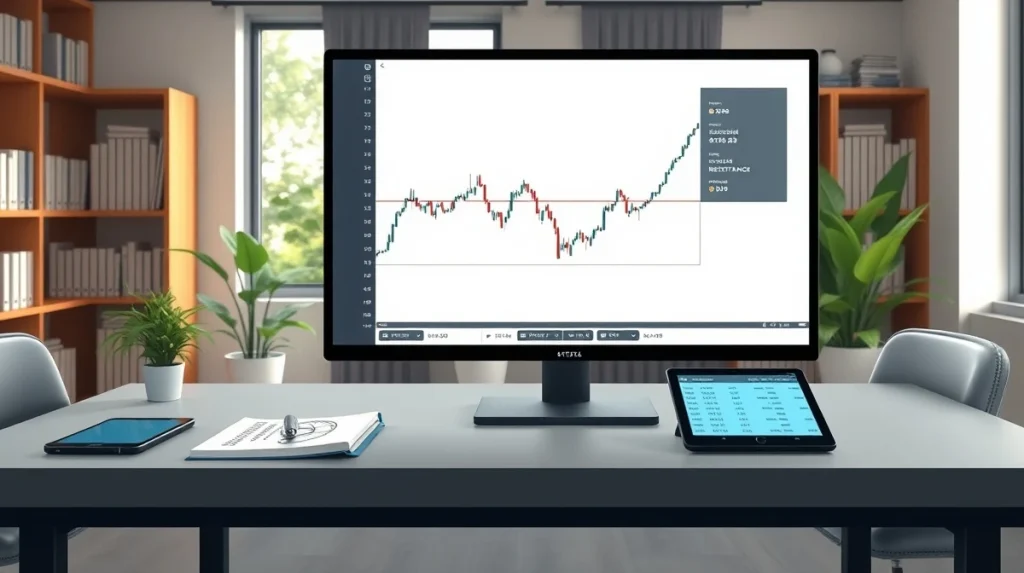
XRP is showing signs of a potential short-term rally toward the $2 level, according to technical analysts who point to the cryptocurrency’s ability to hold above $1.30 support. This comes as market data reveals traders continue to favor bullish positions, setting up a critical test of resistance at $1.50. The analysis suggests a move toward $2 could precede a deeper examination of long-term Gaussian channel support near $0.78.
XRP Technical Setup and Current Market Position
As of early April 2026, XRP has maintained its position above the $1.30 support zone that analysts have watched closely. This level represents a significant psychological and technical barrier that has been tested multiple times over recent months. Data from major exchanges shows the Binance XRP long/short ratio stands at 2.34, indicating that more than twice as many traders hold long positions expecting price increases compared to those betting on declines.
Also read: Crypto Clarity Act Gains Significant Backing as Armstrong Shifts Stance, Pressuring Congress
This trader sentiment provides underlying support for the current price action. Market observers note that holding above $1.30 has drawn fresh attention to XRP from both retail and institutional participants. The cryptocurrency’s ability to maintain this level despite broader market volatility suggests underlying strength in its technical structure.
Understanding Gaussian Channel Analysis
Technical analysts frequently use Gaussian channels, also known as Bollinger Bands, to identify potential support and resistance levels. These statistical tools plot standard deviation lines above and below a simple moving average, creating a channel that contains most price action. When prices approach the upper band, they’re considered overbought; when they approach the lower band, they’re considered oversold.
Also read: Bitcoin Surges Past $72K, Setting Stage for Potential $80M Short Squeeze
In XRP’s case, analysts have identified what they describe as “deeper Gaussian support” near $0.78. This represents the lower boundary of a longer-term channel that has contained XRP’s price movements over an extended period. According to technical analysis principles, prices tend to revert toward the mean of these channels after significant deviations.
Key technical levels for XRP:
- Immediate resistance: $1.50
- Short-term target: $1.80-$2.00
- Current support: $1.30
- Long-term Gaussian support: $0.78
The Path to $2: Resistance and Momentum Factors
The $1.50 resistance level represents a significant hurdle for XRP’s upward movement. Historical price data shows this level has acted as both support and resistance at various points over the past two years. A clean break above $1.50 with sustained volume could open the path toward the $2 target that analysts are watching.
Market structure analysis suggests that if XRP can consolidate above $1.50, the next logical resistance zones appear at $1.65, $1.80, and finally $2.00. Each of these levels corresponds with previous areas of price congestion where buyers and sellers have previously battled for control. The current analysis suggesting a move toward $2 assumes that bullish momentum can overcome these intermediate resistance points.
Trader Sentiment and Market Dynamics
The elevated long/short ratio of 2.34 on Binance provides quantitative evidence of prevailing bullish sentiment among active traders. This metric, which compares the number of long positions to short positions, has remained above 2.0 for several weeks, indicating consistent optimism about XRP’s near-term prospects. However, experienced traders often view extreme readings in either direction as potential contrarian indicators.
What this means for investors is that while current sentiment supports further upside, excessively bullish positioning could eventually lead to a sharp reversal if the market encounters unexpected resistance. The high long/short ratio suggests many traders are already positioned for gains, potentially limiting the pool of new buyers needed to drive prices significantly higher.
Historical Context and Pattern Recognition
XRP’s price history shows several instances where the cryptocurrency has tested Gaussian channel boundaries before reversing direction. In late 2024, for example, XRP approached the upper boundary of its Gaussian channel near $1.80 before retreating to test support near $1.00. This pattern of expansion and contraction within statistical channels is characteristic of many financial assets, including cryptocurrencies.
Analysts examining the current setup note similarities to previous cycles where XRP made rapid advances toward channel boundaries before experiencing corrective movements. The suggestion that XRP might approach $2 before testing deeper support near $0.78 follows this historical pattern of price behavior within established statistical channels.
Risk Considerations and Market Volatility
Cryptocurrency markets remain exceptionally volatile, and technical analysis provides probabilities rather than certainties. While the Gaussian channel framework suggests potential support near $0.78, market conditions could change rapidly based on regulatory developments, macroeconomic factors, or shifts in investor sentiment toward digital assets generally.
Industry watchers note that XRP faces unique regulatory considerations that can influence its price independently of technical patterns. The ongoing evolution of cryptocurrency regulation globally adds an additional layer of complexity to any price prediction, regardless of the technical methodology employed.
Comparative Analysis with Other Major Cryptocurrencies
XRP’s technical setup differs somewhat from Bitcoin and Ethereum, which have shown different patterns in their Gaussian channel behavior. While all major cryptocurrencies exhibit mean-reverting tendencies within statistical channels, the specific support and resistance levels vary based on each asset’s unique volatility profile and market structure.
Data from multiple exchanges shows that XRP has demonstrated slightly different correlation patterns with other major cryptocurrencies throughout early 2026. This suggests that while broader market trends influence XRP, it also responds to asset-specific developments that can create divergence from the overall cryptocurrency market direction.
Conclusion
Technical analysis suggests XRP may be positioned for a move toward $2 if it can overcome resistance at $1.50 and maintain its position above $1.30 support. The current bullish sentiment among traders, as evidenced by the elevated long/short ratio, provides fundamental support for this technical outlook. However, analysts caution that any move toward $2 would likely be followed by a test of deeper Gaussian channel support near $0.78, following historical patterns of price behavior within statistical boundaries. Market participants should consider both the potential upside toward $2 and the possibility of a subsequent retest of lower support levels when evaluating XRP’s risk-reward profile.
FAQs
Q1: What is Gaussian channel support in cryptocurrency trading?
Gaussian channel support refers to price levels identified using statistical analysis that plots standard deviation bands around a moving average. The lower band often acts as support, representing areas where prices have historically found buying interest after declines.
Q2: How reliable is the $2 price target for XRP?
Price targets based on technical analysis represent probabilities rather than certainties. The $2 target depends on XRP maintaining support above $1.30 and breaking through resistance at $1.50 with sufficient trading volume and momentum.
Q3: What does a long/short ratio of 2.34 mean?
A long/short ratio of 2.34 means there are 2.34 long positions for every short position on the exchange. This indicates traders are predominantly bullish, expecting price increases rather than decreases in the near term.
Q4: Why is the $1.30 level important for XRP?
The $1.30 level has acted as both support and resistance at multiple points in XRP’s trading history. Maintaining this level suggests underlying buyer interest, while breaking below it could signal weakening momentum and potential for further declines.
Q5: How does Gaussian channel analysis differ from other technical methods?
Gaussian channel analysis uses statistical standard deviations to create dynamic support and resistance levels that adjust to changing volatility. This differs from fixed support/resistance methods that use historical price points regardless of current market conditions.

This article was produced with AI assistance and reviewed by our editorial team for accuracy and quality.