
XRP Price Analysis: ‘Latent’ Buy Pressure Threatens Crowded Shorts in Critical 2025 Showdown
January 2025 – Global cryptocurrency markets face a pivotal moment as XRP demonstrates concerning patterns for leveraged short traders. Recent derivatives data reveals accumulating negative funding rates on major exchanges, creating what analysts describe as ‘latent’ buy pressure that could trigger significant price movements. This XRP price analysis examines the technical and on-chain factors shaping the digital asset’s trajectory amid evolving market conditions.
XRP Price Dynamics and Historical Funding Rate Patterns
Cryptocurrency derivatives markets provide crucial insights into trader sentiment through funding rate mechanisms. When funding rates turn negative on platforms like Binance, leveraged traders predominantly bet on price declines, paying fees to maintain short positions. Currently, XRP exhibits this exact pattern, with funding rates remaining mostly negative throughout the past two months. This situation mirrors historical precedents that preceded substantial price rebounds.
Market analysts identify three significant historical parallels. First, August-September 2024 saw negative funding rates precede a 50% XRP price recovery. Second, April 2025 witnessed similar conditions before a remarkable 100% rally. Third, the current setup resembles both previous instances in duration and intensity. These patterns suggest that crowded short positions, while creating immediate selling pressure, simultaneously build potential energy for upward movements.
Technical Analysis: Critical Support and Resistance Levels
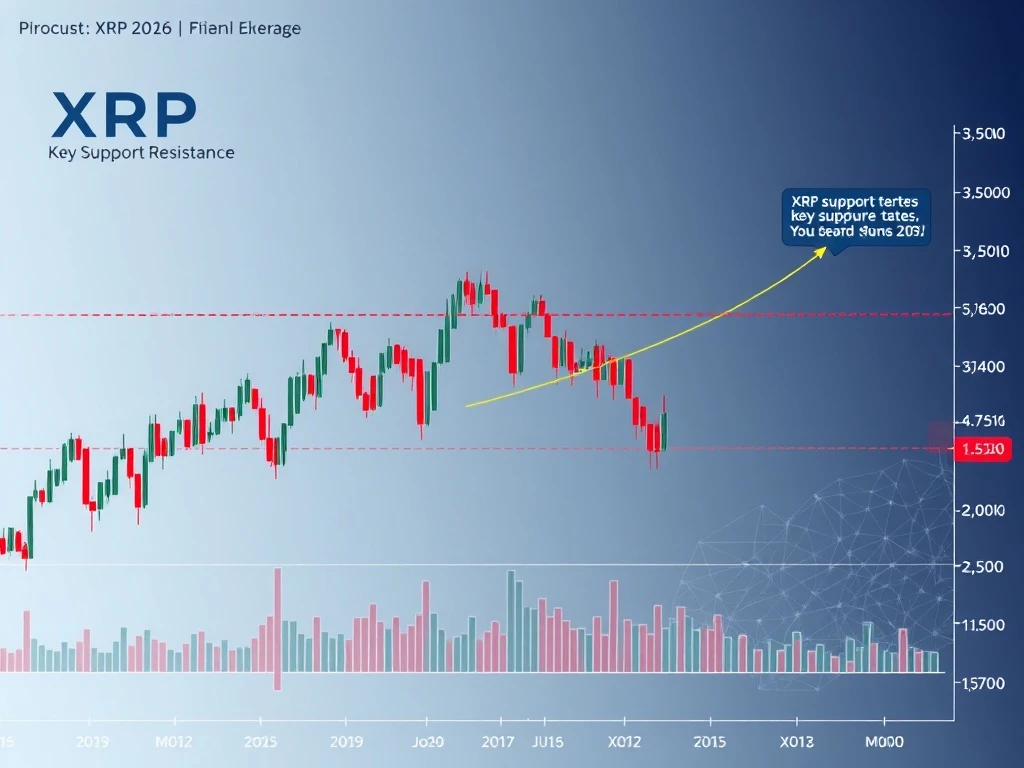
XRP currently navigates a complex technical landscape defined by several crucial price zones. The $1.80-$2.00 support area represents the lower boundary of a year-long sideways channel, previously serving as the launchpad for April 2025’s rally to $3.66. This zone now functions as a critical battleground between bullish and bearish forces. Technical analysts emphasize that maintaining this support remains essential for the bullish case.
Key Technical Indicators and Moving Averages
Several technical indicators warrant close monitoring. The 50-week exponential moving average (EMA) at $2.22 represents immediate resistance, with successful reclamation potentially triggering renewed bullish momentum. Conversely, failure to hold current levels could see XRP testing the 200-week EMA near $1.40. This wide range between key moving averages highlights the asset’s current volatility and uncertainty.
On-chain data from Glassnode provides additional context regarding investor behavior. Each retest of the $2.00 area since early 2025 coincided with substantial realized losses ranging from $500 million to $1.2 billion weekly. This pattern suggests that many holders previously used price recoveries to exit positions rather than increase exposure, creating overhead resistance that must be overcome for sustained upward movement.
Market Mechanics: Understanding Short Squeeze Potential
The derivatives market structure creates unique dynamics that can amplify price movements. When leveraged short positions become excessively crowded, even modest price increases can trigger liquidations, forcing traders to buy back assets to close positions. This process creates a self-reinforcing cycle known as a short squeeze. On-chain analyst Darkfrost describes the current XRP situation as building ‘latent buying pressure’ precisely because of this mechanism.
Historical data supports this analysis. The period from late 2024 through mid-2025 demonstrated how negative funding rates can precede sharp rebounds. During these episodes, the accumulation of short positions initially suppressed prices but eventually contributed to rapid recoveries when market sentiment shifted. The current similarity to these historical patterns suggests traders should monitor funding rate normalization closely.
Broader Market Context and Comparative Analysis
XRP’s current situation occurs within a broader cryptocurrency market context. Several factors influence the asset’s potential trajectory, including regulatory developments, adoption metrics, and overall market sentiment. While this analysis focuses primarily on technical and derivatives data, these external factors contribute significantly to price discovery. The relationship between XRP and major cryptocurrencies like Bitcoin also warrants consideration, as correlation patterns often influence short-term movements.
Comparative analysis with other major altcoins reveals both similarities and distinctions. Many digital assets experienced significant corrections from their 2025 highs, creating oversold conditions across the market. However, XRP’s specific derivatives positioning and technical setup create unique characteristics that may lead to differentiated performance. Traders should consider both the broader market environment and XRP-specific factors when evaluating risk and opportunity.
Risk Factors and Alternative Scenarios
While the ‘latent buying pressure’ thesis presents a compelling narrative, several risk factors could alter the projected outcome. A decisive break below the $1.80-$2.00 support zone would materially weaken the bullish case, potentially triggering additional selling pressure. External market shocks, regulatory announcements, or broader economic factors could also override technical patterns. Furthermore, changes in exchange dynamics or derivatives product structures might affect funding rate relevance.
Alternative scenarios include extended consolidation within the current range, gradual normalization of funding rates without significant price movement, or breakdowns that invalidate historical patterns. Each possibility requires different risk management approaches. Prudent traders typically develop contingency plans for multiple outcomes rather than relying on a single projected path.
Conclusion
XRP faces a critical juncture characterized by crowded short positions and latent buy pressure. Historical patterns suggest that current derivatives market conditions could precede significant price movements, though direction remains uncertain. The $1.80-$2.00 support zone represents a crucial technical level, with breaches potentially triggering extended declines while holds could enable substantial recoveries. This XRP price analysis highlights the importance of monitoring funding rates, technical levels, and on-chain data for informed decision-making in volatile cryptocurrency markets.
FAQs
Q1: What are cryptocurrency funding rates and why do they matter?
Funding rates represent periodic payments between long and short position holders in perpetual swap markets. Negative rates indicate more traders are shorting an asset, potentially creating conditions for short squeezes if prices rise.
Q2: How reliable are historical patterns in predicting XRP price movements?
While historical patterns provide valuable context, they don’t guarantee future outcomes. Market conditions, regulations, and adoption fundamentals evolve, requiring analysis of both historical data and current developments.
Q3: What technical levels are most important for XRP currently?
The $1.80-$2.00 support zone and the $2.22 resistance level (50-week EMA) represent crucial technical thresholds. Maintaining support suggests bullish potential, while reclaiming resistance could confirm upward momentum.
Q4: How does a short squeeze actually work in cryptocurrency markets?
When leveraged short positions face liquidation due to rising prices, automated systems force traders to buy assets to close positions. This buying pressure further increases prices, potentially triggering additional liquidations in a reinforcing cycle.
Q5: What time horizon should traders consider for this XRP analysis?
The patterns discussed typically unfold over weeks to months rather than days. However, cryptocurrency markets can move rapidly, requiring continuous monitoring of technical levels and derivatives data for timely adjustments.
