XRP Price Analysis: Critical $1.65 Resistance Test Could Trigger Alarming Drop to $0.90
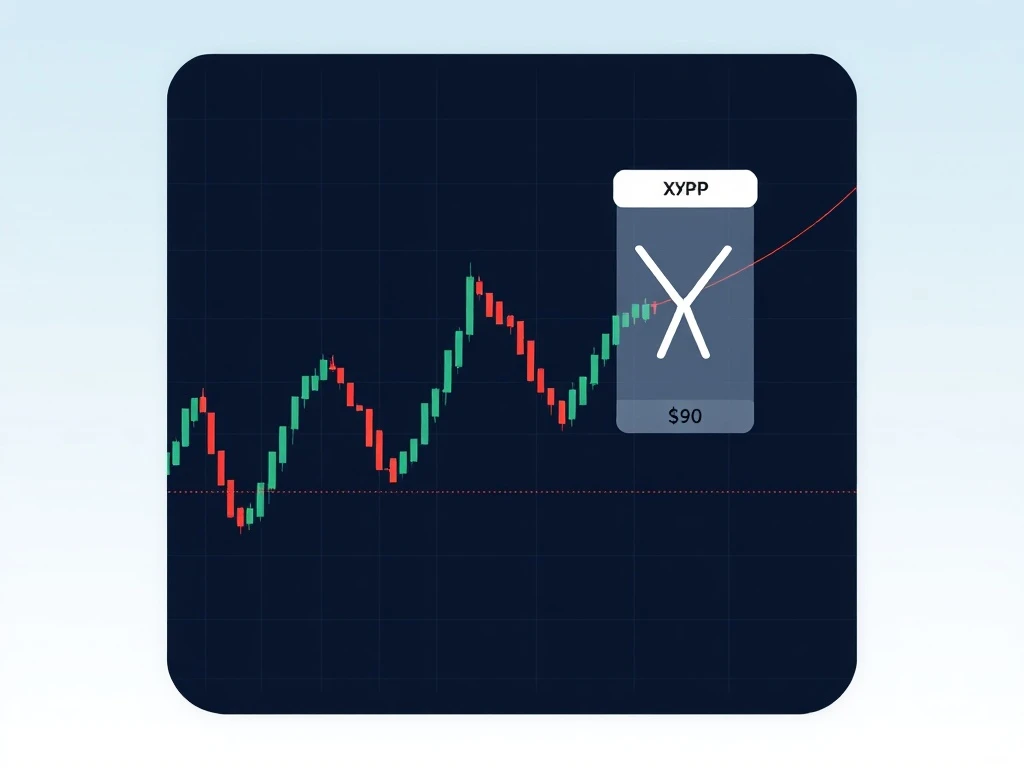
Global cryptocurrency markets face renewed volatility as XRP tests a crucial technical threshold at $1.65, with analysts monitoring whether the digital asset can maintain momentum or face what could be a significant correction toward the $0.90 support zone. This price action occurs within a complex market environment where regulatory developments, institutional adoption patterns, and broader macroeconomic factors continue to influence digital asset valuations across all major trading platforms worldwide.
XRP Price Technical Structure and Critical Levels
The current XRP price action reveals a decisive technical battle unfolding between bullish and bearish forces. According to market data from multiple exchanges including Coinbase, Binance, and Kraken, XRP has approached the $1.65 resistance level multiple times throughout recent trading sessions. This resistance represents a significant psychological and technical barrier that has contained price advances on three separate occasions since early 2024.
Technical analysts emphasize several key observations about the current market structure:
- Wave 4 Relief Pattern: The recent upward movement from lower support levels appears to represent a Wave 4 corrective pattern within a broader Elliott Wave structure
- Bearish Daily Framework: Despite short-term relief rallies, the overarching daily chart structure maintains bearish characteristics
- Volume Analysis: Trading volume during recent advances has shown concerning divergence from price movement
Market participants should note that failure to establish a sustained position above $1.65 could trigger what technical analysts describe as a “final decline phase” toward two critical support clusters. The primary support zone resides near $1.09, while secondary, more substantial support exists around the $0.90 region. These levels correspond with previous accumulation areas where institutional buyers demonstrated significant interest throughout 2023 and early 2024.
Technical Indicator Analysis and Market Sentiment
Two primary technical indicators currently dominate the XRP analysis conversation among professional traders. The Ichimoku Cloud indicator, a comprehensive Japanese technical analysis tool, continues to display bearish alignment across multiple timeframes. Specifically, the price remains below the Kumo (cloud) on daily charts, while the Tenkan-Sen (conversion line) sits beneath the Kijun-Sen (base line), confirming the prevailing downward momentum structure.
Meanwhile, the Moving Average Convergence Divergence (MACD) indicator presents a more nuanced picture. While the MACD line remains below the signal line, indicating continued bearish momentum, the histogram shows diminishing negative values. This divergence suggests that selling pressure may be slowing, though market technicians caution that this does not constitute a confirmed trend reversal signal.
| Technical Element | Current Status | Significance |
|---|---|---|
| Resistance Level | $1.65 | Multiple-test psychological barrier |
| Primary Support | $1.09 | Previous institutional accumulation zone |
| Secondary Support | $0.90 | Major 2023 support and Fibonacci level |
| Ichimoku Cloud | Bearish | Price below cloud on daily timeframe |
| MACD Histogram | Negative but improving | Selling pressure slowing, no reversal confirmed |
| Relative Strength Index | 48.5 (neutral) | No extreme overbought or oversold conditions |
Institutional Perspective and Market Context
Institutional analysts from firms including Fidelity Digital Assets and Grayscale Investments have published research noting the broader context surrounding XRP’s price action. The digital asset continues to navigate a unique regulatory environment following the SEC vs. Ripple case developments, with legal clarity providing both opportunities and ongoing uncertainties. Furthermore, XRP’s price movements increasingly correlate with broader cryptocurrency market trends, particularly Bitcoin’s dominance cycles and Ethereum’s network upgrade impacts.
Market data from Glassnode and CoinMetrics reveals several noteworthy on-chain metrics. The Network Value to Transactions (NVT) ratio, often called the “PE ratio for cryptocurrencies,” shows XRP trading at reasonable levels compared to historical averages. Additionally, exchange outflow data indicates accumulation patterns among larger holders, suggesting some market participants view current levels as attractive for long-term positioning despite short-term technical challenges.
Historical Precedents and Comparative Analysis
Historical analysis reveals that XRP has experienced similar technical setups on three previous occasions since 2018. Each instance involved testing a major resistance level multiple times before either achieving a decisive breakout or experiencing a significant rejection. The most relevant comparison comes from early 2021, when XRP tested the $0.75 resistance level on four separate occasions before breaking through and advancing to the $1.96 high later that year.
Current market conditions differ from previous cycles in several important respects:
- Regulatory Environment: Increased clarity but ongoing oversight concerns
- Institutional Participation: Substantially higher than previous cycles
- Market Maturity: Broader cryptocurrency adoption reduces extreme volatility
- Macroeconomic Factors: Interest rate environment differs significantly from previous periods
Comparative analysis with other major digital assets reveals that XRP’s current technical structure shares characteristics with several peers. Cardano (ADA) and Solana (SOL) have both experienced similar resistance-testing patterns in recent months, suggesting broader market forces may be influencing these technical formations rather than asset-specific developments.
Risk Factors and Market Considerations
Several risk factors warrant careful consideration for market participants monitoring XRP price action. Regulatory developments remain a primary concern, with ongoing litigation and potential legislative changes capable of creating sudden market movements. Additionally, broader cryptocurrency market correlations continue to strengthen, meaning Bitcoin and Ethereum price actions increasingly influence XRP’s trajectory regardless of Ripple-specific developments.
Technical analysts emphasize the importance of monitoring several key developments:
- Volume Confirmation: Any breakout above $1.65 requires substantial volume validation
- Timeframe Alignment: Watch for consistent signals across daily, weekly, and monthly charts
- Market Structure Shifts: Monitor for changes in higher-high and higher-low patterns
- On-chain Metrics: Track holder distribution changes and exchange flow patterns
The potential decline toward $0.90, while concerning for short-term traders, would represent a approximately 45% correction from current levels. Historical data shows that corrections of this magnitude have occurred six times in XRP’s trading history, with recovery periods averaging between 90 and 120 trading days following such movements.
Conclusion
XRP price action currently balances at a critical technical juncture, with the $1.65 resistance level serving as the immediate determinant for near-term direction. While technical indicators show slowing selling pressure, the overall market structure maintains bearish characteristics that could trigger movement toward the $0.90 support zone if resistance holds. Market participants should monitor volume patterns, regulatory developments, and broader cryptocurrency market correlations when assessing XRP’s probability of maintaining current levels or experiencing further corrective action. The coming trading sessions will likely provide crucial information about whether accumulation patterns will support prices or whether distribution will dominate near-term XRP price action.
FAQs
Q1: What is the significance of the $1.65 level for XRP?
The $1.65 level represents a major psychological and technical resistance barrier that XRP has tested multiple times. This level corresponds with previous price rejection points and serves as a critical determinant for near-term bullish or bearish momentum.
Q2: Which technical indicators are most important for analyzing XRP currently?
Professional analysts focus primarily on the Ichimoku Cloud for overall market structure and the MACD for momentum analysis. Additionally, volume patterns and on-chain metrics provide crucial context for interpreting price movements.
Q3: How does XRP’s current technical setup compare to historical patterns?
Current conditions share similarities with early 2021, when XRP tested resistance multiple times before breaking through. However, market maturity, institutional participation, and regulatory environments differ significantly from previous cycles.
Q4: What would confirm a genuine breakout above $1.65?
A confirmed breakout requires sustained trading above $1.65 with substantial volume support, preferably accompanied by bullish alignment across multiple technical indicators and timeframes.
Q5: What are the primary risk factors for XRP’s price action?
Key risks include regulatory developments, broader cryptocurrency market correlations, macroeconomic factors affecting digital assets generally, and technical breakdowns below critical support levels.


