XRP Plummets: The Shocking 9-Month Low Despite Ripple’s Unwavering Fundamental Strength
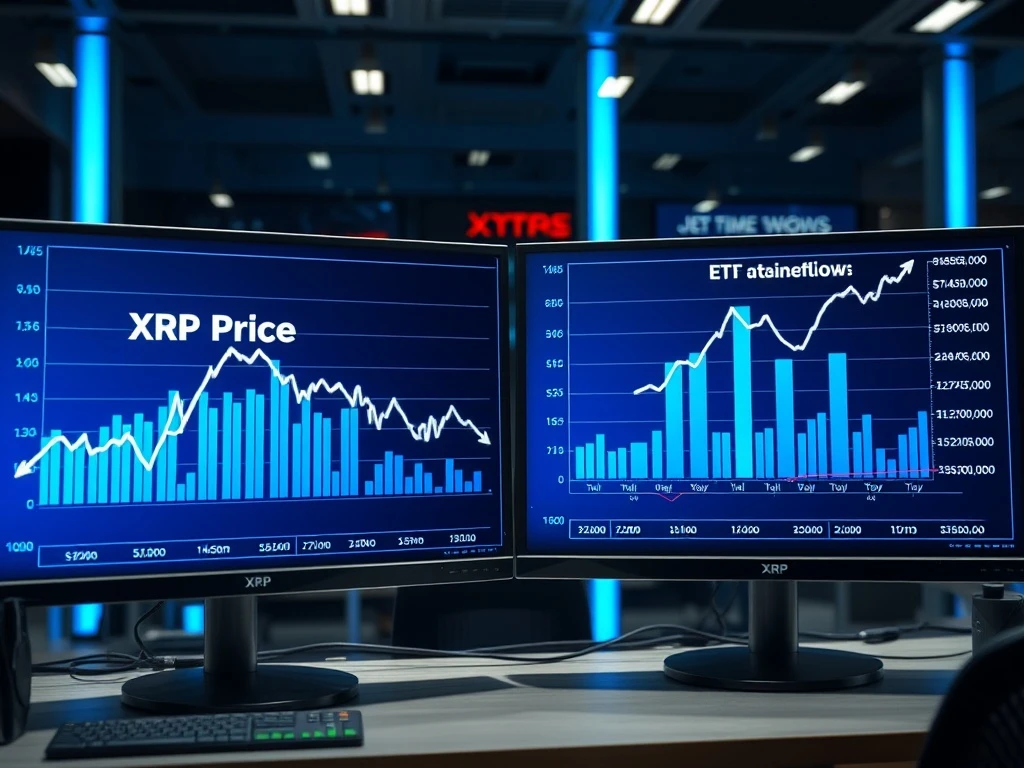
February 1, 2026 – The cryptocurrency market presents a stark contradiction as Ripple’s XRP token plunges to $1.60, marking its lowest valuation in nine months. This significant drop occurs despite a series of powerful fundamental developments for the Ripple network, creating a perplexing scenario for investors and analysts. The divergence between price action and underlying strength highlights the complex forces shaping digital asset markets in early 2026.
XRP Price Collides With Conflicting Market Signals
Ripple’s native token XRP has experienced a 9% pullback since the beginning of 2026. This decline effectively erased all gains accumulated following the previous election cycle. Market data reveals the token breached the critical $1.80 support level, shaking investor conviction. Meanwhile, network analytics tell a completely different story. Ripple’s Real-World Asset (RWA) Total Value Locked (TVL) surged 11% over the past 30 days. This metric reached a record $235 million, signaling solid institutional capital allocation. The simultaneous price decline and fundamental growth create a classic value investment dilemma.
Also read: Tokenization: The IMF's Ambitious 2026 Blueprint for Reshaping Global Finance
Institutional Adoption Versus Retail Sentiment
Several strategic developments underscore Ripple’s operational progress. The company established a dedicated Ripple Treasury to manage its digital asset reserves more effectively. Furthermore, Ripple secured significant regulatory licenses across multiple European jurisdictions. These licenses solidify the use case for RLUSD, Ripple’s stablecoin, within the European financial ecosystem. Major financial institutions continue exploring Ripple’s payment solutions for cross-border settlements. This institutional traction contrasts sharply with the retail-driven price volatility currently affecting XRP markets.
The Overwhelming Shadow of Bitcoin Correlation
Altcoin markets currently move in near-perfect sync with Bitcoin. Analytical firm Alphractal reports an 87% correlation between BTC and the broader altcoin market. This dependency means Bitcoin’s price movements dictate market sentiment across the board. Ripple’s XRP demonstrates this phenomenon with extreme clarity. Data shows XRP maintains a 0.998 correlation reading with Bitcoin, making it one of the most BTC-dependent major altcoins. Consequently, macroeconomic pressures affecting Bitcoin directly transfer to XRP, regardless of its independent developments.
Also read: Drift Protocol Exploit Sparks Crisis Across 20 Solana Projects
Key factors driving this correlation include:
- Macroeconomic uncertainty surrounding Federal Reserve policy
- Persistent fears regarding potential government shutdowns
- Market-wide risk-on/risk-off sentiment shifts
- Institutional capital treating crypto as a single asset class
ETF Inflows Fail To Counter Market Pressure
Spot Bitcoin Exchange-Traded Fund (ETF) approvals initially promised to decouple crypto from traditional market movements. However, 2026 has demonstrated their limitations. While Ripple attracts notable ETF inflows as a Layer-1 blockchain, these investments get overshadowed by broader market fear. The current FUD (Fear, Uncertainty, Doubt) environment, fueled by geopolitical tensions and monetary policy questions, keeps Bitcoin volatility elevated. This volatility outpaces positive fundamental developments for individual projects like Ripple. As a result, recent capital inflows cannot fully manifest in price appreciation for XRP.
Regulatory Clarity Presents A Double-Edged Sword
The impending CLARITY Act represents a major moment for digital assets. If passed, this legislation would provide a comprehensive regulatory framework for cryptocurrencies in the United States. Such clarity typically boosts market legitimacy and attracts conservative capital. For Ripple, which has actively engaged with regulators, this could be particularly beneficial. The company’s proactive licensing strategy in Europe positions it well for a regulated future. However, the uncertainty during the legislative process contributes to short-term market hesitation. Investors often adopt a wait-and-see approach until regulatory outcomes become certain.
Tokenization and Real-World Asset Growth
Ripple’s network demonstrates significant growth in tokenizing real-world assets. The 11% monthly increase in RWA TVL to $235 million is not an isolated event. It reflects a sustained trend of financial institutions using the XRP Ledger for asset representation. This activity includes tokenizing commodities, securities, and debt instruments. The growth in this sector indicates strong utility beyond speculative trading. It provides a tangible, revenue-generating use case for the XRP ecosystem. Market analysts often view rising TVL as a leading indicator of long-term network health, even when short-term prices disagree.
Strategic Partnerships and Long-Term Vision
Ripple continues to expand its global partnership network despite market headwinds. The company recently announced collaborations with several major payment processors and central banks. These partnerships focus on developing central bank digital currency (CBDC) platforms and improving remittance corridors. Such developments are fundamentally bullish but operate on a multi-year timeline. Their impact does not immediately translate to daily price charts. This disconnect between immediate market sentiment and long-term strategic execution defines Ripple’s current challenge. Investors betting on these partnerships are clearly taking a multi-year view, accepting short-term volatility.
Comparative Market Position (Early 2026)
| Metric | Ripple (XRP) | Market Average (Top 10 Altcoins) |
|---|---|---|
| Price Change YTD | -9% | -5.2% |
| Network TVL Growth | +11% | +3.8% |
| BTC Correlation | 0.998 | 0.87 |
| Institutional Inflow Score | High | Medium |
The Psychology of Support Level Breaches
Technical analysis plays a important role in trader psychology. The breach of the $1.80 support level for XRP triggered automated sell orders and shook holder confidence. Many traders set stop-loss orders at key support levels. When these levels break, it creates a cascade of selling pressure. This technical selling often ignores fundamental news. Therefore, positive developments about Ripple’s treasury or licenses get drowned out by algorithmic trading responses. The market must now establish a new, lower support level before confidence can rebuild, regardless of the positive on-chain data.
Conclusion
Ripple’s XRP finds itself caught in a powerful market contradiction. Strong fundamentals, including record RWA tokenization, strategic regulatory licenses, and consistent ETF inflows, clash with a price at a nine-month low. The primary culprit remains XRP’s extreme 0.998 correlation with Bitcoin, which subjects it to overarching macroeconomic fears. Until broader market volatility subsides or correlation weakens, XRP’s independent strengths may remain underappreciated by the price market. The second half of 2026, with potential regulatory clarity from the CLARITY Act and settled Fed policy, could provide the catalyst for price to finally reflect Ripple’s underlying network growth and institutional adoption.
FAQs
Q1: Why is XRP price falling if Ripple’s fundamentals are strong?
The price is falling primarily due to its near-perfect correlation with Bitcoin (0.998). Macroeconomic pressures and market-wide fear are dragging BTC down, and XRP is following despite its own positive developments.
Q2: What does Ripple’s record $235 million RWA TVL mean?
It means the value of real-world assets (like commodities or securities) tokenized on the XRP Ledger has hit an all-time high. This indicates growing institutional use of the network for practical applications beyond trading, which is a strong fundamental signal.
Q3: How could the CLARITY Act affect XRP?
If passed, the CLARITY Act would provide clear U.S. regulatory rules for digital assets. This would reduce uncertainty, potentially attracting more institutional investment. Ripple’s proactive compliance could position XRP favorably under such a framework.
Q4: Are ETF inflows still happening for crypto assets like XRP?
Yes, data shows Ripple continues to attract ETF inflows as a Layer-1 blockchain. However, these inflows are currently being muted by broader market sell pressure and cannot fully offset the downward momentum from correlated Bitcoin moves.
Q5: What needs to happen for XRP price to recover?
Key factors include a reduction in overall market volatility, a decoupling from Bitcoin’s price movements, and the realization of value from Ripple’s partnerships and RWA growth. Clear regulatory outcomes in H2 2026 could also provide a significant boost.

This article was produced with AI assistance and reviewed by our editorial team for accuracy and quality.