WOO Token Burn Proposal Passes Unanimously: A Strategic Move to Boost Scarcity
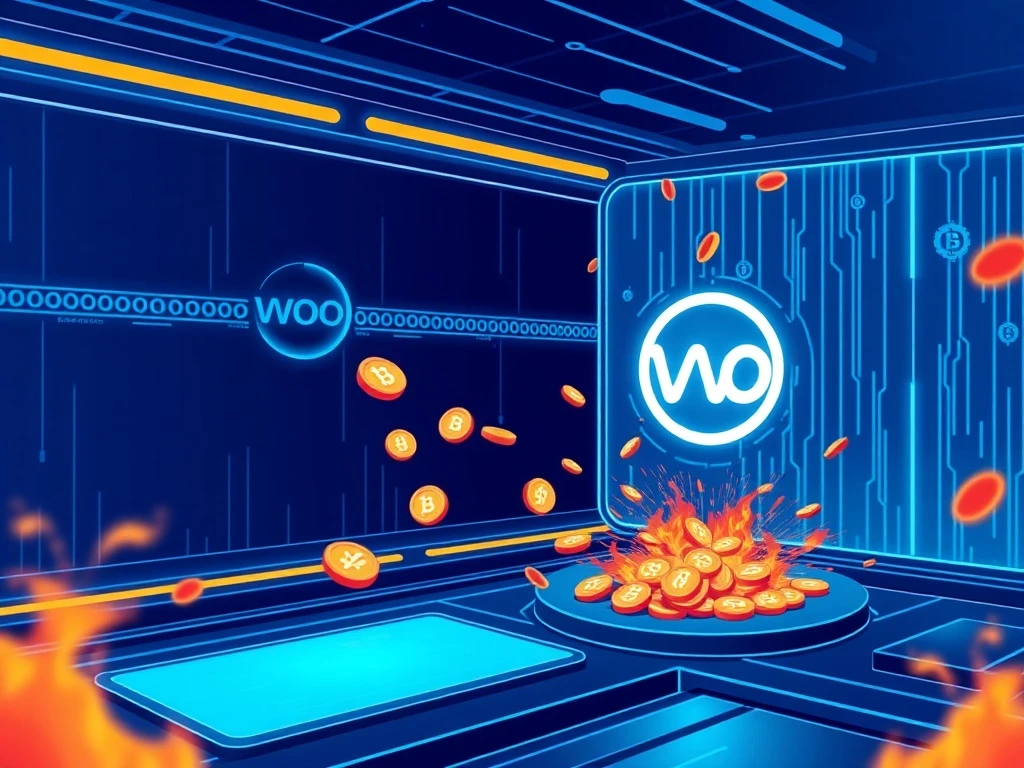
In a decisive move for its ecosystem, the WOO Network community has ratified a decisive governance proposal to permanently remove a massive portion of its token supply from circulation. The proposal to burn 300 million WOO tokens passed with unanimous 100% approval, signaling strong consensus on a deflationary strategy aimed at enhancing long-term tokenomics. This significant event, finalized in early 2025, represents one of the largest single token burns in recent decentralized finance (DeFi) history and will directly impact the asset’s circulating supply and economic model.
Understanding the WOO Token Burn Proposal
The approved governance action mandates the permanent destruction, or “burn,” of 300 million WOO tokens. Consequently, this quantity equates to approximately 15% of the token’s total supply. The burn mechanism will execute on-chain within the next few days, irreversibly sending the tokens to a verifiable null address. Token burning is a common cryptographic practice for reducing supply, thereby increasing the relative scarcity of the remaining tokens if demand remains constant or grows. Historically, similar actions by other blockchain projects have often preceded periods of increased market attention and volatility.
Governance in decentralized networks like WOO typically involves token holders voting on key protocol decisions. The 100% approval rate for this burn is notably rare, indicating an exceptionally unified community stance. This level of agreement often reflects extensive prior discussion and a clear, shared understanding of the proposal’s strategic intent. The decision follows established trends in crypto-economics where projects transition from inflationary to deflationary models to reward long-term holders and align incentives.
The Mechanics and Immediate Impact of Supply Reduction
Executing a token burn requires precise technical steps. The designated tokens will be transferred to a wallet whose private keys are publicly known to be unretrievable. This process is transparent and verifiable by anyone on the blockchain explorer. Following the burn, network validators will confirm the transaction, and the total supply metric will update across tracking websites and exchanges. The immediate effect is a reduction in the total and circulating supply figures, which are critical data points for investors and analysts.
Also read: Bitcoin Treasury Companies Face New Pressure as US-Iran Tensions Shift
From a tokenomics perspective, reducing supply can influence several key metrics. The burn directly increases the scarcity of the remaining WOO tokens. Assuming steady demand, basic economic principles suggest this scarcity could exert upward pressure on the token’s price. Furthermore, it improves the network’s “fully diluted valuation” (FDV) to market capitalization ratio, a metric closely watched by institutional crypto funds. The action also demonstrates a commitment from the founding team and treasury to not dilute existing holders, potentially boosting investor confidence.
Expert Analysis on Strategic Tokenomics
Financial analysts specializing in crypto-assets often view deliberate supply reductions as a maturation signal. “A governance-approved burn of this magnitude is a strategic pivot,” notes a report from a leading blockchain analytics firm. “It shifts the narrative from supply expansion, common in early-stage growth, to value accrual for the existing community.” The WOO Network, which provides deep liquidity and trading infrastructure across centralized and decentralized exchanges, is likely aligning its token utility with its core business growth. By making the token scarcer, each token represents a larger share of the network’s fee potential and governance power.
Comparatively, other major protocols like Binance (BNB) and Ethereum (ETH) have implemented consistent burn mechanisms with measurable long-term effects on their supply curves. The WOO burn is distinct due to its one-time, large-scale nature versus a continuous automated process. This approach creates a definitive supply shock, the market effects of which are typically observed over the subsequent weeks as traders and algorithms adjust their models to the new supply reality.
Broader Context in the 2025 Cryptocurrency Sector
The decision arrives during a period where regulatory clarity and sustainable economic models are paramount for crypto projects. In 2025, the market increasingly rewards protocols with clear, verifiable, and community-driven tokenomic plans. Actions like token burns must be seen not as short-term price maneuvers but as part of a long-term, transparent financial strategy. The WOO Network’s proposal included detailed rationale, likely outlining how the burned tokens were sourced from ecosystem funds or reserves not critical to operations, thus ensuring ongoing development funding remains secure.
This event also highlights the growing sophistication of decentralized governance. Reaching full consensus on a major treasury action is a testament to effective community communication and proposal design. It sets a precedent for how DeFi projects can manage their native assets responsibly in response to market conditions and strategic goals. The move may pressure similar projects to evaluate their own supply schedules and community incentives to remain competitive.
Potential Long-Term Effects and Market Considerations
While the immediate market reaction will be watched closely, the long-term implications are more significant. A reduced supply increases the token’s potential as a collateral asset within the WOO ecosystem and broader DeFi. It can lead to:
- Enhanced Staking Rewards: With fewer tokens overall, rewards distributed from network fees may represent a higher yield percentage for stakers.
- Stronger Governance Participation: A scarcer token may encourage more deliberate and valuable voting, as each token holds more weight.
- Improved Perceptions: The market often interprets large burns as a sign of a project’s financial health and commitment to its token holders.
However, analysts caution that token burns are a single factor within a complex market. Fundamental value ultimately derives from the utility and adoption of the WOO Network’s liquidity and trading products. The burn should be evaluated as part of the project’s complete performance, including technology updates, partnership announcements, and volume growth. Sustainable value creation requires ongoing utility, not just supply manipulation.
Conclusion
The unanimous passage of the WOO token burn proposal marks a critical juncture for the network’s economic policy. By permanently removing 300 million tokens, the community has taken definitive action to increase scarcity and align incentives for long-term holders. This strategic decision, rooted in transparent governance, reflects broader trends in cryptocurrency toward sustainable, deflationary models. The coming days will see the execution of this burn, after which the market will begin to price in the new, reduced supply structure of the WOO token. The move underscores the evolving maturity of decentralized governance and its power to enact significant financial changes through collective agreement.
FAQs
Q1: What does it mean to “burn” a cryptocurrency token?
A1: Burning a token means permanently removing it from circulation by sending it to a verifiable, inaccessible blockchain address. This process reduces the total supply of the token, making the remaining tokens scarcer.
Q2: Where did the 300 million WOO tokens come from for this burn?
A2: According to the governance proposal, the tokens were allocated from the network’s ecosystem and community treasury reserves. These were tokens not currently in circulation and were earmarked for future initiatives that the community has now decided to forgo in favor of the burn.
Q3: How will this burn affect the price of WOO?
A3: While no outcome is guaranteed, basic economics suggests that reducing the supply of an asset, all else being equal, can create upward price pressure if demand remains stable or increases. However, price is influenced by many factors beyond supply, including overall market sentiment, adoption, and network activity.
Q4: Can burned WOO tokens ever be recovered or used again?
A4: No. The burn process is cryptographically permanent. The tokens are sent to a “burn address” for which no private key exists, making them unusable and irretrievable forever.
Q5: What is the difference between a token burn and a token buyback?
A5: A token burn destroys tokens directly from a project’s treasury or supply. A buyback involves a project using its funds to purchase tokens from the open market, which are then typically burned or placed in a locked vault. Both aim to reduce circulating supply, but their market mechanics and capital sources differ.

This article was produced with AI assistance and reviewed by our editorial team for accuracy and quality.