Kevin Warsh Fed Nomination Creates Critical Mixed Signals for Bitcoin and US Dollar Liquidity
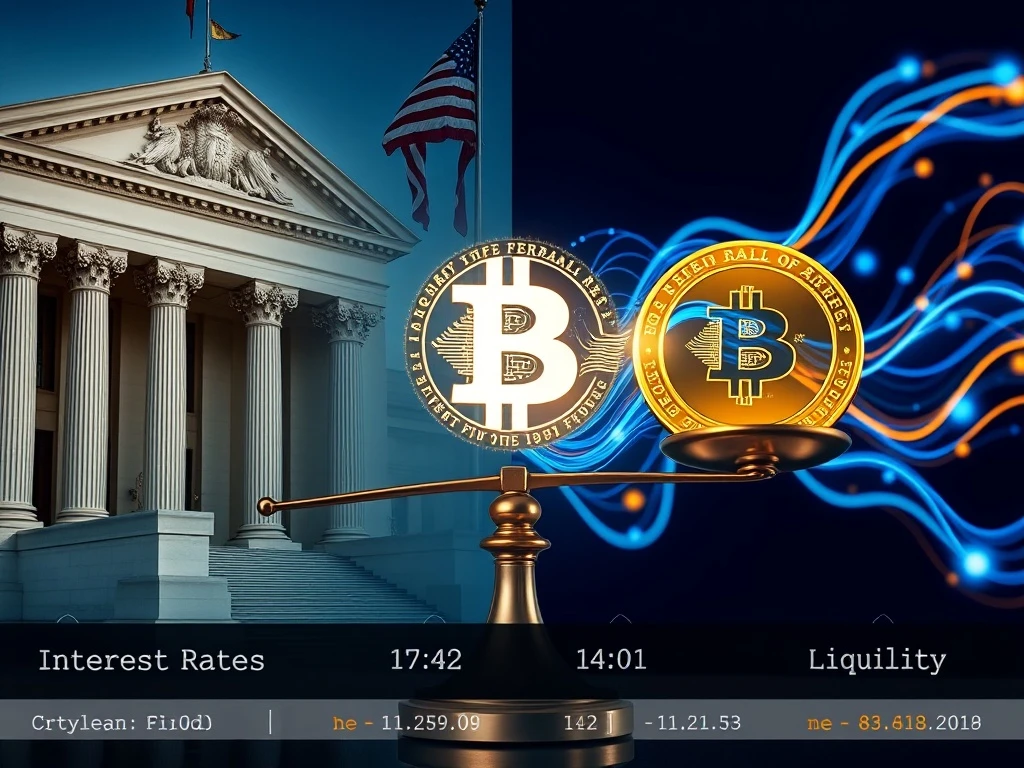
WASHINGTON, D.C. — February 2025 — President Donald Trump’s nomination of former Federal Reserve governor Kevin Warsh to lead the U.S. central bank has created a complex, mixed-signal environment for cryptocurrency markets and broader financial liquidity, according to market analysts who spoke exclusively with CryptoNewsInsights. This decisive development arrives during a period of significant market volatility, thereby presenting both challenges and potential opportunities for digital asset investors.
Kevin Warsh Fed Nomination Sparks Immediate Market Reactions
President Trump announced Warsh’s nomination on Friday, setting the stage for a potential leadership transition when current Chair Jerome Powell’s term concludes in May, pending Senate confirmation. Consequently, financial markets responded with immediate volatility. Cryptocurrency markets, in particular, experienced substantial liquidations exceeding $250 billion in market capitalization over the weekend. This sell-off extended beyond digital assets to impact traditional equities and precious metals, indicating a broad-based liquidity concern.
Also read: Bitcoin's Liquidity Warning: Why the Heatmap Signals a Critical Juncture
Market analysts quickly identified the nomination as a primary catalyst. Nic Puckrin, investment analyst and co-founder of Coin Bureau, explained the direct connection. “Markets are digesting Warsh’s views on future Fed policy,” Puckrin stated. He emphasized the central bank’s balance sheet, which Warsh has previously described as “trillions larger” than necessary. This perspective raises legitimate concerns about potential liquidity contraction.
Understanding the Dual Impact on Bitcoin and Crypto Markets
The nomination presents a paradoxical scenario for risk assets like Bitcoin. On one hand, Warsh’s historical stance suggests he might continue the Fed’s current trajectory of interest rate cuts. Lower interest rates typically weaken the U.S. dollar and enhance the appeal of alternative stores of value, including cryptocurrencies. However, analysts caution against simplistic interpretations.
Also read: Leap Wallet Shutdown: Urgent Steps Cosmos Users Must Take Now
Thomas Perfumo, Kraken’s Head of Global Strategy, provided significant context regarding market sensitivity. “This sustains the mixed macro backdrop for Bitcoin and crypto,” Perfumo explained. He noted these assets demonstrate particular sensitivity to overall liquidity conditions, potentially more so than direct changes to the Fed Funds Rate itself. Therefore, the balance sheet approach becomes equally, if not more, significant than interest rate policy alone.
Expert Analysis: Liquidity Versus Interest Rate Expectations
Current market data reveals a nuanced picture of investor expectations. According to the CME Group’s FedWatch Tool, interest rate expectations remained remarkably stable following the nomination announcement. Specifically, 85% of market participants anticipate rates will hold steady at the upcoming March 18 meeting. Looking further ahead to the June 17 meeting—the first Federal Open Market Committee gathering after Powell’s potential departure—expectations show 49% forecasting a 25 basis-point cut, a slight increase from 46% the previous week.
This stability in rate expectations contrasts sharply with liquidity concerns. Puckrin highlighted the critical distinction for investors. “If he does indeed adopt policies to shrink the balance sheet, markets will have to reckon with a lower-liquidity environment,” he warned. Such an environment traditionally proves unsupportive for both risk assets and inflation hedges like precious metals, creating a challenging field for portfolio allocation.
The Historical Context of Fed Leadership Transitions
Federal Reserve leadership changes historically trigger market reassessments and volatility. The transition from Alan Greenspan to Ben Bernanke in 2006, for instance, preceded the global financial crisis and prompted significant policy shifts. Similarly, the appointment of Jerome Powell in 2018 marked a departure from Janet Yellen’s approach, eventually leading to the “Powell Pivot” of 2019 that reversed tightening policies.
Warsh’s potential appointment carries unique historical weight. He served as a Fed governor from 2006 to 2011, a period encompassing the 2008 crisis. His experience during that era of extraordinary monetary intervention—including quantitative easing (QE)—likely shapes his current skepticism toward balance sheet expansion. This background informs his published critiques of the Fed’s post-2008 asset purchases, views that now directly influence market sentiment.
Quantitative Easing and Its Direct Crypto Implications
Quantitative easing (QE) represents a critical concept for cryptocurrency investors. This unconventional monetary policy involves large-scale asset purchases—typically government bonds—by the central bank. The primary goals include lowering long-term interest rates and increasing money supply to stimulate economic activity. For markets, QE translates directly into increased system-wide liquidity.
Perfumo addressed Warsh’s stance explicitly. “Investors may be disappointed with Warsh’s skeptical posture on balance sheet expansion,” he noted, referring specifically to QE measures. Since the 2020 pandemic response, expansive Fed policies correlated strongly with substantial capital inflows into cryptocurrency markets. A shift away from such policies could therefore remove a significant tailwind for digital asset valuations, necessitating a fundamental reassessment of growth drivers.
Broader Market Correlations and Liquidity Drought Theories
The recent synchronized decline across asset classes underscores their interconnectedness in the modern financial ecosystem. Popular analyst Raoul Pal identified a U.S. “liquidity drought” as the primary driver behind the concurrent crash in crypto and equities, rather than any crypto-specific event. This analysis suggests macroeconomic liquidity conditions now serve as a dominant factor for digital asset performance, overshadowing many industry-specific developments.
Key market correlations evident in recent moves include:
- Bitcoin and Tech Stocks: Continued high correlation with Nasdaq indices
- Digital Assets and Gold: Shared reaction to dollar strength and real yield movements
- Global Liquidity Indicators: Tighter correlation with broad money supply metrics
This environment demands that investors monitor traditional macroeconomic indicators with the same rigor as blockchain metrics. Federal Reserve balance sheet movements, Treasury General Account levels, and reverse repo facility usage now provide important signals for cryptocurrency market direction.
Political Dimensions and Policy Alignment Uncertainties
The nomination introduces significant political considerations. President Trump has consistently advocated for lower interest rates to support economic growth and market performance. Warsh’s willingness to align with this agenda remains an open question that markets are actively pricing. Historical precedent shows that while Fed chairs maintain operational independence, presidential preferences inevitably influence the policy sector and public communications.
Puckrin highlighted this specific uncertainty. “Questions remain on Warsh’s interest rate policy and how much he is willing to align himself with Trump’s push for lower interest rates,” he observed. This political-economic interface will likely generate volatility around FOMC meetings and congressional testimonies throughout the confirmation process and potential tenure.
The Senate Confirmation Process as a Market Variable
The Senate Banking Committee’s confirmation hearings will provide the next major catalyst for market sentiment. Senators will undoubtedly scrutinize Warsh’s views on digital assets, given his previous commentary acknowledging Bitcoin’s technological innovation. His responses regarding central bank digital currencies (CBDCs) and financial innovation could either alleviate or exacerbate market concerns about regulatory approaches under his potential leadership.
Historical confirmation timelines suggest a decision by late April, creating a window of uncertainty. During this period, markets may exhibit heightened sensitivity to any statements from committee members or the nominee himself. This procedural aspect adds another layer of complexity to the short-term investment sector for digital assets.
Strategic Implications for Cryptocurrency Investors
In this evolving environment, investors must adopt nuanced strategies. The “mixed signals” scenario requires balancing several competing factors:
Portfolio considerations for the current macro backdrop:
- Liquidity Sensitivity: Position sizing that accounts for potential dollar strength
- Duration Management: Shorter-term horizons amid policy uncertainty
- Diversification: Across crypto sectors with varying correlation to traditional finance
- Hedging Strategies: Utilizing options or stablecoin allocations for volatility
Perfumo’s analysis suggests the mixed environment may persist. “This sustains the mixed macro backdrop,” he reiterated, emphasizing that crypto’s sensitivity to liquidity conditions creates both risk and opportunity. Investors who successfully manage this complexity may identify mispriced assets, while those assuming straightforward correlations could face unexpected challenges.
Conclusion
The Kevin Warsh Fed nomination represents a watershed moment for financial markets, sending critical mixed signals for Bitcoin and U.S. dollar liquidity. While potential interest rate cuts could provide support for risk assets, concurrent concerns about balance sheet contraction and quantitative easing skepticism create substantial headwinds. This complex interplay between interest rate policy and broader liquidity conditions will likely define the cryptocurrency investment sector through 2025. Market participants must therefore monitor traditional macroeconomic indicators with renewed vigilance, recognizing that Federal Reserve policy decisions now exert unusual influence over digital asset valuations. The coming Senate confirmation process will provide further clarity, but the fundamental tension between supportive rate policies and restrictive liquidity measures appears set to continue shaping market dynamics.
FAQs
Q1: Who is Kevin Warsh and why does his Fed nomination matter for Bitcoin?
Kevin Warsh is a former Federal Reserve governor (2006-2011) nominated by President Trump to potentially replace Jerome Powell as Fed Chair. His nomination matters because his views on interest rates and quantitative easing directly influence U.S. dollar liquidity, a key factor for Bitcoin’s valuation as an alternative asset.
Q2: What are the “mixed signals” analysts refer to regarding this nomination?
The mixed signals involve Warsh’s potential continuation of interest rate cuts (positive for risk assets) alongside his skeptical stance on balance sheet expansion and quantitative easing (negative for market liquidity). These conflicting policy directions create uncertainty for Bitcoin and other cryptocurrencies.
Q3: How does Federal Reserve policy actually affect cryptocurrency markets?
Fed policy affects crypto through several channels: interest rate changes influence dollar strength and investment flows, balance sheet policies impact system-wide liquidity, and forward guidance shapes market risk appetite. Tighter liquidity conditions typically pressure risk assets including cryptocurrencies.
Q4: What is quantitative easing and why do analysts mention it in this context?
Quantitative easing (QE) is a Fed policy of purchasing government bonds to increase money supply and stimulate the economy. Analysts mention it because Warsh has expressed skepticism about QE, and reduced balance sheet expansion could mean less liquidity entering financial markets, potentially affecting crypto valuations.
Q5: When will we know if Kevin Warsh becomes the next Fed Chair?
The Senate Banking Committee must hold confirmation hearings, followed by a full Senate vote. This process typically takes 2-3 months, with a potential decision by late April or early May 2025, before Jerome Powell’s term ends.

This article was produced with AI assistance and reviewed by our editorial team for accuracy and quality.