Vitalik Buterin’s Decisive Shift: Abandons L2 Vision for Native Rollups as Ethereum Mainnet Scales
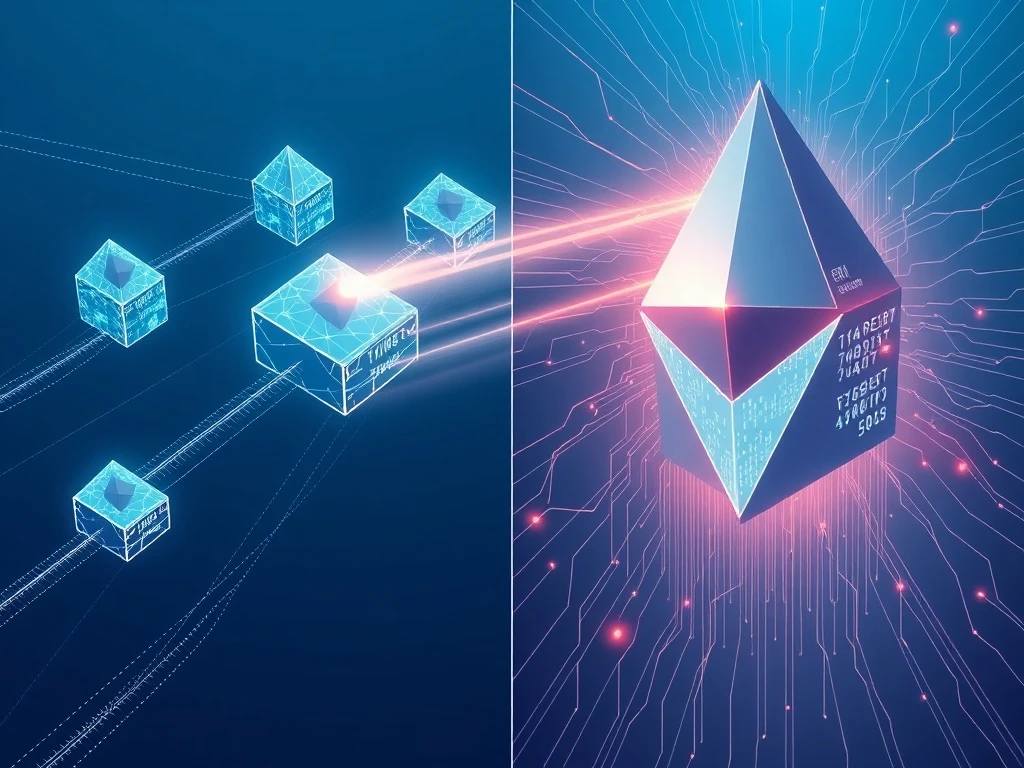
In a stunning reversal that signals a fundamental evolution for the world’s leading smart contract platform, Ethereum co-founder Vitalik Buterin has declared the original layer-2 scaling vision obsolete, championing a future built on native rollups integrated directly into a stronger Ethereum mainnet. This important shift, articulated in a detailed social media post on March 18, 2025, emerges as the Ethereum network demonstrates newfound scaling prowess through gas limit increases and imminent protocol upgrades, forcing a strategic reassessment that will redefine blockchain development for years to come.
Vitalik Buterin’s Decisive Reversal on Ethereum L2 Strategy
For nearly a decade, the Ethereum scaling roadmap prominently featured layer-2 solutions as the primary avenue for achieving mass adoption. These networks, including Arbitrum, Optimism, and Base, were designed to process transactions off-chain before settling data on the Ethereum mainnet. Consequently, they promised high throughput and low fees while theoretically inheriting Ethereum’s strong security. However, Buterin now argues this model has fundamentally failed to deliver on its core promise. “The original vision of L2s and their role in Ethereum no longer makes sense,” Buterin stated, marking a significant departure from long-held community doctrine.
Also read: Pi Network KYC Reward Milestone: First Distribution Pays 0.0504 Pi at 21x Rate
The central critique hinges on a critical failure of decentralization. Buterin emphasized that many prominent layer-2 networks remain mediated by multisignature bridges for transferring assets between layers. These bridges, often controlled by a small set of entities, represent a centralized point of failure and censorship. “If you create a 10000 TPS EVM where its connection to L1 is mediated by a multisig bridge, then you are not scaling Ethereum,” Buterin asserted, quoting commentator David Hoffman. This architecture, therefore, does not create block space “fully secured by the Ethereum mainnet,” betraying the original intent of trustless, fluid scaling.
The Rising Promise of Native Rollups for ETH Scaling
Simultaneously, Buterin’s renewed confidence stems from tangible progress in scaling the Ethereum mainnet itself and the maturation of rollup technology. The concept of native rollups represents a model shift. Unlike traditional rollups built as separate execution layers, native rollups are precompiled and baked directly into the Ethereum protocol. This design means transaction processing and verification occur under the direct purview of Ethereum’s validator set, eliminating the trusted bridge problem and offering stronger security guarantees.
Also read: Ethereum's Sharp Drop Below $2,100: What Holders Must Understand About the Emerging Opportunity
Buterin specifically highlighted the integration of zero-knowledge Ethereum Virtual Machine (zkEVM) proofs into Ethereum’s base layer as a key enabler. These cryptographic proofs allow the network to verify the correctness of off-chain computation efficiently and trustlessly. The technical roadmap suggests a future where the mainnet can natively support and validate rollup operations, making external, complex bridging mechanisms obsolete. This evolution positions Ethereum not just as a settlement layer but as an active, scalable execution environment.
Mainnet Scaling: Gas Limits and the 10,000 TPS Vision
The viability of this pivot is underpinned by concrete improvements to Ethereum’s base capacity. In January 2025, following the second blob-parameter-only hard fork, developers successfully raised the network’s gas limit from 60 million to 80 million. This increase directly boosts the number of transactions and smart contract operations per block, enhancing throughput and potentially reducing fees. This move demonstrates a renewed focus on optimizing the core protocol.
Furthermore, this aligns with a longer-term vision articulated by Ethereum researcher Justin Drake in July 2024. Drake outlined a 10-year plan to achieve 10,000 transactions per second (TPS) on the Ethereum mainnet, a monumental leap from its current 15–30 TPS. This goal relies on a suite of scaling features, including full danksharding, continued optimizations to the EVM, and the very native rollup infrastructure Buterin now advocates. The timeline indicates that mainnet scaling is not a distant dream but an active, progressing engineering effort.
Community and Developer Reactions to the Strategic Pivot
Buterin’s proclamation has ignited vigorous discussion across the Ethereum ecosystem, revealing existing philosophical divides. Ryan Sean Adams, co-host of the influential Bankless podcast, endorsed the shift, calling it “‘the pivot.’ I’m glad it’s now being said. Strong ETH, Strong L1.” This sentiment reflects a faction that has long believed in maximizing the security and capability of the base layer.
The debate also recalls the departure of developers like Max Resnick, a former Consensys researcher. Resnick reportedly moved to the Solana ecosystem after his internal advocacy for prioritizing mainnet scaling failed to gain sufficient traction within Ethereum’s development circles. Buterin’s new stance validates the concerns of those who argued that an over-reliance on fragmented L2s could dilute Ethereum’s value proposition and security model.
For existing layer-2 projects, Buterin’s comments serve as a strategic directive. He suggested these networks should pivot from generic scalability to cultivating specific niches where they can offer unique value. Proposed areas include:
- Privacy: Networks specializing in confidential transactions and data.
- Identity & Social: Platforms built around decentralized social graphs and verifiable credentials.
- Finance & AI: High-performance environments tailored for complex DeFi products or AI-agent economies.
This niche specialization could reduce redundant competition for generic throughput and build innovation in distinct application verticals.
Comparative Analysis: L2s vs. Native Rollups
The following table outlines the fundamental differences between the traditional layer-2 model and the emerging native rollup framework, clarifying the technical and philosophical shift.
| Feature | Traditional Layer-2 Networks | Native Rollups |
|---|---|---|
| Architecture | Separate chain with independent sequencer, connected via bridges. | Functionality integrated directly into the Ethereum protocol. |
| Security Model | Derived from Ethereum but often gated by a trusted bridge. | Directly inherits Ethereum’s consensus security; no trusted bridge. |
| Development Focus | General-purpose scalability and low fees. | Base-layer scaling, enabling L1 to handle more direct load. |
| User Experience | Requires bridging assets, managing multiple networks. | Potentially effortless within a unified Ethereum environment. |
| Current Examples | Arbitrum, Optimism, Base, Starknet. | In development; part of Ethereum’s post-Dencun technical roadmap. |
Conclusion
Vitalik Buterin’s strategic pivot from layer-2 dependence to native rollups marks a critical maturation point for Ethereum. This shift is driven by the sobering reality that many L2s compromised on decentralization and by the demonstrable progress in scaling the Ethereum mainnet itself. The emerging path forward emphasizes a stronger, more capable base layer secured by native rollup technology, while encouraging existing scaling projects to innovate in specialized domains. As Ethereum continues its evolution, this recalibration towards integrated security and purposeful scalability will likely shape developer activity, investment, and the network’s competitive stance in the broader blockchain market for the remainder of the decade. The era of fragmentation may be giving way to an era of fortified, unified strength.
FAQs
Q1: What are native rollups, and how do they differ from current L2s?
Native rollups are scaling solutions built directly into the Ethereum protocol, where transaction verification is performed by Ethereum validators. This contrasts with current layer-2 networks, which are separate chains that use bridges—often centralized—to communicate with Ethereum, creating a potential security weakness.
Q2: Why did Vitalik Buterin change his view on layer-2 scaling?
Buterin changed his view primarily because many L2s failed to achieve sufficient decentralization, relying on multisig bridges, and because the Ethereum mainnet itself has shown significant scaling progress through gas limit increases and upcoming protocol upgrades, making a primary reliance on external L2s less necessary.
Q3: Does this mean existing L2s like Arbitrum and Optimism will become obsolete?
Not necessarily obsolete, but their role may change. Buterin suggests they should pivot from general-purpose scaling to focus on specific niches like privacy, identity, or AI, where they can provide unique value beyond simple transaction throughput.
Q4: What is the significance of raising Ethereum’s gas limit?
Raising the gas limit from 60 million to 80 million directly increases the number of transactions the Ethereum mainnet can process per block. This is a form of on-chain scaling that boosts throughput and can reduce fees, strengthening the case for improving the base layer itself.
Q5: How does the zkEVM relate to native rollups?
Zero-knowledge Ethereum Virtual Machine (zkEVM) technology is critical for native rollups. It allows for the creation of cryptographic proofs that off-chain computation was executed correctly. Integrating zkEVM proofs into Ethereum’s base layer enables the network to efficiently and trustlessly verify native rollup operations, making them secure and viable.

This article was produced with AI assistance and reviewed by our editorial team for accuracy and quality.