Vitalik Buterin’s Decentralized Social Media Crusade Becomes a Critical 2026 Priority
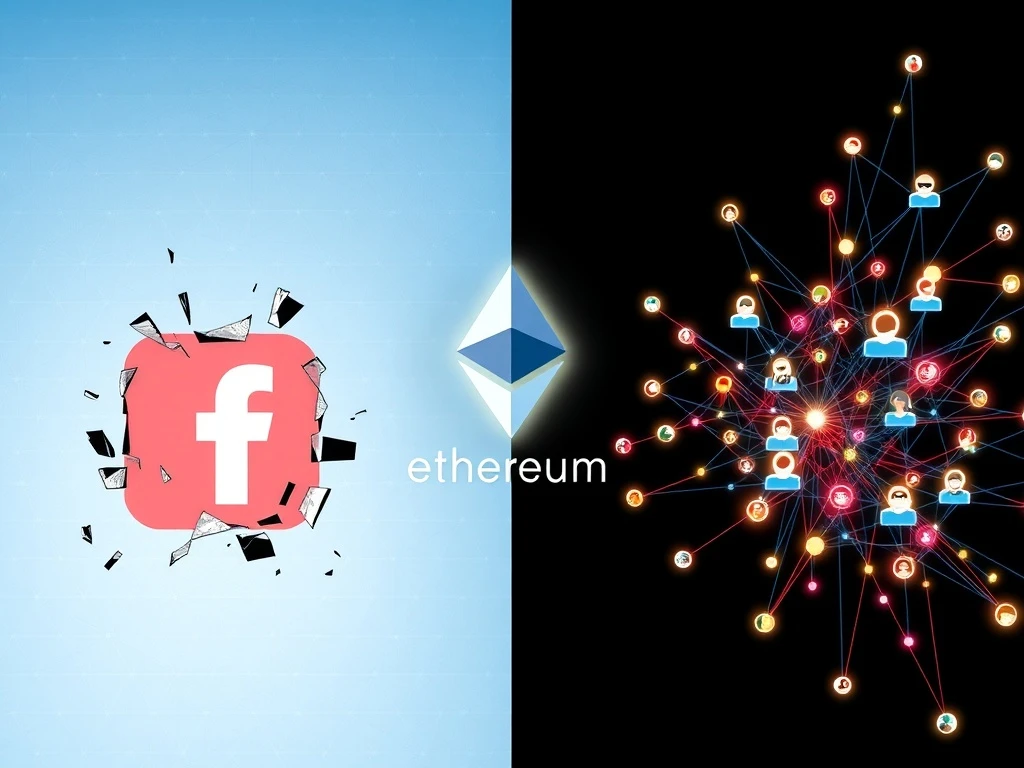
In a decisive move that could reshape the future of online interaction, Ethereum co-founder Vitalik Buterin has formally declared his full commitment to advancing decentralized social media as a primary objective for 2026. His recent public statements, made from San Francisco on Wednesday, outline a compelling vision for moving beyond centralized platforms to foster genuine competition and user-aligned communication systems.
Vitalik Buterin’s Vision for Decentralized Social Media
Buterin’s argument centers on a fundamental architectural shift. He contends that only platforms built upon shared, decentralized data layers can enable true competition. This structure allows multiple independent applications, or “clients,” to interface with the same underlying social graph and content. Consequently, users gain freedom of choice without losing their connections or data. “If we want a better society, we need better mass communication tools,” Buterin asserted. He has personally migrated his activity, noting that every post he has written or consumed in 2026 has been accessed through Firefly, a multi-client interface supporting major protocols.
The Current State of SocialFi and Its Challenges
The sector known as SocialFi—merging social media with blockchain-based finance—has faced significant growing pains. Buterin offered sharp criticism of many early projects, arguing they often prioritized speculative token mechanics over meaningful innovation. These experiments, he suggested, frequently rewarded existing social capital and short-term trading rather than fostering high-quality content and constructive discourse. He contrasted this with subscription-based models like Substack, which he views as better aligning creator incentives with content value. The core challenge remains converting early-adopter traction into sustained, mass-market adoption that rivals centralized giants.
Infrastructure Evolution: Leadership and Protocol Transitions
The landscape is undergoing pivotal changes. In a significant development, core infrastructure provider Neynar acquired the Farcaster protocol from Merkle. Farcaster co-founder Dan Romero stated the move was necessary, indicating that after five years, the protocol required “a new approach and leadership to reach its full potential.” Simultaneously, the Lens Protocol experienced a stewardship transition, with Aave transferring control to Mask Network. Mask’s mandate is to advance the development of consumer-ready, onchain social applications. These leadership shifts signal a maturation phase, where specialized entities are taking protocols to the next stage of development.
Data and User Adoption: Measuring Early Traction
Adoption metrics provide a tangible snapshot of progress. According to Dune Analytics data, Farcaster boasts over two million total registered users, with hundreds of thousands of daily interactions measured through posts and reactions. The Lens Protocol has accumulated approximately 506,000 users. While these numbers are impressive for nascent decentralized networks, they represent a fraction of the user bases commanded by centralized social media platforms. The growth trajectory, however, indicates a steadily expanding community of early adopters who value data sovereignty and open protocols.
| Protocol | Key Metric | Recent Development |
|---|---|---|
| Farcaster | >2M registered users | Acquired by infrastructure provider Neynar |
| Lens Protocol | ~506,000 users | Stewardship transferred to Mask Network |
The Path Forward: Community Participation and Ecosystem Growth
Buterin’s call to action extends beyond builders to the broader community. He urges users and developers to actively participate in decentralized social ecosystems. The goal is to move past a single, centralized “info warzone”—where algorithms optimize for engagement over truth—and toward a more competitive frontier. In this new frontier, diverse models for moderation, monetization, and interaction can coexist and evolve. This requires not just technological building but also cultural migration, where users consciously choose platforms that respect their autonomy and align with their long-term interests.
- Shared Data Layers: Enable multiple clients to compete on user experience.
- User Sovereignty: Users control identity and data, not corporations.
- Incentive Alignment: Moving beyond speculation to reward quality content.
- Interoperability: Protocols designed to work together, avoiding new walled gardens.
Conclusion
Vitalik Buterin’s prioritization of decentralized social media for 6 marks a critical inflection point for the Web3 space. It moves the conversation from speculative experimentation toward a sustained, principled effort to rebuild the foundational tools of public discourse. By advocating for open protocols, criticizing flawed incentive models, and highlighting ongoing infrastructure consolidation, Buterin provides a clear framework. The success of this vision hinges on widespread community adoption and the continued development of scalable, user-friendly applications that demonstrate tangible advantages over the centralized status quo.
FAQs
Q1: What is decentralized social media?
Decentralized social media refers to platforms built on open, often blockchain-based networks. Unlike traditional platforms, no single company controls user identities, content, or social connections. This design aims to give users ownership of their data and enable interoperability between different applications.
Q2: Why is Vitalik Buterin focusing on this in 2026?
Buterin believes current centralized platforms create unhealthy “info warzones” optimized for engagement, not quality. He sees 2026 as a pivotal time to recommit resources to building viable alternatives based on shared data layers that foster real competition and better align with user interests.
Q3: What are Farcaster and Lens?
Farcaster and Lens are two leading decentralized social media protocols. Farcaster is a sufficiently decentralized protocol powering clients like Warpcast, while Lens is a composable social graph protocol. Both allow developers to build social applications on top of a user-owned social layer.
Q4: What is SocialFi and how is it different?
SocialFi combines social media with decentralized finance (DeFi) elements, often through token incentives. Buterin has criticized many SocialFi projects for emphasizing token speculation over improving social interaction. His vision focuses more on the underlying data architecture than on financialization.
Q5: How can someone start using decentralized social media?
Users can start by exploring applications built on protocols like Farcaster (e.g., Warpcast) or Lens. These often require a crypto wallet for login. Interfaces like Firefly, mentioned by Buterin, also allow users to access multiple protocols from a single client, simplifying the experience.


