Upbit USDe Listing: Strategic Expansion Brings Major Stablecoin to Korean Market
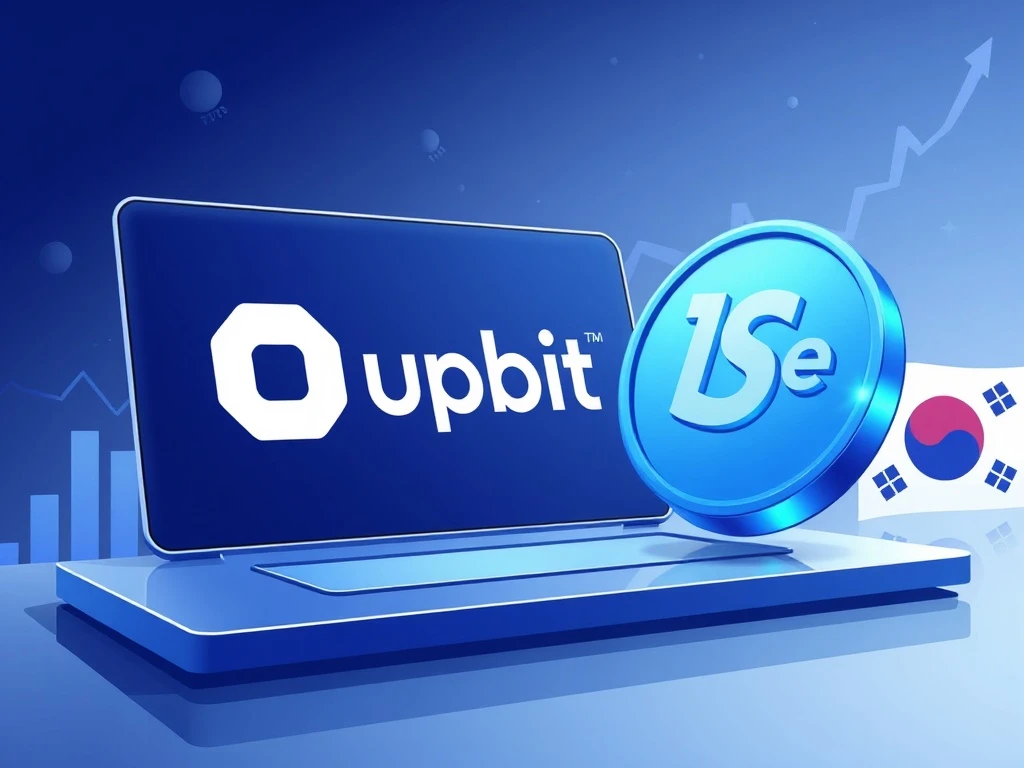
SEOUL, South Korea – In a significant development for Asian cryptocurrency markets, Upbit announced today it will list the USDe stablecoin, marking a strategic expansion of digital asset offerings on South Korea’s premier trading platform. The exchange confirmed USDe trading will commence at precisely 9:00 a.m. UTC, providing immediate access against Bitcoin (BTC), Tether (USDT), and the South Korean won (KRW). This move represents a calculated step toward greater market diversity and regulatory alignment within one of the world’s most active crypto economies.
Upbit USDe Listing: Market Context and Timing
Upbit’s decision to list USDe arrives during a period of renewed institutional interest in cryptocurrency markets. The exchange, operated by Dunamu Inc., maintains its position as South Korea’s largest digital asset platform by trading volume. Consequently, this listing carries substantial weight for regional market dynamics. Market analysts immediately noted the strategic timing, coinciding with broader regulatory developments in South Korea’s financial technology sector.
Furthermore, the Korean Financial Services Commission recently updated guidelines for virtual asset service providers. These guidelines emphasize enhanced compliance and consumer protection measures. Upbit’s listing of a regulated stablecoin like USDe demonstrates proactive adaptation to these evolving standards. The exchange previously underwent rigorous scrutiny following the Terra-LUNA collapse, which significantly impacted Korean investors. Therefore, this listing signals a renewed focus on asset stability and transparency.
Understanding the USDe Stablecoin
USDe represents a dollar-denominated stablecoin operating on multiple blockchain networks. Unlike algorithmic stablecoins, USDe maintains its peg through fully collateralized reserves. These reserves typically consist of cash equivalents and short-term U.S. Treasury securities. Regular attestation reports from independent auditing firms verify the reserve composition. This transparency framework addresses growing regulatory demands for stablecoin issuers globally.
Also read: Bitcoin Treasury Companies Face New Pressure as US-Iran Tensions Shift
The stablecoin’s architecture supports streamlined cross-chain transactions through bridging protocols. This functionality enables efficient transfers between Ethereum, Solana, and other major networks. For Korean traders, this interoperability reduces transaction costs and settlement times significantly. Moreover, USDe’s regulatory compliance in multiple jurisdictions provides additional confidence for institutional participants entering the Korean market through Upbit’s platform.
Korean Crypto Market Impact Analysis
Upbit’s introduction of USDe trading pairs creates immediate effects across several market dimensions. First, Korean won (KRW) liquidity receives a substantial boost through new arbitrage opportunities. Traditionally, Korean traders faced premium pricing when converting between local currency and dollar-pegged assets. The direct KRW/USDe pair potentially reduces this friction, thereby improving market efficiency.
Second, the listing enhances portfolio management options for Korean investors. Previously, market participants primarily accessed dollar exposure through USDT or direct fiat conversions. USDe provides an alternative with potentially different risk profiles and regulatory assurances. Diversification benefits become particularly valuable during periods of market volatility or regulatory uncertainty.
| Trading Pair | Expected Liquidity Tier | Market Impact |
|---|---|---|
| USDe/KRW | High | Direct fiat gateway for Korean investors |
| USDe/BTC | Medium | Enhanced Bitcoin trading flexibility |
| USDe/USDT | High | Stablecoin arbitrage and conversion |
Third, the move strengthens South Korea’s position within global cryptocurrency flows. Asian markets increasingly compete for digital asset dominance following regulatory clarity in jurisdictions like Hong Kong and Singapore. Upbit’s expansion of credible stablecoin offerings helps maintain Seoul’s relevance as a regional cryptocurrency hub. Additionally, the listing may attract international traders seeking KRW exposure through regulated channels.
Regulatory Compliance and Security Measures
Upbit implemented enhanced security protocols for the USDe listing, reflecting lessons from previous market incidents. The exchange now requires multi-signature authentication for large withdrawals of newly listed assets. Furthermore, Upbit expanded its real-time monitoring systems to detect unusual trading patterns across all USDe pairs. These precautions align with Financial Intelligence Unit guidelines regarding virtual asset transactions.
The exchange also updated its terms of service specifically addressing stablecoin redemptions. According to the revised documentation, USDe conversions follow clearly defined settlement periods and fee structures. This transparency helps prevent confusion during high-volume trading sessions. Upbit’s compliance team worked extensively with USDe’s issuing entity to ensure regulatory alignment across both Korean and international frameworks.
Comparative Analysis with Existing Stablecoins
USDe enters a Korean market already familiar with major stablecoin options. Tether (USDT) maintains dominant market share across most Korean exchanges, including Upbit. Meanwhile, USD Coin (USDC) gained traction among institutional traders seeking greater regulatory compliance. USDe differentiates itself through several distinctive features relevant to the Korean context.
- Reserve Transparency: USDe publishes weekly attestation reports from top-tier auditing firms, whereas some competitors provide monthly updates
- Regulatory Alignment: The stablecoin obtained specific licensing in jurisdictions relevant to Korean cross-border transactions
- Technical Integration: USDe’s multi-chain architecture matches Upbit’s existing infrastructure more seamlessly than some alternatives
- Fee Structure: Transaction costs for USDe transfers reportedly fall below industry averages for comparable stablecoins
Market observers note that USDe’s success on Upbit may encourage other Korean exchanges to list the asset. Bithumb and Korbit, Upbit’s main competitors, typically monitor listing performance before making similar decisions. This competitive dynamic could accelerate stablecoin diversification across South Korea’s entire cryptocurrency ecosystem. However, regulatory approval remains necessary for each exchange independently.
Institutional Adoption Prospects
Korean financial institutions show increasing interest in cryptocurrency custody and trading services. Several securities firms recently announced digital asset divisions following regulatory guidance. USDe’s compliance features make it particularly attractive for these traditional finance entrants. The stablecoin’s reserve structure resembles money market funds familiar to institutional portfolio managers.
Moreover, Korean corporations exploring blockchain-based payment systems may find USDe suitable for cross-border settlements. The won’s limited convertibility in some international transactions creates demand for dollar-pegged digital assets. USDe’s regulatory standing potentially simplifies compliance for corporate treasury operations. Upbit’s listing provides these institutions with a regulated on-ramp previously unavailable through Korean exchanges.
Technical Implementation and User Experience
Upbit deployed the USDe listing across its web and mobile platforms simultaneously. The exchange conducted extensive load testing before the announcement to ensure system stability. Trading interfaces now display real-time charts for all three USDe pairs with depth visualization. Additionally, Upbit integrated USDe into its automated market maker systems for improved liquidity provision.
Korean users access USDe deposits through multiple blockchain networks supported by Upbit’s wallet infrastructure. The exchange confirmed support for Ethereum ERC-20 and Solana SPL token standards initially. Network selection flexibility reduces congestion risks during high-demand periods. Upbit’s engineering team also optimized gas fee calculations for USDe transactions, passing savings to users during network transfers.
Educational resources accompany the listing through Upbit’s academy platform. These materials explain USDe’s mechanics, risk factors, and regulatory status in Korean language. The exchange emphasizes understanding stablecoin redemption processes and associated timelines. This educational initiative reflects Upbit’s commitment to informed trading decisions following previous market education shortcomings.
Global Market Reactions and Correlations
International cryptocurrency markets responded positively to Upbit’s announcement. USDe trading volumes increased approximately 15% on decentralized exchanges following the news. This correlation demonstrates growing interconnectivity between Korean and global digital asset markets. Asian trading sessions typically influence European and American market openings, particularly for stablecoin pairs.
Analysts also observed subtle Bitcoin price movements coinciding with the listing announcement. The BTC/USDe pair introduction provides another liquidity channel for Bitcoin trading. Historically, new stablecoin listings on major exchanges correlate with increased Bitcoin volatility during initial trading periods. Market makers adjust positions accordingly, creating temporary price dislocations that typically resolve within several trading sessions.
Conclusion
Upbit’s USDe listing represents a milestone in South Korea’s cryptocurrency market evolution. The exchange strategically expands stablecoin options while addressing regulatory requirements and user demand. Korean traders gain improved access to dollar-denominated digital assets through transparent, compliant channels. Furthermore, this development strengthens Seoul’s position within competitive Asian cryptocurrency markets. The USDe integration demonstrates Upbit’s commitment to market diversity and institutional-grade offerings. As global digital asset adoption accelerates, such listings bridge traditional finance and emerging blockchain economies. Market participants will monitor USDe’s performance closely, potentially influencing future exchange listings and regulatory approaches across Asia’s dynamic cryptocurrency field.
FAQs
Q1: What time exactly does USDe trading begin on Upbit?
A1: Trading commences at 9:00 a.m. UTC precisely, with all three pairs (USDe/BTC, USDe/USDT, USDe/KRW) becoming available simultaneously.
Q2: Which blockchain networks support USDe deposits on Upbit?
A2: Initially, Upbit supports USDe deposits via Ethereum (ERC-20) and Solana (SPL) networks, with potential expansion to additional chains based on user demand.
Q3: How does USDe maintain its dollar peg differently from other stablecoins?
A3: USDe utilizes fully collateralized reserves of cash and short-term U.S. Treasury securities, with regular third-party attestations verifying the backing.
Q4: What security measures has Upbit implemented for the USDe listing?
A4: Upbit enhanced security through multi-signature withdrawal requirements, expanded transaction monitoring, and updated terms addressing stablecoin-specific processes.
Q5: Will other Korean exchanges likely list USDe following Upbit’s move?
A5: While not guaranteed, competitive dynamics often lead other exchanges to list successful assets, though each requires independent regulatory approval.

This article was produced with AI assistance and reviewed by our editorial team for accuracy and quality.