Upbit Delists GoChain (GO): Critical Exchange Move Sparks Market Scrutiny
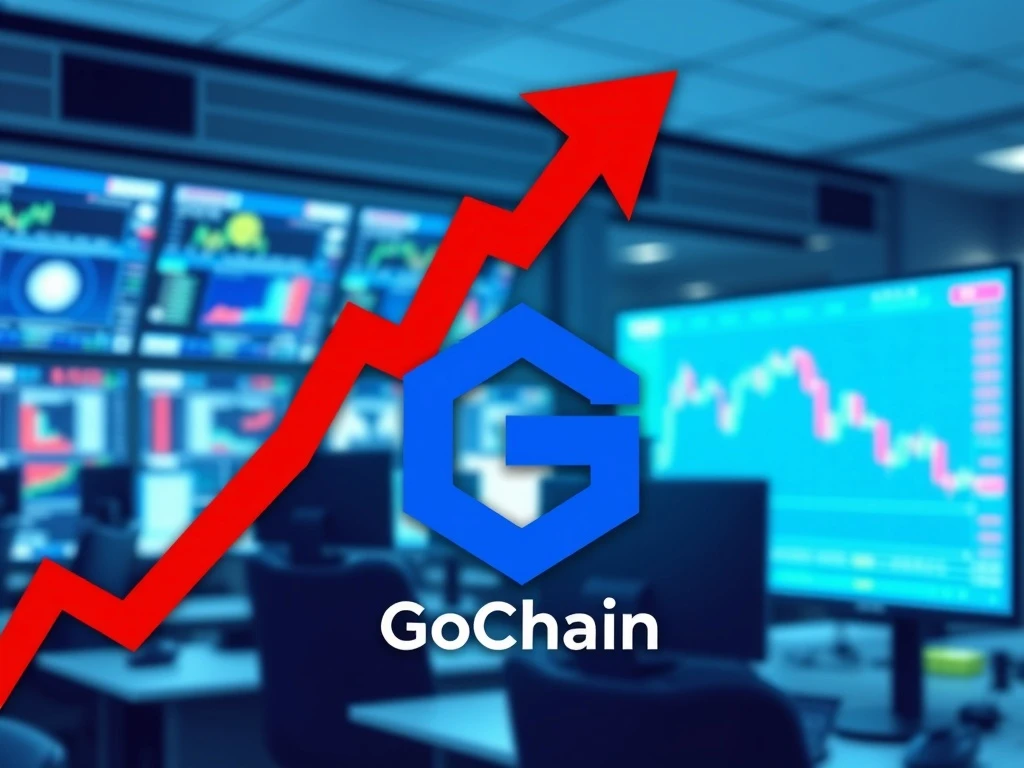
SEOUL, South Korea – February 27, 2025 – In a decisive regulatory action, the prominent South Korean cryptocurrency exchange Upbit has announced the impending delisting of GoChain (GO), scheduling removal for 6:00 a.m. UTC on March 3. This significant move follows a comprehensive review process where the exchange identified “numerous shortcomings” and a “potential for harm to users” associated with the virtual asset. Consequently, the Upbit delist GoChain decision immediately reverberated through trading communities, prompting urgent analysis of exchange governance and token viability standards.
Upbit Delists GoChain: The Official Rationale and Immediate Effects
Upbit, operated by Dunamu Inc., issued a formal notice detailing the GoChain delisting. The exchange explicitly cited deficiencies in the project’s trading support and overall adoption status as primary catalysts. Furthermore, Upbit’s compliance team highlighted potential user protection risks, a critical consideration under South Korea’s stringent financial regulations. Immediately following the announcement, the GO token experienced pronounced volatility. Market data shows a sharp decline in trading volume and price on the platform as holders reacted to the news.
Also read: Bitcoin Spot ETFs Shatter Positive Streak With $296 Million Outflow
This action is not isolated. Upbit maintains a periodic review framework for all listed assets, assessing criteria like:
- Project Development Activity: Code commits, roadmap progress, and team transparency.
- Market Integrity & Liquidity: Trading volume stability and absence of market manipulation.
- Regulatory Compliance: Adherence to evolving South Korean and global virtual asset laws.
- User Protection Safeguards: Security audits, wallet support, and clear communication channels.
Industry analysts note that exchanges increasingly prioritize these metrics. The GoChain removal signals a tightening of standards, especially for projects with niche use cases or stagnant development cycles. For context, the table below outlines recent delisting actions by major Asian exchanges for comparison:
Also read: Bitcoin Strategy Divide: GameStop's 4,710 BTC Hold Contrasts With Nation's Massive Sell-Off
| Exchange | Asset Delisted | Primary Cited Reason | Month/Year |
|---|---|---|---|
| Upbit (KR) | GoChain (GO) | User protection risks, adoption shortcomings | March 2025 |
| Binance (Global) | Privacy Coin X | Proactive compliance with new regulations | January 2025 |
| Coinone (KR) | Project Y Token | Low liquidity and trading volume | December 2024 |
Understanding the GoChain Project and Its Market Journey
GoChain launched as an Ethereum-compatible blockchain platform focusing on environmental sustainability and higher transaction throughput. Initially, it aimed to provide a more scalable and energy-efficient alternative for decentralized applications (dApps) and enterprise solutions. However, over the past 18 months, measurable traction proved challenging. Competing layer-1 and layer-2 solutions like Polygon, Avalanche, and Arbitrum captured significant market share and developer mindshare.
Market data from CoinMarketCap and similar aggregators shows a consistent decline in GO’s overall trading volume across all platforms preceding the Upbit announcement. Moreover, developer activity on its GitHub repositories slowed considerably compared to rivals. This context is vital for understanding Upbit’s assessment of “adoption status.” The exchange’s decision likely reflects a data-driven view of the project’s declining ecosystem health rather than a singular event.
Expert Analysis: The Ripple Effects of a Major Exchange Delisting
Financial technology experts emphasize the multifaceted impact of a delisting from a top-tier exchange like Upbit. Firstly, it severely restricts liquidity access for a large segment of Korean investors, who rely on domestic, compliant platforms. Secondly, it acts as a powerful market signal, often triggering reassessments by other exchanges and institutional investors. A delisting can create a vicious cycle: reduced liquidity leads to higher volatility and wider bid-ask spreads, which further deters legitimate trading and investment.
“A delisting from a major regulated exchange is one of the most significant credibility events a cryptocurrency project can face,” notes a report from the Blockchain Transparency Institute, a market surveillance group. “It directly impacts token holder confidence and can necessitate a fundamental reevaluation of the project’s utility and long-term strategy.” For existing GO holders, the immediate practical effect is the need to withdraw tokens from Upbit before the deadline or convert them to another asset on the platform. After March 3, trading, deposits, and withdrawals for GO will be permanently disabled on Upbit.
Regulatory Context: South Korea’s Evolving Crypto Environment
South Korea enforces some of the world’s most rigorous cryptocurrency regulations. The Financial Services Commission (FSC) and the Financial Intelligence Unit (FIU) mandate strict anti-money laundering (AML) and know-your-customer (KYC) protocols. Exchanges like Upbit operate under the Specific Financial Information Act, requiring real-name bank account verification and extensive reporting. In this environment, exchanges proactively manage their listings to avoid regulatory scrutiny and potential sanctions.
The decision to delist GoChain aligns with a broader trend of exchanges conducting “spring cleaning” to remove assets that may pose compliance risks or fail to meet heightened operational standards. This trend intensified following the implementation of the Travel Rule in South Korea and global pushes for clearer market oversight. Consequently, projects must now demonstrate not only technological merit but also strong legal and operational frameworks to maintain listing status on top-tier Korean exchanges.
Conclusion
Upbit’s decision to delist GoChain (GO) on March 3 underscores the maturing and increasingly regulated nature of the global cryptocurrency market. This action, driven by identified user protection risks and adoption shortcomings, highlights the critical role exchanges play as gatekeepers. For investors, it reinforces the importance of due diligence beyond price speculation, focusing on project fundamentals, exchange relationships, and regulatory alignment. The Upbit delist GoChain event will likely serve as a case study for other projects managing the complex interplay of technology, market adoption, and compliance in 2025 and beyond.
FAQs
Q1: What should I do if I hold GO tokens on Upbit?
You must withdraw your GO tokens to a private wallet that supports the GoChain network before 6:00 a.m. UTC on March 3. Alternatively, you can trade your GO for another cryptocurrency on the platform before the deadline. After delisting, you will not be able to deposit, withdraw, or trade GO on Upbit.
Q2: Will GoChain still be traded on other exchanges?
Yes, the delisting is specific to Upbit. GoChain (GO) may continue trading on other global and decentralized exchanges that choose to support it. However, holders should verify listing status and liquidity on alternative platforms.
Q3: What does “potential for harm to users” mean in Upbit’s statement?
While not explicitly detailed, this phrase typically encompasses risks like extreme price volatility due to low liquidity, susceptibility to market manipulation, technical vulnerabilities in the asset’s smart contracts or network, or non-compliance with regulatory standards that could jeopardize user funds.
Q4: How often do major exchanges like Upbit delist cryptocurrencies?
Major exchanges conduct periodic reviews, often quarterly or biannually. Delistings are relatively common but usually affect a small percentage of listed assets that fail to meet continuously evolving listing criteria related to technology, liquidity, legal compliance, and project activity.
Q5: Does this delisting mean the GoChain project is shutting down?
Not necessarily. A delisting from one exchange is a significant setback but does not equate to project termination. The GoChain development team would need to address the cited shortcomings to potentially regain listing status on major exchanges in the future. The project’s continuity depends on its core team, community, and underlying technology.

This article was produced with AI assistance and reviewed by our editorial team for accuracy and quality.