Upbit Revises Atletico Madrid Fan Token Circulation: Strategic Supply Adjustment Signals Growing Sports Crypto Market
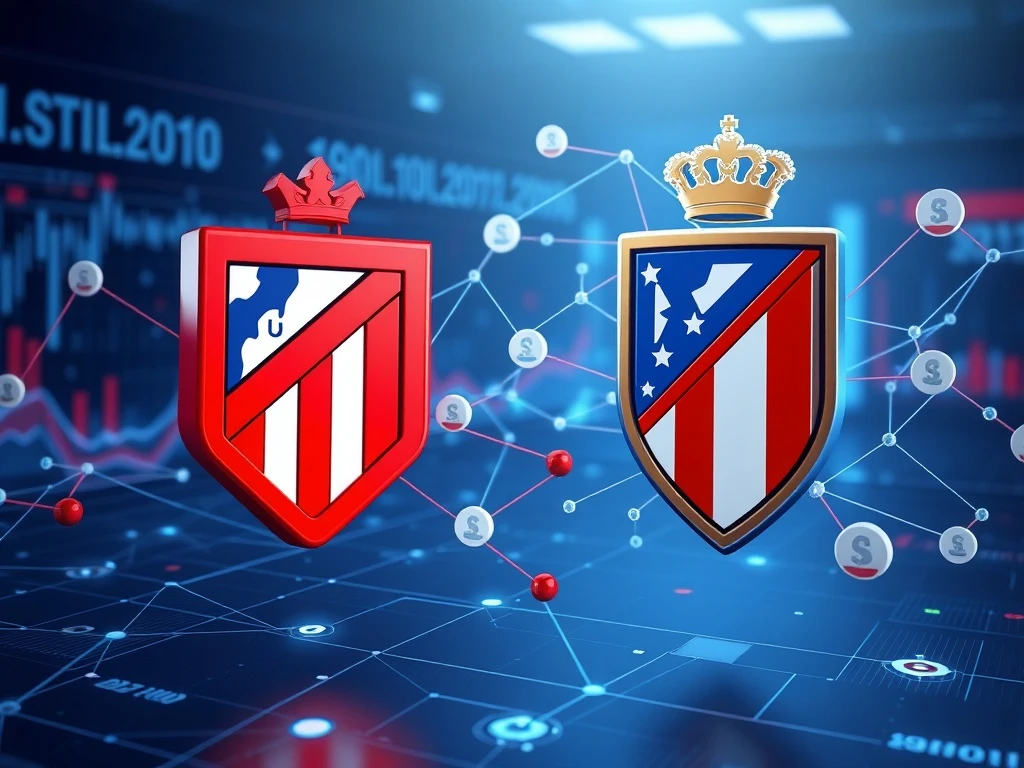
SEOUL, South Korea – March 2025: Leading South Korean cryptocurrency exchange Upbit announced a significant revision to the circulation plan for Atletico de Madrid’s official fan token (ATM), marking a pivotal development in the evolving relationship between professional sports and blockchain technology. This adjustment, implemented at the direct request of the Spanish football club, increases the first-quarter token supply by 200,000 ATM units, shifting the total from 9,244,450 to 9,444,450 tokens. Consequently, the circulating supply for the second quarter now stands at 9,861,117 ATM, according to official exchange communications reviewed by industry analysts.
Upbit’s Strategic Token Circulation Revision
Upbit’s announcement represents more than a simple numerical adjustment. The exchange, which dominates South Korea’s cryptocurrency market with approximately 80% of domestic trading volume, made this change following formal discussions with Atletico Madrid’s management team. This collaborative approach highlights how major sports franchises now actively participate in token economics. Furthermore, the revision demonstrates Upbit’s commitment to maintaining transparent and responsive listing practices for specialized digital assets.
The 200,000 ATM token increase specifically affects the Q1 2025 allocation. Market analysts immediately noted this represents a 2.16% expansion of the planned quarterly supply. Meanwhile, the Q2 2025 circulating supply target of 9,861,117 ATM establishes a clear trajectory for controlled token distribution throughout the year. These adjustments typically respond to measurable factors including fan engagement metrics, secondary market liquidity assessments, and club initiative rollouts requiring token utility expansion.
Sports Fan Token Market Evolution
The global sports fan token market has experienced substantial transformation since its inception. Initially launched as novelty digital collectibles, these tokens now function as sophisticated engagement tools. Major football clubs like Barcelona, Paris Saint-Germain, and Manchester City have pioneered tokenized fan experiences. Consequently, the market capitalization for sports-related digital assets exceeded $800 million in late 2024, according to Crypto Finance Research Institute data.
Atletico Madrid launched its ATM token in partnership with blockchain platform Socios.com in 2021. The token provides holders with voting rights on minor club decisions, exclusive content access, and merchandise rewards. However, the partnership with Upbit represents a crucial expansion into the Asian market. South Korea’s tech-savvy population and passionate football following create ideal conditions for fan token adoption. Therefore, supply adjustments reflect strategic market penetration efforts rather than arbitrary changes.
Token Economics and Supply Management
Professional sports organizations now employ dedicated blockchain strategists who manage token circulation with precision. These experts balance multiple competing objectives: maintaining token scarcity to preserve value, ensuring sufficient liquidity for fan accessibility, and aligning supply with upcoming engagement initiatives. The table below illustrates typical factors influencing circulation decisions:
| Factor | Influence on Supply | Example |
|---|---|---|
| Fan Membership Growth | Increased demand may justify supply expansion | New Asian supporter clubs forming |
| Utility Expansion | More tokens needed for voting events and rewards | Additional token-gated experiences |
| Market Liquidity | Adjustments to improve trading efficiency | Reducing excessive price volatility |
| Regulatory Compliance | Changes to meet jurisdiction requirements | South Korea’s specific crypto regulations |
Dr. Elena Rodriguez, a sports token economist at Barcelona Digital Assets Lab, explains the reasoning behind such adjustments. “Controlled supply revisions represent healthy market management,” she stated in a 2024 research paper. “Unlike static cryptocurrency supplies, fan tokens require dynamic calibration to match real-world club activities and fan community growth patterns.”
Regulatory Landscape and Exchange Compliance
South Korea maintains some of the world’s most stringent cryptocurrency regulations. The Financial Services Commission (FSC) requires exchanges like Upbit to implement rigorous listing standards and continuous monitoring. These regulations specifically address:
- Investor Protection Measures: Clear disclosures about token utility and risks
- Market Manipulation Prevention: Monitoring unusual trading patterns
- Transparency Requirements: Regular reporting of circulation changes
- Anti-Money Laundering Protocols: Strict KYC/AML verification for traders
Upbit’s timely announcement about the ATM token adjustment demonstrates compliance with these transparency mandates. The exchange previously faced regulatory scrutiny in 2023, resulting in enhanced reporting procedures. Since implementing these improvements, Upbit has maintained perfect compliance records according to FSC quarterly reviews. This regulatory diligence provides institutional confidence, potentially attracting more conservative investors to the sports token sector.
Comparative Analysis: Football Club Token Strategies
Atletico Madrid’s approach differs meaningfully from other European clubs. While Paris Saint-Germain’s token emphasizes luxury experiences and Barcelona’s focuses on governance participation, ATM tokens prioritize accessible fan engagement. The supply increase suggests Atletico Madrid plans broader participation initiatives rather than exclusive high-value offerings. This strategy aligns with the club’s historical emphasis on passionate, community-oriented support rather than elitist fan relationships.
Italian football analyst Marco Bianchi notes the strategic implications. “Atletico’s token strategy mirrors their playing philosophy,” he observed in a recent Sports Business International article. “They prioritize collective engagement over individual prestige. The supply expansion likely precedes community voting events or reward distributions that require wider token distribution among their global supporter base.”
Market Impact and Investor Considerations
Initial market response to Upbit’s announcement showed measured positivity. The ATM token experienced a 3.2% price increase within 24 hours of the news, followed by stabilized trading volumes. This reaction contrasts with the typical volatility following supply changes for conventional cryptocurrencies. The difference suggests sports fan tokens respond to fundamentally different market dynamics than purely financial digital assets.
Several key considerations emerge for current and potential investors:
- Utility Over Speculation: Token value derives primarily from club engagement utility rather than pure trading
- Controlled Inflation: Small, announced supply increases differ from unpredictable monetary policy
- Partnership Stability: Continued collaboration between Upbit and Atletico Madrid signals long-term commitment
- Regulatory Security: South Korea’s strict oversight reduces certain risk categories
Historical data from similar token adjustments shows minimal long-term price disruption when changes accompany clear communication and expanded utility. The 2024 Juventus token supply adjustment, for instance, resulted in increased fan participation metrics without significant value depreciation over subsequent quarters.
Future Trajectory for Sports Cryptocurrency Integration
The Upbit-Atletico Madrid development represents a maturation phase in sports cryptocurrency integration. Early experiments with fan tokens have evolved into sophisticated digital engagement ecosystems. Industry projections suggest several forthcoming developments:
- Enhanced Utility Layers: Tokens may grant access to augmented reality experiences or metaverse interactions
- Cross-Club Collaborations: Token holders might access multi-club voting or combined rewards
- Regulatory Standardization: International frameworks for sports tokens may emerge by 2026
- Mainstream Financial Integration: Traditional sports financing may incorporate token mechanisms
Professor Kenji Tanaka of Tokyo Fintech University emphasizes the broader significance. “These adjustments represent incremental progress toward fully integrated digital sports economies,” he noted in a recent lecture. “Each calibrated change moves beyond speculative trading toward sustainable token ecosystems where digital assets genuinely enhance fan experiences and club operations.”
Conclusion
Upbit’s revision of the Atletico Madrid fan token circulation plan demonstrates the dynamic, responsive nature of modern sports cryptocurrency management. The 200,000 ATM token increase for Q1 2025, raising the total to 9,444,450 tokens, reflects strategic adaptation to growing fan engagement and market conditions. This adjustment, implemented through direct club-exchange collaboration, highlights how professional sports organizations now actively manage digital asset economies. As the sports token sector continues evolving, such transparent, utility-focused supply management will likely become standard practice, further bridging traditional sports fandom with blockchain innovation.
FAQs
Q1: Why did Upbit increase the Atletico Madrid fan token supply?
The increase resulted from Atletico Madrid’s request, likely responding to expanded fan engagement initiatives, growing Asian market participation, or upcoming token utility expansions requiring broader distribution.
Q2: How does this supply change affect ATM token value?
Small, announced supply increases typically have minimal long-term price impact when accompanied by expanded utility. Initial market response showed moderate positivity, suggesting investors view the change as reflecting growth rather than dilution.
Q3: What distinguishes sports fan tokens from regular cryptocurrencies?
Fan tokens derive primary value from utility within specific ecosystems (voting rights, rewards access) rather than purely financial speculation. Their supplies often adjust dynamically based on club activities rather than following fixed algorithms.
Q4: How does South Korean regulation affect these tokens?
South Korea’s strict cryptocurrency regulations require transparent reporting of changes like supply adjustments. This regulatory environment provides investor protection but also imposes compliance burdens on exchanges like Upbit.
Q5: Can other football clubs adjust their token supplies similarly?
Yes, most fan token agreements include mechanisms for supply adjustments based on mutual agreement between clubs and their exchange partners. These changes typically respond to measurable engagement metrics and strategic initiatives.