Uniswap UNI Token Faces Market Volatility
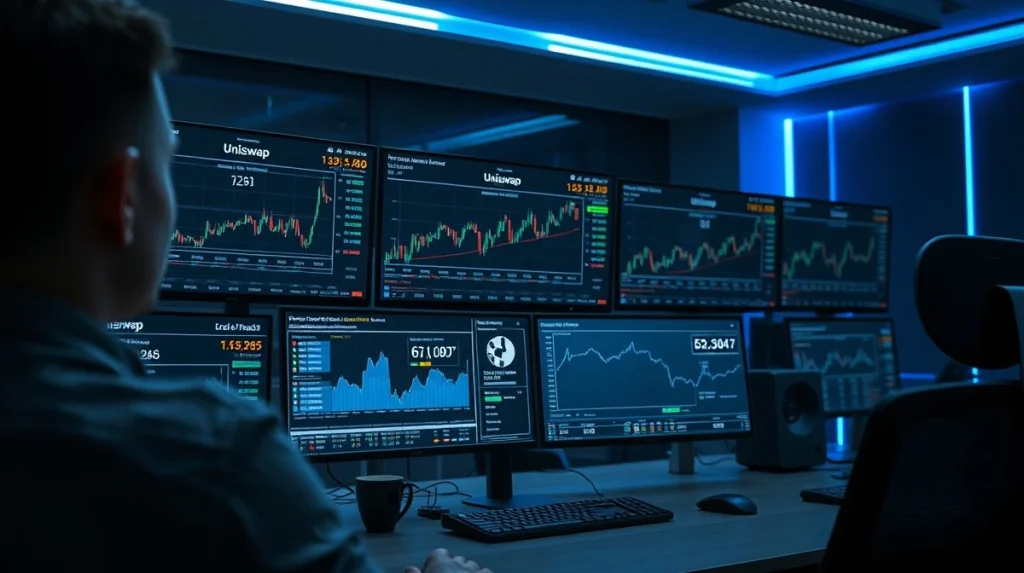
March 15, 2026 – The price of Uniswap’s UNI governance token continues to experience significant volatility, reflecting broader uncertainty in the decentralized finance (DeFi) sector. Market data from CoinGecko shows the token trading within a wide range, influenced by protocol upgrades, regulatory developments, and shifting liquidity patterns.
Current Market Position and Protocol Metrics
As of March 15, 2026, UNI’s market performance remains tied to the overall health of the Uniswap protocol. On-chain analytics reveal the total value locked (TVL) across Uniswap’s various deployments, a key indicator of platform usage and fee generation. Trading volume data from the protocol’s official analytics dashboard provides real-time insight into user activity.
Also read: SIREN Price Skyrockets 100%—Charts Flash Ominous Bull Trap Warning
Industry analysts note that fee accrual mechanisms and governance proposals directly impact token valuation. The protocol’s recent version upgrades have altered fee structures for liquidity providers. These changes are designed to enhance capital efficiency and could influence long-term token economics.
Regulatory Environment and Competitive Pressures
The regulatory landscape for DeFi protocols and their associated tokens has evolved significantly. Statements from financial authorities in multiple jurisdictions have created a complex operating environment. This regulatory scrutiny affects market sentiment and institutional adoption potential.
Also read: Crypto Rally Watch: EDGE, VVV, and ALGO Show Early Bullish Signals in April 2026
Competition within the automated market maker (AMM) space has intensified. Several rival protocols have launched with alternative tokenomics and governance models. This competitive pressure requires Uniswap to continuously innovate to maintain its dominant market share in decentralized trading.
Technical Developments and Governance
Uniswap’s development team and decentralized autonomous organization (DAO) have focused on scaling solutions and cross-chain expansion. The successful deployment on additional layer-2 networks has aimed to reduce transaction costs for users. Governance proposals passed by UNI token holders have shaped the protocol’s strategic direction.
Technical milestones, such as the implementation of new smart contract features, are tracked publicly on the project’s GitHub repository. These developments are critical for maintaining the protocol’s security and functionality. The community’s ability to execute upgrades efficiently remains a focal point for observers.
Market Sentiment and External Factors
Broader cryptocurrency market trends heavily influence UNI’s price action. Correlations with major assets like Bitcoin and Ethereum are evident in historical data. Macroeconomic factors, including interest rate policies and traditional market flows, also create indirect effects on DeFi asset valuations.
Liquidity provider returns and yield farming opportunities across the ecosystem drive capital allocation decisions. Shifts in these yields can prompt rapid movements of funds between protocols. Consequently, UNI’s price reflects both its specific utility and its role within the wider DeFi yield landscape.
Assessing Future Trajectory
Any assessment of UNI’s potential price movement involves weighing multiple variables. Protocol fee generation, governance participation rates, and successful execution of the development roadmap are fundamental drivers. Market data indicates that adoption metrics, rather than speculation, increasingly dictate valuation models for DeFi tokens.
The integration of Uniswap with traditional finance infrastructure could present future growth avenues. However, this depends on regulatory clarity and technological interoperability. The protocol’s ability to capture value from its substantial trading volume remains a central question for its economic model.
Ultimately, UNI’s market performance will be determined by real-world usage and the protocol’s competitive advantages. Continued innovation and effective community governance are required to navigate a rapidly evolving sector. Market participants monitor these factors closely when evaluating the token’s long-term prospects.

This article was produced with AI assistance and reviewed by our editorial team for accuracy and quality.